
Banks Will Need Bailouts Like 2008! Bubba Horwitz on the New Loan Scam + Gold $6,000
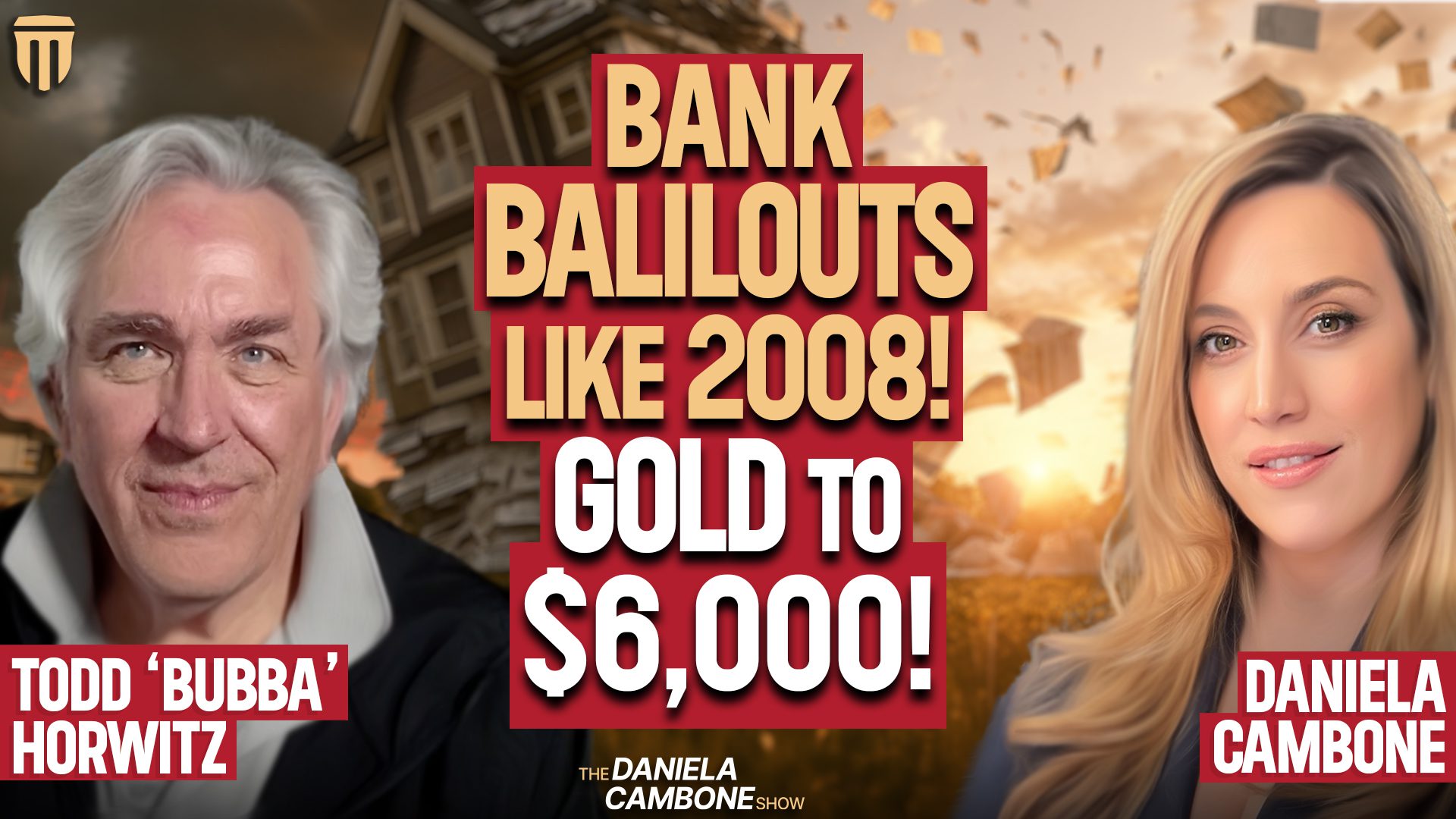
Banks Will Need Bailouts Like 2008! Bubba Horwitz on the New Loan Scam + Gold $6,000
Is History Repeating Itself—Or Did It Never Really End?
The financial system may be setting the stage for another crisis, and this time the warning signs are becoming increasingly difficult to ignore.
Nearly two decades after the 2008 bank bailout, lending practices that many believed disappeared with the housing collapse are quietly making a comeback. Zero-down mortgages. Looser underwriting. Rising consumer delinquencies. Slowing employment. Meanwhile, the Federal Reserve remains trapped between persistent inflation and weakening economic growth.
In a recent conversation with Daniela Cambone, veteran trader Todd “Bubba” Horwitz argued that America is once again building systemic financial risk while investors underestimate the consequences. At the same time, he believes the current pullback in gold represents an opportunity—not a reason to panic—with longer-term prices potentially reaching $6,000 under the right conditions.
The Return of the Lending Practices That Triggered 2008
One of Horwitz’s strongest warnings centered on the housing market.
According to him, builders across parts of the United States are once again offering incentives that resemble the conditions leading up to the financial crisis.
These include:
- Zero-down mortgages
- Reduced documentation loans
- Aggressive financing incentives
- Discounted mortgage rates to move excess inventory
While these programs may temporarily stimulate home sales, Horwitz argues they transfer increasing credit risk into the banking system.
His concern isn’t simply about home prices.
It’s about loan quality.
If risky mortgages are packaged and sold throughout the financial system—as they were before 2008—the same structural vulnerabilities could reappear under different names.
Consumer Debt Is Flashing Warning Signals
Housing isn’t the only area showing stress.
Horwitz pointed to several indicators suggesting American households are becoming increasingly stretched financially.
Among the trends discussed:
- Rising credit card delinquencies
- Higher mortgage defaults
- Increasing auto loan delinquencies
- Consumers relying more heavily on revolving debt
Even without a housing collapse, deteriorating consumer balance sheets create additional pressure on banks that already face commercial real estate losses and tighter credit conditions.
When defaults spread across multiple categories simultaneously, financial institutions become increasingly vulnerable.
The Employment Picture May Be Weaker Than Headlines Suggest
Official unemployment numbers often dominate financial news.
Horwitz believes those figures fail to capture the full picture.
He argues that broader labor measures—including discouraged workers who have stopped searching for employment—paint a far weaker economy than headline statistics suggest.
Whether or not investors agree with his assessment, several economic trends deserve attention:
- Corporate layoffs remain elevated across multiple industries.
- Restaurant closures continue rising in many markets.
- Consumer discretionary spending is slowing.
- Small businesses remain under pressure from financing costs.
If employment continues weakening while household debt rises, credit quality could deteriorate even further.
Why Higher Interest Rates Could Create More Bank Stress
Most investors assume higher rates hurt only borrowers.
Horwitz argues the situation is more complicated.
Banks have benefited from wider spreads between short-term funding costs and longer-term lending rates. However, persistent inflation and rising Treasury yields could eventually expose weaknesses sitting on balance sheets.
If long-term rates remain elevated while loan defaults increase, financial institutions may once again face capital pressure.
That raises an uncomfortable question:
Would policymakers allow major banks to fail—or repeat another round of bailouts?
History suggests governments often choose rescue over restructuring.
AI May Be the Next Bubble Investors Are Ignoring
While artificial intelligence has dominated Wall Street enthusiasm, Horwitz believes investors are overlooking the infrastructure costs supporting that boom.
He argues AI creates significant demand for:
- Electricity
- Data centers
- Copper
- Power infrastructure
Those investments ultimately ripple throughout the broader economy.
Meanwhile, several AI-related stocks have already experienced meaningful corrections from recent highs.
If investor sentiment shifts further, capital could begin rotating into traditional safe havens—including gold and silver.
Why Bubba Horwitz Still Sees Gold Moving Higher
Despite gold’s recent correction, Horwitz remains constructive.
Rather than viewing the decline as a breakdown, he sees it as a healthy reset following an extended rally.
His outlook includes several possible milestones:
- Around $4,600
- Approximately $5,000
- Longer-term potential toward $6,000
His thesis rests on several broader themes:
- Persistent inflation
- Growing sovereign debt
- Banking instability
- Eroding confidence in central banks
- Continued demand for tangible assets
Short-term volatility doesn’t necessarily alter those structural drivers.
Gold and Silver Remain Wealth Preservation Assets During Financial Uncertainty
Periods of financial instability often force investors to reconsider where true security exists.
Unlike digital assets or financial products dependent on counterparties, physical gold and silver remain tangible assets with thousands of years of monetary history.
For investors focused on wealth preservation, precious metals may help diversify portfolios during periods of uncertainty.
Potential advantages include:
- Protection against currency devaluation
- Inflation hedge
- Diversification outside traditional financial markets
- No counterparty risk when held physically
- Long-term purchasing power preservation
As concerns surrounding debt, banking stability, and monetary policy continue growing, the debate increasingly becomes gold vs. dollar rather than simply stocks versus bonds.
The Bigger Issue Isn’t One Crisis—It’s the Accumulation of Risks
No one knows whether another financial crisis will unfold exactly like 2008.
History rarely repeats perfectly.
But it often rhymes.
Today investors face an unusual combination of challenges:
- Record government debt
- Persistent inflation
- Elevated consumer leverage
- Housing affordability problems
- Banking system vulnerabilities
- Rising geopolitical uncertainty
Individually, each issue may appear manageable.
Together, they create an environment where unexpected shocks can spread rapidly throughout financial markets.
That makes understanding risk—and preparing before markets react—more important than ever.
About ITM Trading
ITM Trading has over 28 years of experience helping clients safeguard their wealth through personalized strategies built on physical gold and silver. Our team of experts delivers research-backed guidance tailored to today’s economic threats.
THINKING ABOUT PURCHASING GOLD & SILVER?
Get expert guidance from our team of analysts with 28+ years of experience.
👉 [SCHEDULE YOUR CALL HERE] Or call 866-706-9061.