
The Massive Supply Shock That Will Break the Gold Market

What happens when governments, central banks, investors, and industry all start competing for gold that cannot be produced fast enough?
That is the setup behind a potential gold supply shock—and according to U.S. Global Investors CEO Frank Holmes, the scramble for strategic metals is becoming much bigger than a simple commodity cycle.
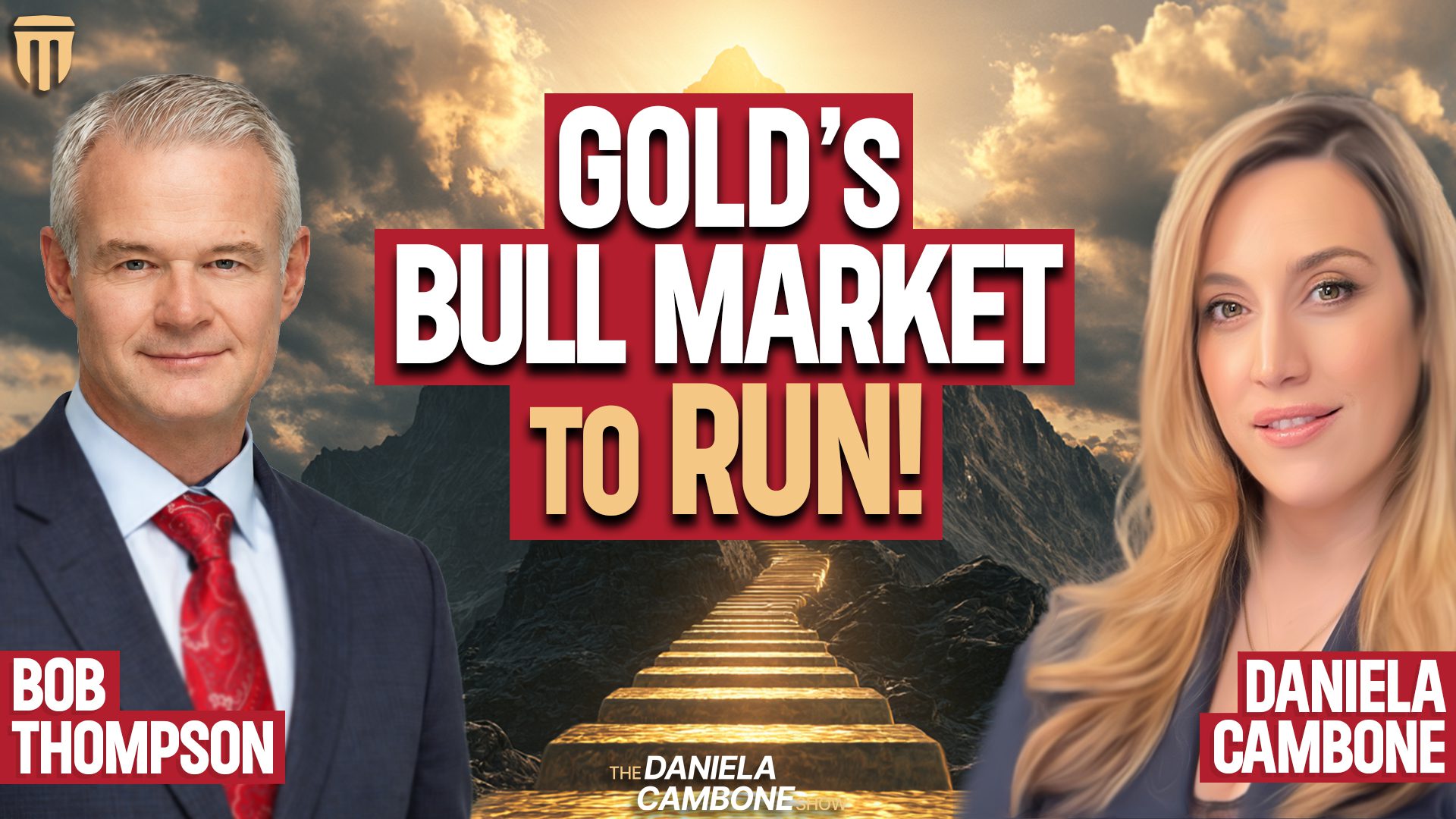
In a recent interview with Daniela Cambone, Holmes argued that the United States is entering a new era of mineral nationalism: rebuilding domestic mining, manufacturing, processing, and strategic supply chains after decades of dependence on foreign producers. At the same time, China continues accumulating gold and strengthening its grip on critical mineral supply chains.
And the latest gold data adds another layer to that warning.
Global gold mine production reached a record in 2025—but increased by only about 1%. Meanwhile, total gold demand exceeded 5,000 tonnes for the first time, and central banks remained major buyers. (World Gold Council)
That is the real issue.
Gold does not need to “run out” for the market to experience a supply shock. Demand only needs to move faster than new supply can respond.
The Gold Supply Shock Isn’t About Running Out of Gold
The mainstream framing of commodity shortages is often too simplistic.
A shortage does not necessarily mean there is no gold left underground. The issue is how quickly economically viable gold can be discovered, permitted, financed, mined, processed, and delivered into the market.
And that process cannot be switched on overnight.
World Gold Council data shows global miners produced a record 3,672 tonnes of gold in 2025. On the surface, that sounds reassuring.
Look closer.
Mine production increased only around 1% year over year. Even more striking, recycled gold supply increased only about 3%, despite the U.S. dollar gold price surging roughly 67% during the year. (World Gold Council)
In other words:
- Gold prices exploded higher.
- Miners produced only marginally more metal.
- Owners of existing gold did not rush to sell nearly as aggressively as the price increase might suggest.
- Central banks continued accumulating physical reserves.
- Investors increased demand for bars, coins, and gold-backed investment products.
That is a market with remarkably limited supply elasticity.
And in the first half of 2026, the basic dynamic remained intact. The World Gold Council reported Q2 total supply of 1,269 tonnes, with mine production rising just 2% year over year while recycling actually declined 6%. (World Gold Council)
The gold market is producing more metal.
It just isn’t producing dramatically more metal.
That distinction could become critical.
China Just Sent the Gold Market Another Message
During the interview, Daniela pointed to reports that China had purchased approximately 20 tonnes of gold in July. Holmes argued that gold reserves are becoming increasingly important as countries rethink their dependence on other nations’ currencies.
That 20-tonne figure has since been confirmed by World Gold Council data.
The People’s Bank of China reported adding 20 tonnes in July 2026, its largest monthly increase since October 2023. That brought China’s reported official holdings to approximately 2,366 tonnes and extended its gold-buying streak to 21 consecutive months. (World Gold Council)
Ask yourself why.
China already has enormous foreign-exchange reserves. It has manufacturing capacity. It has commodities. It has access to global trade.
Yet it continues exchanging a portion of its reserves for an asset that:
- Has no counterparty.
- Cannot be created by another central bank.
- Is globally recognized.
- Has survived repeated currency regimes.
- Can be held outside another country’s financial system.
The World Gold Council’s 2026 survey found that 89% of responding central banks expect global official gold reserves to increase over the next 12 months, while a record 45% expect their own institutions to increase gold holdings. (World Gold Council)
That is not retail speculation.
It is a structural shift in how monetary authorities are thinking about reserves.
Washington Is Quietly Rebuilding the Mineral Supply Chain
Holmes’s bigger point was not limited to gold.
He sees what is happening in Washington as a return to an old American idea: a country cannot consider itself strategically independent if another country controls the materials required to build its factories, defense systems, infrastructure, and technology.
In the interview, Holmes compared today’s policy shift with Alexander Hamilton’s vision for American manufacturing—using government policy to build domestic industrial capacity rather than remaining dependent on foreign producers.
Whatever one thinks about tariffs or industrial policy, the strategic shift is difficult to ignore.
The United States has moved aggressively to strengthen domestic critical-mineral production and processing. A January 2026 White House proclamation noted that, as of 2024, America was 100% net-import reliant for 12 critical minerals and at least 50% import reliant for another 29. (The White House)
DOE has separately announced hundreds of millions of dollars in funding aimed at mining, processing, battery materials, recycling, and related critical-material infrastructure. (The Department of Energy’s Energy.gov)
Why the urgency?
Because modern economies are discovering that supply chains are national-security infrastructure.
You cannot manufacture your way out of a mineral shortage if the ore, refining capacity, or processing technology is controlled somewhere else.
The Mining Renaissance Has One Major Problem: Time
Politicians can announce billions of dollars in financing in an afternoon.
They cannot create a producing mine in an afternoon.
Holmes emphasized this fundamental mismatch throughout his discussion with Daniela: governments may want domestic mineral independence, but mining projects require exploration, permitting, financing, construction, infrastructure, skilled workers, processing facilities, and ultimately a commercially viable deposit.
The World Gold Council makes a similar point.
It expects gold mine production to continue growing only modestly and notes that the longer-term industry still faces challenges involving finding, permitting, financing, and building new large-scale mines. (World Gold Council)
That matters because demand can change in weeks.
Mine supply changes over years.
This is where a genuine gold supply shock becomes possible.
Imagine several trends accelerating simultaneously:
- Central banks increase reserve diversification.
- Investors seek protection from currency depreciation.
- Geopolitical tensions increase demand for neutral reserve assets.
- Governments encourage domestic accumulation of strategic resources.
- Existing gold owners become reluctant to sell physical metal.
- New mine supply grows only marginally.
You do not need every investor on Earth to buy gold.
You need enough incremental demand chasing a relatively inflexible pool of available supply.
Price then becomes the balancing mechanism.
A Gold Market Can “Break” Without Running Out of Gold
This distinction is important.
There is no evidence today that the world has literally exhausted its gold supply. In fact, 2025 mine production reached a record. (World Gold Council)
But markets do not wait until the last ounce disappears.
They reprice when buyers become more aggressive than sellers.
Consider what happened in 2025.
Total gold demand, including OTC activity, exceeded 5,000 tonnes for the first time, representing approximately $555 billion in value. Gold set 53 new all-time highs during the year. (World Gold Council)
Then in the first half of 2026, demand reached about 2,522 tonnes, valued at a record $380 billion. Central banks bought an estimated 289 tonnes in Q2 alone. (World Gold Council)
Yet mine production is still expanding in the low single digits.
That is the pressure point.
If physical demand accelerates materially from here, the gold market cannot simply order another million ounces from a factory.
Gold must be:
- Mined.
- Recycled.
- Released from existing inventories.
- Or coaxed out of existing owners through a higher price.
The fourth option is where things become interesting.
Gold vs. Dollar: The Reserve Question Is Getting Harder to Ignore
For decades, the U.S. dollar enjoyed an extraordinary advantage.
It became the common language of international finance and trade.
Holmes argues that China is now working to reduce that dominance by building alternative trade relationships, deepening economic influence abroad, and encouraging a more multipolar monetary system. In that environment, he believes gold becomes increasingly attractive because it is not another country’s liability.
That does not mean the dollar disappears tomorrow.
It does mean reserve managers have more incentive to ask uncomfortable questions:
How concentrated are our reserves?
What happens if financial assets become geopolitical weapons?
What do we own that does not simultaneously represent somebody else’s promise to pay?
Physical gold has an answer that sovereign bonds cannot provide.
It carries no issuing government’s credit risk.
That is one reason the modern gold vs dollar debate is not merely about inflation.
It is increasingly about geopolitical optionality.
Silver Has Now Become a National-Security Metal
Gold is not the only precious metal being pulled into this strategic competition.
Holmes highlighted silver’s growing importance for solar power, industry, and defense applications.
That argument gained additional weight when the U.S. government added silver to the final 2025 List of Critical Minerals. Copper was added as well. (USGS)
That changes the conversation around silver.
Silver is simultaneously:
- A precious metal.
- An industrial input.
- A component used across advanced technologies.
- An increasingly strategic resource.
- A historically recognized monetary metal.
Unlike gold, a large portion of silver demand is tied directly to industrial consumption.
That means investors looking at precious metals are no longer watching only monetary policy.
They are watching manufacturing policy, electrification, defense spending, artificial intelligence infrastructure, reshoring, and geopolitical competition.
Why Physical Gold and Silver Matter for Wealth Preservation
For retirement savers, the significance of this story is not predicting exactly when a supply squeeze occurs.
It is recognizing what has changed.
For decades, Americans were taught that financial wealth should largely consist of paper claims: stocks, bonds, bank deposits, retirement accounts, and government debt.
Those assets can certainly play important roles in a diversified portfolio.
But they all exist inside the financial system.
Physical gold and silver are different.
They are tangible assets that do not require a corporation, bank, government, or clearinghouse to remain solvent in order to exist.
That distinction matters in an environment characterized by:
- Persistent government deficits.
- Currency debasement concerns.
- Geopolitical fragmentation.
- Growing central-bank gold purchases.
- Strategic competition over natural resources.
- Increasing distrust in financial institutions.
Gold has historically been used as an inflation hedge and a tool for wealth preservation, although its price can be volatile and it does not outperform every asset in every period.
Silver adds additional industrial-demand dynamics and typically experiences greater volatility.
The point is not that precious metals eliminate risk.
The point is that physical gold and silver represent a fundamentally different type of risk from financial assets denominated in dollars.
The Supply Shock Could Be a Repricing Event
The most important takeaway from Daniela’s conversation with Frank Holmes is not that the gold market is about to run out of metal.
It is that governments appear to be rediscovering the strategic importance of controlling real resources at precisely the moment central banks are rediscovering the strategic importance of owning gold.
Those two trends are colliding.
China is buying.
Central banks broadly remain interested.
The United States is pouring resources into critical-mineral security.
Silver has officially joined America’s critical-minerals list.
And despite record prices, new gold mine production is responding only gradually.
That is how a supply shock develops—not necessarily through empty vaults, but through a sudden realization that the available physical supply is far less responsive than demand.
For investors concerned about retirement security, inflation, dollar purchasing power, or systemic financial risk, the question is therefore bigger than, “Where will gold trade next month?”
The more important question may be:
How much of your wealth depends on promises—and how much is held in assets that exist independently of those promises?
About ITM Trading
ITM Trading has over 28 years of experience helping clients safeguard their wealth through personalized strategies built on physical gold and silver. Our team of experts delivers research-backed guidance tailored to today’s economic threats.
THINKING ABOUT PURCHASING GOLD & SILVER?
Get expert guidance from our team of analysts with 28+ years of experience.
👉 [SCHEDULE YOUR CALL HERE] or call 866-706-9061