


The Worst Crisis in Modern History: “These Are the Most Troubling Times of My Lifetime” — Celente
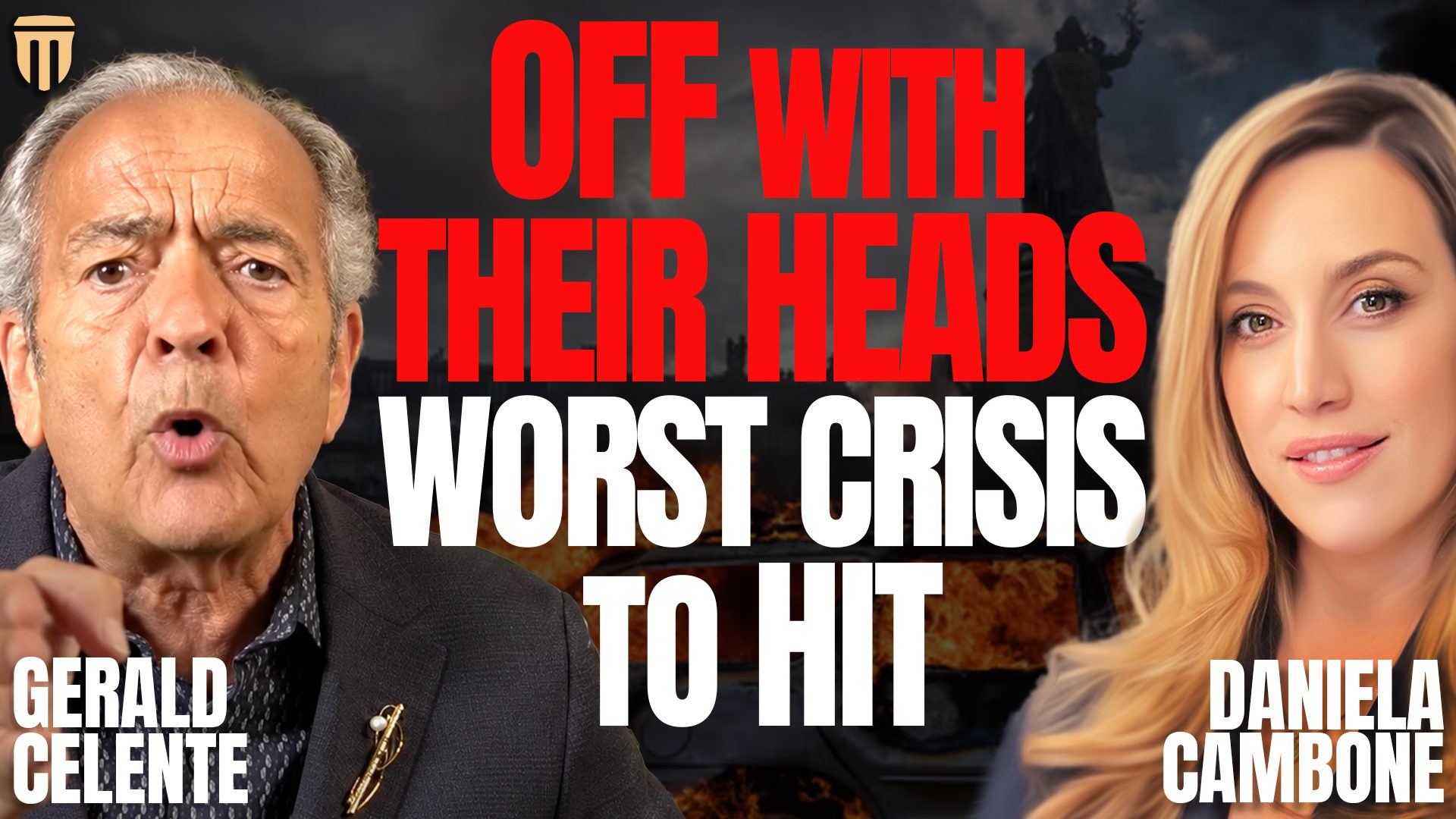
In a new interview with ITM Trading’s Daniela Cambone, the founder of the Trends Research Institute and publisher of Trends Journal delivered one of his starkest forecasts yet: a socioeconomic and geopolitical crisis that he believes could surpass even the Great Depression.
And while Wall Street continues to attract enormous amounts of capital, Celente argues that the financial markets are increasingly disconnected from the economic struggles facing ordinary Americans.
His message is clear: The warning signs are already visible. The question is whether investors recognize them before the next major financial shock.
The Economic Crisis Hiding Behind Wall Street’s Optimism
According to Celente, one of the most dangerous misconceptions about the economy is that rising stock prices necessarily indicate widespread financial prosperity.
“There’s no relationship between Wall Street, the government, and Main Street,” he told Cambone.
He pointed to the concentration of stock market wealth among the richest Americans, arguing that strong equity markets provide a misleading picture of household financial security.
At the same time, inflation continues to squeeze consumers, with higher housing, energy, and transportation costs putting pressure on family budgets.
Consider the growing divide:
- Wealth concentration: Stock ownership is heavily concentrated among high-income households, meaning market gains disproportionately benefit those already holding significant financial assets.
- Consumer spending: Celente argues that spending by wealthier households can mask financial weakness among middle- and lower-income Americans.
- Housing affordability: Rising home prices and financing costs have made homeownership increasingly difficult for younger generations.
- Retirement security: Older Americans dependent on savings and fixed incomes remain vulnerable to persistent increases in living costs.
Cambone described the situation as a K-shaped economy, where financially secure households continue advancing while others fall further behind.
The danger is that a rising stock market can conceal weakening financial foundations until the divide becomes impossible to ignore.
For retirees and investors approaching retirement, that disconnect raises an uncomfortable question: How much of their financial security depends on asset prices remaining elevated?
Inflation and the Middle-Class Squeeze: Why Americans Are Falling Behind
One of the most revealing moments in the interview came when Cambone and Celente discussed the changing economics of homeownership.
Celente recalled a time when younger Americans could purchase homes, establish independent businesses, and build middle-class wealth without requiring extraordinary financial resources.
Today, that path has become considerably more difficult.
The National Association of Realtors’ 2025 Profile of Home Buyers and Sellers found that:
- The median age of first-time homebuyers reached 40, a record high.
- First-time buyers represented just 21% of home purchases, the lowest share recorded.
- Before 2008, first-time buyers typically represented approximately 40% of the market.
These figures illustrate how profoundly the affordability landscape has shifted.
Celente also pointed to the disappearance of independently owned businesses, arguing that corporate consolidation has weakened the economic opportunities that once supported the American middle class.
For older Americans, this creates another financial challenge.
Parents and grandparents who expected to use their savings for retirement may instead find themselves helping adult children manage housing expenses, debts, and everyday living costs.
The middle-class crisis is no longer confined to younger generations. It is increasingly becoming a multigenerational financial burden.
Oil Prices and Geopolitical Conflict: A New Inflation Shock
Celente believes the escalating conflict involving Iran represents another major threat to global economic stability.
During the interview, he criticized political leaders for suggesting that the economic consequences of war could be easily contained.
His concern centers on energy prices.
Oil is not simply a commodity traded by investors. It is a foundational cost embedded throughout the global economy.
When energy prices rise, the financial consequences spread through multiple industries:
- Transportation: Higher diesel costs increase expenses for trucking and freight companies.
- Food: Agricultural production, processing, and distribution become more expensive.
- Manufacturing: Higher energy and shipping costs place additional pressure on producers.
- Households: Consumers face increased costs at gas stations and potentially across everyday purchases.
The concern is supported by recent energy data.
On October 8, 2026, AAA reported a national average gasoline price of $4.36 per gallon, calling it the highest level ever recorded for that time of year.
By October 28, the average had eased to approximately $4.25, but remained well above the roughly $3.04 recorded a year earlier.
Energy inflation does not stop at the gas pump. It can spread through nearly every part of the economy, eroding purchasing power even when headline inflation appears to moderate.
Celente fears that prolonged geopolitical conflict could intensify those pressures, further undermining households already struggling with higher costs.
The AI Bubble: Is Wall Street Repeating the Dot-Com Crash?
One of Celente’s most provocative predictions involves the artificial intelligence investment boom.
He calls the emerging risk “Dot Combust 2.0,” drawing a direct comparison to the technology bubble that burst in 2000.
Celente recalled that his publication warned about the original dot-com collapse in 1999, before the Nasdaq peaked in March 2000 and began its steep decline.
Now he sees similarities in the enormous capital flowing into AI-related businesses.
His concern is not that artificial intelligence lacks long-term potential.
It is that investors may be paying prices that assume extraordinary future growth before companies have demonstrated sustainable returns on the investments being made.
The risks include:
- Elevated valuations: Share prices may reflect optimistic expectations that leave little room for disappointment.
- Massive infrastructure spending: AI development requires expensive computing capacity, energy, and data centers.
- Debt exposure: Companies relying on borrowed capital face refinancing pressure when interest rates remain elevated.
- Competitive disruption: Rapid technological innovation could undermine today’s leading companies before they recover their investments.
Celente also warned about increasing competition from China, arguing that American investors may be underestimating the pace of technological development overseas.
History offers a cautionary lesson.
The Nasdaq Composite lost roughly 78% of its value between its March 2000 peak and October 2002 trough.
A transformative technology can change the world while still producing devastating investment losses for shareholders who pay too much for future growth.
Celente believes another major technology-driven market correction could trigger a broader reckoning across financial markets.
That outcome is a forecast, not a certainty. But for investors heavily exposed to equities, the historical parallel raises an important portfolio-risk question.
Commercial Real Estate: Another Financial Risk Hiding in Plain Sight
Beyond AI valuations, Celente identified commercial real estate as another vulnerable part of the financial system.
The problem is straightforward.
Many commercial buildings continue to face the consequences of changing workplace patterns, weak office demand, and elevated borrowing costs.
Property owners who financed buildings when interest rates were much lower may face substantially more expensive refinancing conditions.
At the same time, reduced occupancy can place pressure on rental income and property valuations.
This creates a potentially dangerous combination:
- Falling or stagnant property income
- Higher debt-servicing and refinancing costs
- Reduced property valuations
- Greater credit risk for lenders exposed to commercial real estate
When a heavily indebted property loses value while its financing costs rise, the pressure can spread beyond the building owner to lenders and investors.
Not every commercial property or financial institution faces the same risk. Nevertheless, Celente sees the sector as another possible source of instability if economic conditions deteriorate.
A Gen Z Revolution: When Economic Frustration Becomes Social Unrest
Economic pressures are not confined to investment portfolios.
Celente believes they are also fueling growing political and social frustration around the world.
During the interview, Cambone described witnessing demonstrations in Italy involving younger people concerned about their financial futures and workers struggling with rising fuel costs.
Celente connected those observations to one of his major forecasts for 2026: a Gen Z Revolution.
He argues that younger generations increasingly view the traditional economic bargain as broken.
They face expensive housing, uncertain career opportunities, concentrated corporate power, and a growing sense that financial independence is moving beyond their reach.
According to Celente, those pressures could contribute to more widespread protests and political instability.
He expects the frustration to extend beyond younger generations as rising costs affect a broader portion of society.
His prediction of escalating unrest remains speculative, but its underlying economic concern is worth examining.
When economic opportunity weakens and living costs rise faster than household resources, financial stress can become a source of broader political instability.
For investors, that introduces additional uncertainty into an already complicated economic outlook.
Gold and Silver: Why Celente Remains Bullish Despite the Selloff
With warnings about inflation, excessive debt, potential market instability, and geopolitical conflict mounting, Cambone turned the conversation toward precious metals.
She noted that gold had experienced a significant pullback and asked Celente whether the weakness was part of a larger shift.
His response was revealing.
Celente acknowledged that he had not expected gold and silver prices to decline as sharply as they had during the period discussed.
But his longer-term view remained bullish.
He argued that rising inflation and declining currency purchasing power continue to support the case for precious metals, even when short-term market movements contradict those fundamentals.
Celente believes that a major equity-market correction could eventually renew demand for gold and silver as investors reassess financial risk.
However, precious metals do not move in a straight line. Gold and silver can fall during periods of market stress, particularly when investors liquidate assets to raise cash. Higher real interest rates can also weigh on their prices.
His forecast of a major rally is therefore not guaranteed.
Still, the broader distinction between physical precious metals and financial assets dependent on intermediaries deserves attention.
Gold and silver have historically served as stores of value across monetary systems and periods of economic disruption.
Unlike stocks, bonds, or bank deposits, physical precious metals held outright do not represent someone else’s promise to pay.
That does not eliminate price volatility, storage considerations, or liquidity costs. But it does create a different form of ownership.
Gold vs. Dollar: Protecting Purchasing Power During Monetary Uncertainty
The debate over gold vs. dollar ultimately comes down to purchasing power.
The U.S. dollar remains the world’s dominant reserve currency, but its domestic purchasing power has declined substantially over decades of inflation.
For Americans living on fixed incomes or drawing down retirement savings, even moderate inflation can have a significant cumulative effect.
At an average annual inflation rate of 3%, a dollar would lose approximately 26% of its purchasing power over ten years.
This is why physical gold and silver are often considered within broader wealth preservation strategies.
They offer potential benefits that differ from conventional financial holdings:
- Tangible assets: Physical gold and silver are assets investors can own directly.
- Monetary diversification: Precious metals provide exposure outside exclusively dollar-denominated financial claims.
- Historical inflation hedge: Gold has preserved purchasing power over certain long historical periods, although it is not a reliable inflation hedge over every shorter period.
- Reduced counterparty dependence: Properly held physical metals do not require a bank or corporate issuer to fulfill a payment obligation.
The distinction becomes especially important when retirement portfolios are heavily concentrated in paper financial assets.
Precious metals are not a substitute for cash reserves, income-producing investments, or a diversified retirement strategy.
But for investors concerned about monetary instability, physical gold and silver can serve as one component of a long-term plan designed around protecting purchasing power.
The Worst Economic Crisis in Modern History: What Investors Should Watch Next
Celente’s central warning is that several vulnerabilities may be converging at once.
Persistent inflation is reducing household purchasing power.
Geopolitical conflict is raising energy costs and economic uncertainty.
Elevated technology valuations could create significant market losses if earnings fail to justify expectations.
Commercial real estate remains exposed to financing challenges.
And growing financial inequality is placing additional pressure on the middle class.
Celente believes these forces could eventually combine into a crisis more severe than the Great Depression.
That is an extreme forecast, not an established economic outcome. The timing, severity, and interaction of these risks remain uncertain.
Nevertheless, the interview highlights why investors should consider more than the latest stock market rally when assessing financial security.
For Americans approaching or already living in retirement, the relevant question is not simply whether markets will continue rising.
It is whether their savings, income sources, and asset allocations are prepared for a wider range of economic conditions.
Conclusion: The Time to Evaluate Financial Risk Is Before a Crisis
Gerald Celente’s warning is unmistakable.
He believes the world is entering a period of extraordinary financial, economic, and geopolitical instability.
Whether his worst-case forecast materializes remains to be seen.
But the pressures he identifies—from elevated living costs and stretched market valuations to geopolitical uncertainty—are real considerations for anyone concerned about preserving wealth.
The greatest danger may not be a crisis investors can see coming. It may be the assumption that yesterday’s financial conditions will continue indefinitely.
For those concerned about inflation, dollar purchasing power, and financial-market volatility, now may be an appropriate time to review retirement exposures, evaluate diversification, and understand the role physical gold and silver could play in a long-term wealth preservation strategy.
Because protecting wealth begins with understanding what could put it at risk.
About ITM Trading
ITM Trading has over 28 years of experience helping clients safeguard their wealth through personalized strategies built on physical gold and silver. Our team of experts delivers research-backed guidance tailored to today’s economic threats.
THINKING ABOUT PURCHASING GOLD & SILVER?
Get expert guidance from our team of analysts with 28+ years of experience.
👉 [SCHEDULE YOUR CALL HERE] or call 866-706-9061