The Road to U.S. Hyperinflation Has Already Begun | GRH
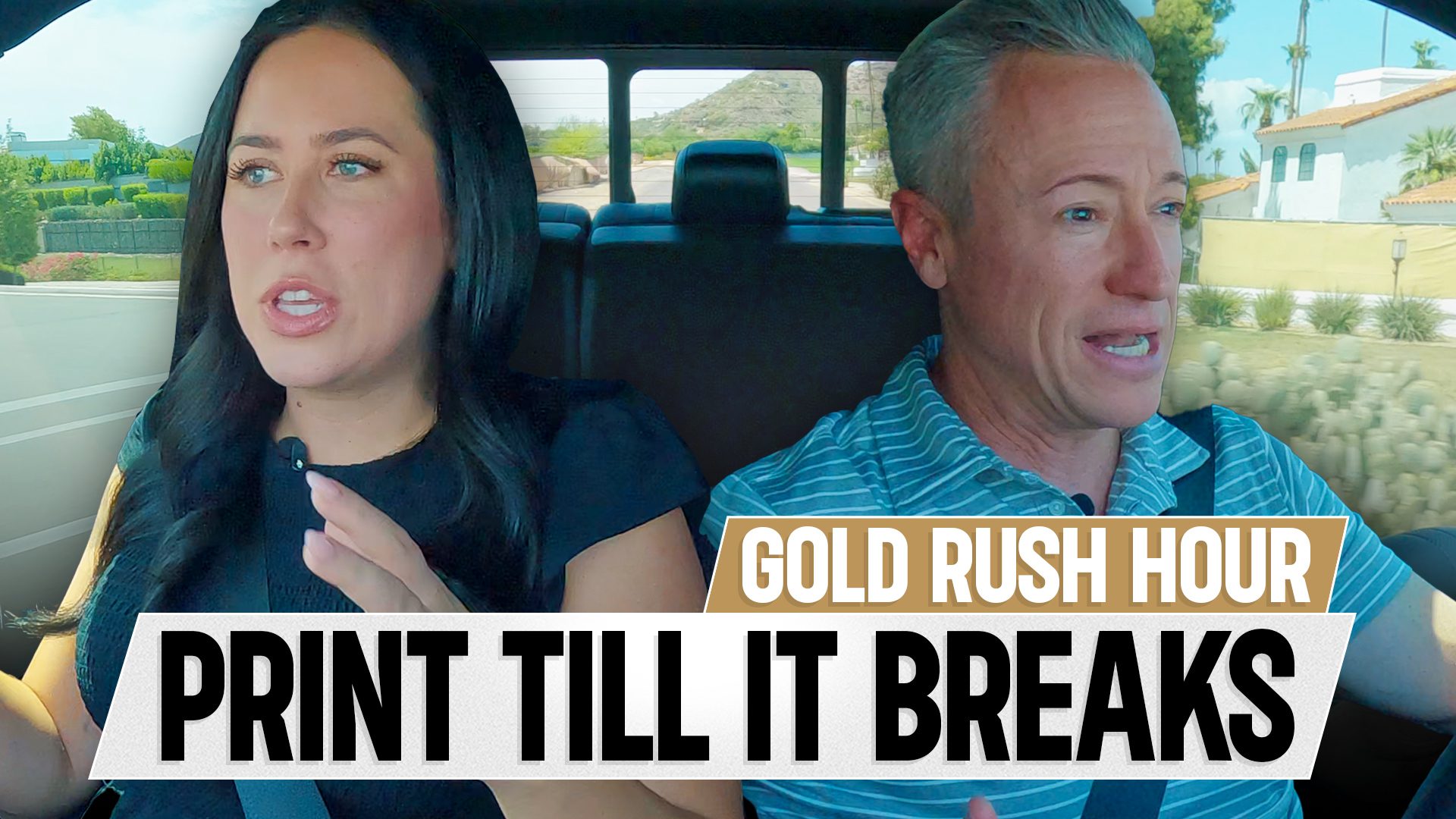
U.S. hyperinflation risks are rising as debt, bond-market intervention, and money creation threaten the dollar’s long-term purchasing power.
U.S. Hyperinflation May Be Closer Than Most Americans Think
What if the road to U.S. hyperinflation has already begun—and most Americans simply don’t recognize the warning signs?
Federal debt keeps climbing, borrowing remains essential to fund government spending, and policymakers continue finding new ways to keep the Treasury market liquid.
In the latest Gold Rush Hour, Taylor and Eric argue that the real danger is not one dramatic event. It is the steady normalization of debt, intervention, and monetary support.
For retirees and savers, that matters because inflation attacks purchasing power long before a currency crisis becomes obvious.
The Bond Market Is Flashing Warning Signs
The U.S. Treasury market sits at the center of the global financial system.
When demand weakens or investors demand higher yields, borrowing becomes more expensive for the government. That pressure can eventually flow into mortgages, business loans, consumer credit, and federal interest costs.
The episode highlights Treasury bond buybacks and increased reliance on short-term debt as signs of growing intervention.
These policies may be described as liquidity management rather than quantitative easing, but the broader issue remains:
Why does the world’s most important debt market require increasingly active support?
More debt leads to higher interest expense. Higher interest expense can produce larger deficits. Larger deficits require even more borrowing.
That is how a debt problem can become a currency problem.
The Money-Printing Cycle Is Becoming Normal
In 2008 and 2020, massive monetary intervention was presented as an emergency response.
Today, the concern is that intervention is becoming structural.
As Eric explains, meaningful austerity does not appear to be the direction Washington is taking. If spending continues while debt-service costs rise, policymakers may eventually face the same choice they have faced before: allow markets to break or provide more liquidity.
The question may no longer be whether policymakers print during the next crisis—but whether they can afford not to.
For Americans on fixed incomes, that is particularly dangerous. Wages can sometimes rise with inflation. Retirement savings may not.
Weimar Germany Shows What Currency Collapse Can Do
The episode points to Weimar Germany as an extreme example of what happens when confidence in money collapses.
Gold reportedly moved from roughly 170 German marks per ounce early in the hyperinflationary period to about 87 trillion marks per ounce near the end.
The lesson is not that America will repeat Weimar Germany exactly.
The lesson is that when the currency becomes the problem, nominal prices stop telling the full story.
The real question is not how many dollars gold is worth. It is how much purchasing power those dollars still have.
Could the Dollar Lose Reserve-Currency Dominance?
The dollar’s global reserve role has historically created enormous demand for U.S. assets.
But if international confidence weakens, financing America’s deficits could become more difficult.
The episode also discusses central-bank gold accumulation and the possibility of a future monetary system involving more centralized digital currencies.
That outcome remains speculative, but the underlying trend is important: governments and central banks are already thinking about a world in which the dollar may not dominate forever.
Gold and Silver as Wealth Preservation
This is where physical gold and silver become especially relevant.
Gold cannot be printed by a central bank. Physical precious metals are tangible assets that do not depend on a bank, corporation, or government promise.
That makes the gold vs. dollar comparison especially important when the risk being discussed is currency devaluation itself.
Gold and silver have historically served as:
- Tangible assets
- Stores of purchasing power
- Potential inflation hedges
- Forms of wealth preservation outside the banking system
They can still experience volatility. Gold may even fall temporarily during a liquidity crisis as investors sell assets to raise cash.
But the underlying thesis does not depend on today’s price.
It depends on what happens to the currency over time.
The Real Risk Is Doing Nothing
Hyperinflation is not guaranteed.
But persistent deficits, rising debt, growing interest costs, intervention in the bond market, and continued monetary support all deserve attention.
The biggest mistake may be assuming policymakers will eventually find a painless solution.
You do not need to predict exactly when the system changes. You need to decide how much of your wealth should depend entirely on the dollar remaining stable.
About ITM Trading
ITM Trading has over 28 years of experience helping clients safeguard their wealth through personalized strategies built on physical gold and silver. Our team of experts delivers research-backed guidance tailored to today’s economic threats.
THINKING ABOUT PURCHASING GOLD & SILVER?
Get expert guidance from our team of analysts with 28+ years of experience.
👉 [SCHEDULE YOUR CALL HERE] or call 866-351-4219