

Gold Just Fell as Inflation Surges (The Next Big Print Is Coming)

Gold falls as inflation surges to 3.7%. Discover how rising Treasury yields, U.S. debt, and future money printing threaten purchasing power.
Gold Falls While Inflation Surges: What’s Really Happening?
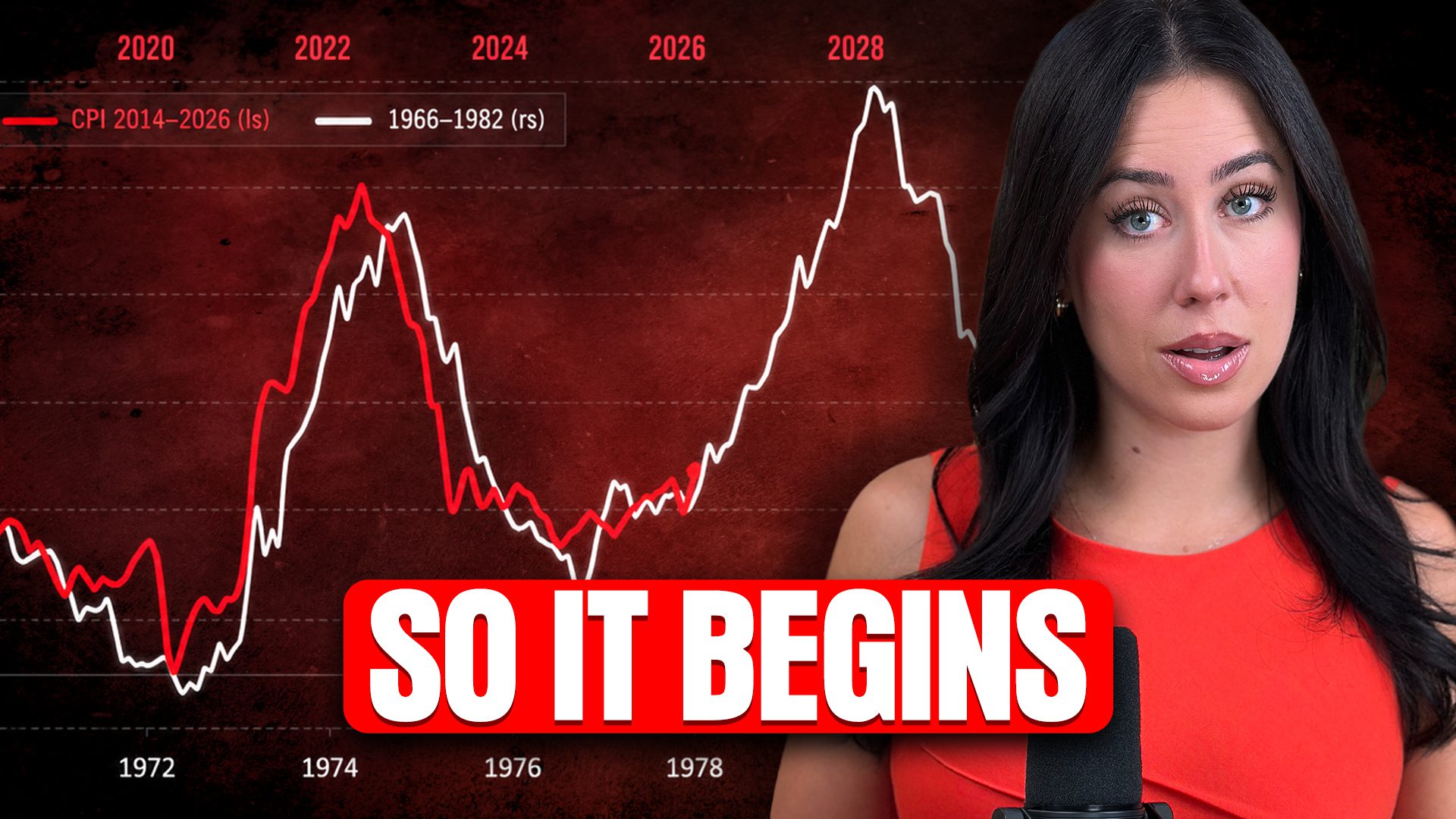
Inflation is rising, gold is falling, and America’s debt crisis is getting worse. So why isn’t gold soaring?
The relationship between gold and inflation can confuse investors watching short-term market movements. September’s inflation rate reportedly climbed to 3.7%, up from 3.4% in August, nearly doubling the Federal Reserve’s 2% target.
Yet gold declined following the inflation announcement.
The explanation? Investors anticipate that persistent inflation could force the Federal Reserve to maintain higher interest rates, making interest-bearing investments more attractive.
But this short-term reaction overlooks a much bigger threat: America’s exploding debt burden and the possibility of another massive round of money printing.
Inflation Is Destroying Your Purchasing Power
Inflation doesn’t simply increase prices. It reduces what your dollars can buy.
Consider $100,000 held in cash since 2020. Using Taylor Kenney’s illustrative estimate, that money now purchases roughly $76,000 worth of goods measured in 2020 dollars.
That’s approximately 24% of purchasing power gone.
For retirees relying on fixed pensions, Social Security, or savings, this erosion becomes particularly dangerous.
Even Social Security’s announced 3.6% cost-of-living adjustment for 2027 may provide limited relief for households experiencing rising expenses.
The problem isn’t just today’s inflation rate. It’s years of compounding price increases that permanently weaken purchasing power.
And the government’s mounting debt problem could make matters worse.
The U.S. Debt Crisis Is Becoming an Interest Rate Crisis
America’s national debt is approaching $40 trillion, and servicing that debt is increasingly expensive.
When the Treasury issues bonds, investors demand interest. Higher Treasury yields translate into greater borrowing costs as existing debt matures and gets refinanced.
Federal net interest expenses have already exceeded $1 trillion annually.
Meanwhile, investors purchasing long-term Treasury securities must consider decades of inflation risk.
Why lock money into a 20-year bond if inflation could substantially erode its future purchasing power?
That uncertainty can push investors to demand higher yields.
Treasury officials may respond by issuing more short-term debt instead of longer-term bonds. Although shorter maturities can lower immediate borrowing costs, they require frequent refinancing.
The underlying debt doesn’t disappear.
It simply comes due sooner.
Federal Reserve Money Printing: The Next Big Risk
Here’s where America’s debt crisis becomes especially concerning.
As interest expenses increase, government borrowing needs may expand further.
If Treasury markets experience severe instability, the Federal Reserve could face pressure to intervene through asset purchases or other liquidity measures.
We’ve witnessed large-scale monetary intervention before, including during the 2008 financial crisis and the 2020 pandemic.
Another major monetary expansion could create additional inflation risks, particularly if price pressures remain elevated.
Such intervention isn’t guaranteed. But the combination of persistent deficits, rising interest expenses, and inflation creates difficult choices for policymakers.
And those choices matter directly to anyone holding dollar-denominated savings.
Why Physical Gold and Silver Still Matter
Today’s gold price decline doesn’t eliminate the long-term case for owning physical precious metals.
Gold and silver offer something paper currencies cannot: tangible assets that central banks cannot create through monetary policy.
For Americans focused on wealth preservation, physical metals may provide diversification against currency depreciation and financial uncertainty.
Gold has historically served as a long-term store of value, while silver combines monetary history with industrial demand.
Neither guarantees protection against inflation, and both can experience significant price volatility.
However, the fundamental distinction remains: dollars can be created electronically, while physical precious metals have limited supplies.
Gold Fell, but the Debt Problem Remains
Short-term gold weakness doesn’t erase America’s long-term financial challenges.
Inflation remains elevated, interest expenses are mounting, and policymakers face increasingly difficult fiscal and monetary decisions.
Rather than attempting to predict gold’s next daily movement, consider whether your retirement strategy adequately addresses purchasing-power risk.
The next major monetary intervention remains uncertain. Preparing a diversified wealth preservation strategy before conditions deteriorate may be more important than trying to time the market.
About ITM Trading
ITM Trading has over 28 years of experience helping clients safeguard their wealth through personalized strategies built on physical gold and silver. Our team of experts delivers research-backed guidance tailored to today’s economic threats.
THINKING ABOUT PURCHASING GOLD & SILVER?
Get expert guidance from our team of analysts with 28+ years of experience.
👉 [SCHEDULE YOUR CALL HERE] or call 866-351-4219.