Fed PANIC Buying Begins as U.S. Banks Brace for CRE Fallout

Fed Treasury buying, CRE delinquencies, and bank risk collide as gold and silver become critical wealth preservation assets.
The Federal Reserve is buying Treasuries again—and that should make every dollar holder pay attention.
Fed Treasury buying is not just another technical balance sheet adjustment. It is a warning signal that the system still cannot stand on its own without intervention.
According to Federal Reserve data, the Fed’s Treasury holdings are back above $4.4 trillion, while commercial real estate delinquencies are rising, redemption gates are appearing in major real estate funds, and banks remain exposed to losses from higher interest rates.
Wall Street calls it “liquidity management.”
But for financially conservative Americans, retirees, and anyone holding dollar-denominated assets, the message is much simpler:
The cracks are spreading.
Fed Treasury Buying Signals a Market That Cannot Stand Alone
The Fed does not step deeper into the Treasury market because everything is normal.
It does so because the system requires support.
After the 2020 crisis, the Federal Reserve dramatically expanded its balance sheet. Then came quantitative tightening, where the Fed allowed assets to roll off. But by late 2025, the central bank announced it would stop reducing its balance sheet beginning December 1, citing money-market liquidity concerns and declining bank reserves. Reuters reported that the Fed would stop letting Treasury securities roll off and begin reinvesting maturing Treasuries.
That is the pivot.
Not the dramatic, televised kind.
The quieter kind.
The kind that tells you the plumbing is under stress.
Why does this matter?
Because Treasury markets are supposed to be the deepest, safest, most liquid markets in the world. When they require persistent central bank support, it raises serious questions:
- Are natural buyers still willing to absorb U.S. debt at current levels?
- Can the government finance trillion-dollar deficits without monetization pressure?
- Will higher yields break the debt-dependent economy?
- Will lower yields require more Fed intervention?
This is the trap.
The U.S. needs buyers for its debt. But higher rates pressure banks, real estate, consumers, and the federal budget itself. Lower rates may require intervention, renewed balance sheet expansion, or eventually some form of yield curve control.
Either path puts the dollar’s purchasing power at risk.
Commercial Real Estate Fallout Is No Longer Theoretical
For years, commercial real estate has been called “the next Big Short.”
Now the numbers are catching up.
Trepp reported that the CMBS delinquency rate jumped 41 basis points to 7.55% in March 2026, reversing February’s decline. The five largest newly delinquent loans accounted for just over $2 billion of the nearly $5.1 billion in newly delinquent loans.
KBRA also reported stress in March, with the 30+ day delinquency rate among KBRA-rated U.S. private-label CMBS rising to 7.7%, while the broader distress rate held at 10.3%.
This is not some abstract Wall Street spreadsheet.
This is the empty office tower downtown.
The half-vacant retail center.
The refinancing cliff nobody wants to talk about.
The “extend and pretend” loan that only works as long as everyone agrees not to mark reality to market.
Commercial real estate is where high rates meet collapsing demand.
Banks and lenders have been trying to avoid recognizing losses because recognizing losses means capital gets hit. And if capital gets hit, lending tightens. If lending tightens, the economy slows. If the economy slows, more borrowers default.
That is how a contained problem becomes systemic.
Redemption Gates: When “Your Money” Suddenly Has Rules
The most dangerous phrase in finance may be: “temporary suspension of redemptions.”
Bloomberg reported that Starwood Capital Group Management halted redemptions from a $22 billion real estate fund aimed at retail investors, citing the need to preserve liquidity while waiting for commercial real estate conditions to improve.
CoStar also reported that Starwood suspended redemptions from its roughly $22.4 billion non-traded real estate investment fund, as exit requests rose in response to stubbornly high interest rates.
That should send a chill through every investor who assumes liquidity is guaranteed.
Because liquidity is always promised—until it is needed most.
The pattern is familiar:
- Investors ask for their money back.
- The fund says withdrawals are too heavy.
- Management restricts exits “for the good of all shareholders.”
- Asset values remain uncertain.
- Investors discover they owned a claim, not control.
That is the difference between paper wealth and tangible assets.
When you own shares, claims, pooled funds, or bank deposits, you are inside a rule-based system. And rules can change.
When you hold physical gold and silver directly, there is no redemption desk, no withdrawal gate, and no fund manager deciding whether today is convenient for you to access your wealth.
Private Credit, CRE, and Banks Are Part of the Same Debt Machine
Private credit was marketed as a sophisticated alternative to traditional banking.
Commercial real estate was marketed as a stable income asset.
Treasuries were marketed as risk-free.
But all three depend on the same assumption:
Debt can always be refinanced.
That assumption worked in a world of near-zero interest rates. It becomes dangerous when rates stay elevated.
The U.S. financial system spent more than a decade getting addicted to cheap capital. Now that the cost of capital has reset higher, weak borrowers are exposed. Illiquid assets are exposed. Overvalued funds are exposed. Banks with concentrated CRE exposure are exposed.
And the Federal Reserve is boxed in.
If it keeps rates high, more debt breaks.
If it cuts too aggressively, inflation and dollar weakness can accelerate.
If it supports Treasury markets more directly, it risks signaling that America’s debt market can no longer clear without central bank help.
This is why Fed Treasury buying matters.
It is not just about the Fed’s balance sheet.
It is about confidence in the entire dollar-based system.
Could Yield Curve Control Be the Next Step?
The nightmare scenario is not just recession.
It is financial repression.
If U.S. debt costs rise too far, policymakers may eventually face pressure to cap yields. That policy is known as yield curve control, where the central bank targets a maximum yield and buys bonds as needed to enforce it.
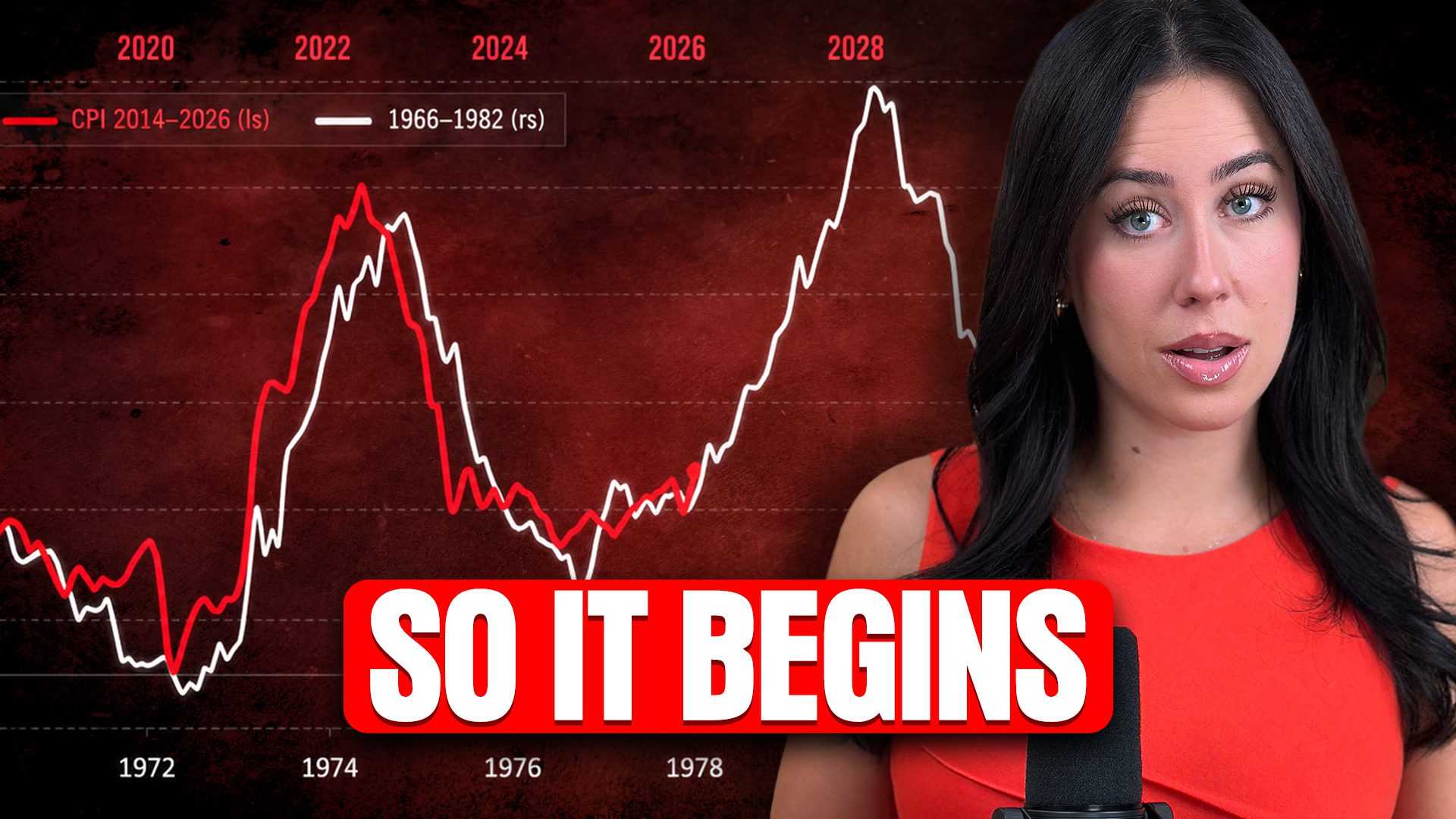
The U.S. has used yield curve control before. During and after World War II, the Federal Reserve helped cap Treasury yields to support government financing. The result was an era where savers were often paid less than the true rate of inflation.
That is the hidden tax.
Not voted on.
Not announced as confiscation.
But felt every time groceries, insurance, medical care, and property taxes rise faster than your income.
For retirees, this is the real danger: not just losing money in a crash, but losing purchasing power year after year while the system insists everything is under control.
Gold and silver matter precisely because they sit outside that paper promise structure.
Gold & Silver Tie-In: Tangible Assets in a System Built on Promises
When confidence breaks, investors rediscover what history never forgot.
Gold and silver are not someone else’s liability.
A Treasury is a promise from the government.
A bank deposit is a liability of the bank.
A money market fund is a structure with rules.
A private credit fund is a claim on loans that may or may not be marked honestly.
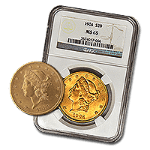
Physical gold and silver are different.
They are tangible assets. They do not need a counterparty to perform. They do not depend on a fund manager’s redemption window. They do not require a central bank to maintain confidence.
That is why central banks have been accumulating gold in recent years as concerns over sanctions, dollar weaponization, and reserve diversification have grown. The World Gold Council has repeatedly noted strong central bank gold demand, with official-sector buying remaining a major force in the gold market.
For financially conservative Americans, the gold vs dollar question is no longer theoretical.
It is practical.
- If inflation persists, gold and silver can serve as an inflation hedge.
- If banks tighten lending, tangible assets become more valuable.
- If funds gate redemptions, direct ownership matters.
- If the dollar weakens, wealth preservation becomes urgent.
- If confidence in paper assets falls, physical metals offer historical protection.
Gold and silver are not about speculation. They are about control.
Control outside the banking system.
Control outside Wall Street.
Control outside the next “temporary” rule change.
What Comes Next for Banks and Dollar Holders?
The warning signs are lining up.
The Fed is no longer simply shrinking away from crisis-era intervention. CRE delinquencies are rising. Private funds are restricting exits. Investors are demanding liquidity. Banks remain exposed to assets that were priced for a world of cheap money.
And yet the mainstream message remains familiar:
Do not worry.
This is contained.
The system is resilient.
We have heard that before.
In 2007, subprime was contained.
In 2008, Bear Stearns was not systemic.
In 2020, emergency intervention was temporary.
Now, in 2026, investors are being told that redemption gates are prudent liquidity management.
Maybe they are. Or maybe they are the early warning flares of a much bigger unwind.
For retirees and savers, the question is not whether every bank fails or every real estate fund collapses.
The question is whether your wealth is positioned for a system where access, purchasing power, and trust can all be impaired at the same time.
The Fed’s renewed Treasury support, the deterioration in commercial real estate, and the rise of redemption gates are not isolated events.
They are symptoms of the same underlying problem:
A debt-based financial system that cannot tolerate truly high interest rates without cracking.
For Americans holding dollars, bank deposits, retirement accounts, or paper claims, the lesson is clear. Liquidity can vanish. Rules can change. Purchasing power can erode. And official reassurance often arrives right before reality does.
Gold and silver do not solve every financial problem.
But they offer something increasingly rare in today’s system:
Direct ownership. Tangible value. Wealth preservation outside the paper maze.
About ITM Trading
ITM Trading has over 28 years of experience helping clients safeguard their wealth through personalized strategies built on physical gold and silver. Our team of experts delivers research-backed guidance tailored to today’s economic threats.
THINKING ABOUT PURCHASING GOLD & SILVER?
Get expert guidance from our team of analysts with 28+ years of experience.
👉 [SCHEDULE YOUR CALL HERE] or call 866-351-4219