80x Bigger Than Enron: $5.1 Trillion Fraud That Can Collapse Treasuries, Spark Civil War
A Financial Fraud Time Bomb Hiding in Plain Sight?
What if the next financial crisis isn’t coming from Wall Street—but from the very foundation of America’s property tax system?
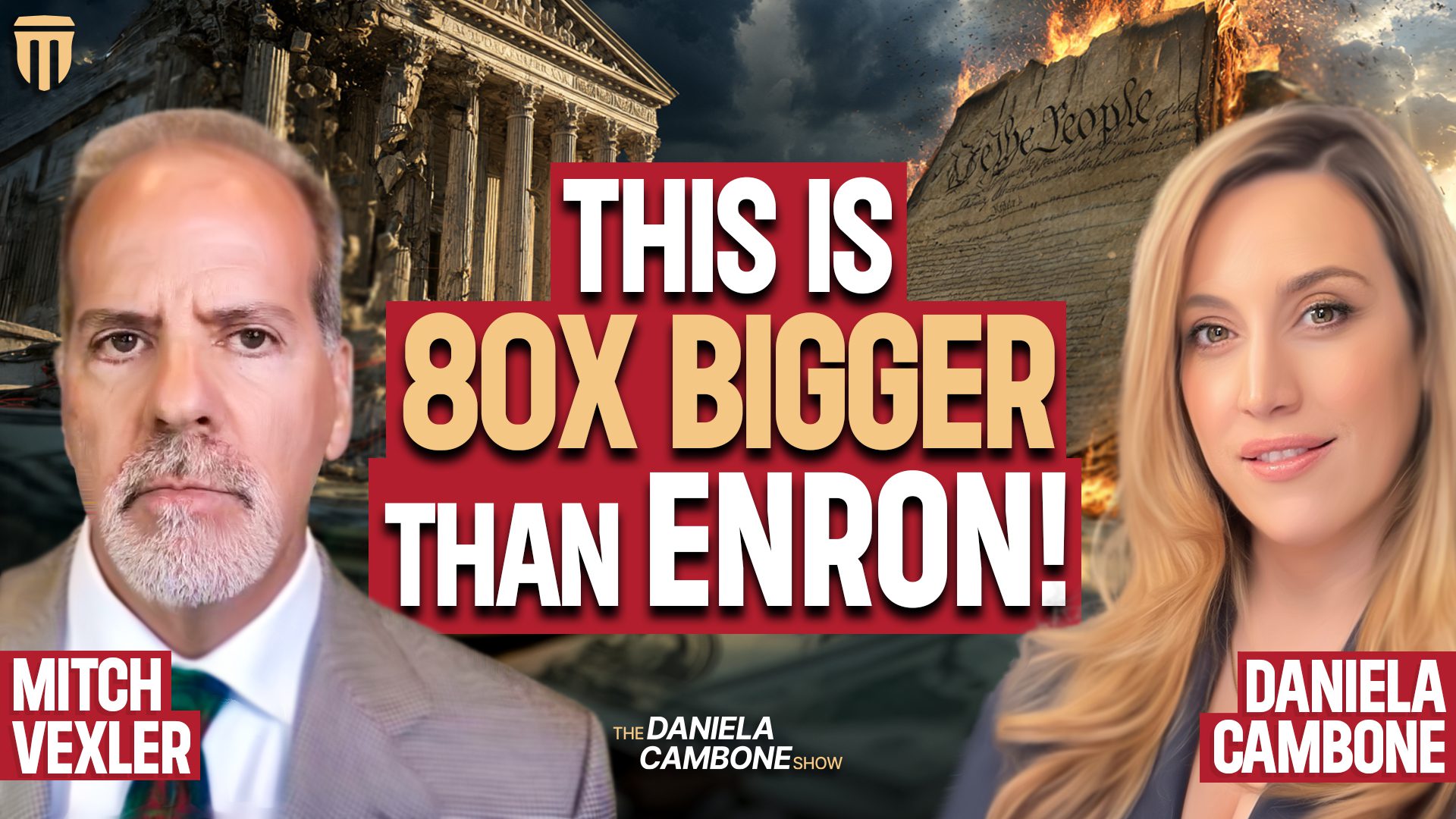
That is the explosive claim at the center of Daniela Cambone’s latest interview with researcher Mitch Vexler. According to Vexler, a $5.1 trillion bond fraud tied to property tax appraisals and school district bonds could eventually undermine confidence in U.S. Treasuries, triggering a broader financial crisis if left unresolved.
Whether every aspect of his thesis ultimately withstands judicial scrutiny remains to be seen. But the interview raises larger questions about public debt, government credibility, and the fragility of financial markets—issues investors can no longer afford to ignore.
How Property Tax Appraisals Could Impact Bond Markets
Vexler argues that inflated property valuations create the foundation for school district bonds that may not accurately reflect underlying economic realities. His broader contention is that confidence—not just cash flow—is what ultimately supports bond markets.
His argument follows this chain of events:
- Property values become increasingly inflated.
- School districts issue bonds backed by those valuations.
- Investors purchase those bonds believing the underlying collateral is sound.
- If confidence in that system breaks down, broader bond markets could face intense selling pressure.
According to Vexler, credibility is the key variable—not merely accounting.
As history repeatedly shows, financial markets rarely collapse because investors slowly lose confidence. They collapse when confidence disappears all at once.
Why Credibility Matters More Than Mathematics
One of the central themes throughout the interview is that financial systems depend on trust.
Vexler argues that if investors begin questioning one large segment of the municipal bond market, algorithms and institutional investors could rapidly reassess risk across multiple fixed-income markets—including U.S. Treasury securities.
His concern centers around market psychology:
- Bond prices depend on perceived safety.
- Algorithms react to volatility faster than humans.
- Liquidity can disappear in hours.
- Panic often spreads far beyond the original problem.
Whether or not this scenario unfolds as described, history demonstrates that confidence shocks can spread quickly across interconnected financial markets.
A Crisis “80 Times Bigger Than Enron”?
During the interview, Vexler compares the alleged exposure to Enron’s collapse.
His claim is striking:
“The 5.1 trillion is 80x bigger than Enron.”
Enron destroyed investor confidence in corporate accounting.
The 2008 financial crisis exposed weaknesses inside mortgage-backed securities.
If confidence in municipal debt were ever significantly impaired, markets could begin repricing risk much more broadly.
Again, these are Vexler’s projections rather than established outcomes, but they underscore an important reality:
Modern financial systems are built upon confidence as much as cash flow.
Could U.S. Treasuries Become the Next Domino?
Perhaps the most controversial argument made in the interview is that problems inside school district bonds could eventually spill into Treasury markets.
Vexler believes algorithms would interpret collapsing confidence in one bond sector as a signal to reduce exposure elsewhere.
His thesis suggests:
- Municipal bond credibility weakens.
- Institutional selling accelerates.
- Treasury prices decline.
- Interest rates rise sharply.
- Credit conditions tighten across the economy.
Many market professionals would debate whether this sequence would occur exactly as described. However, investors have witnessed similar contagion effects during previous financial crises when confidence evaporated.
Why Investors Should Pay Attention to Systemic Risk
Regardless of whether one agrees with every conclusion presented, the interview highlights several undeniable realities.
America continues carrying:
- Massive federal deficits
- Historically high debt levels
- Elevated interest expenses
- Increasing pressure on state and local governments
- Persistent questions surrounding fiscal sustainability
Financial markets often ignore structural risks—until they suddenly don’t.
History has repeatedly shown that systemic problems tend to remain invisible until confidence breaks.
What This Could Mean for Gold and Silver
Periods of declining confidence have historically driven investors toward tangible assets.
When questions arise surrounding debt, currencies, or government obligations, many investors begin evaluating assets that carry no counterparty risk.
That’s one reason physical gold and silver continue to play an important role in long-term wealth preservation.
Unlike bonds or financial contracts, physical precious metals are not dependent on another institution’s promise to pay.
For investors concerned about:
- Currency debasement
- Sovereign debt
- Banking instability
- Inflation
- Financial contagion
gold and silver have historically served as long-term stores of value.
The debate isn’t simply gold vs. dollar.
It’s whether a portion of your wealth should exist outside the traditional financial system.
Preparing for an Uncertain Financial Future
Whether Mitch Vexler’s legal claims ultimately reshape public finance or not, the broader discussion reflects growing skepticism toward debt-driven financial systems.
Markets depend on confidence.
Governments depend on credibility.
Bond markets depend on both.
As uncertainty increases, prudent investors often focus less on predicting every outcome—and more on preparing for multiple possibilities.
That is precisely why physical gold and silver continue attracting attention whenever financial risks begin to multiply.
About ITM Trading
ITM Trading has over 28 years of experience helping clients safeguard their wealth through personalized strategies built on physical gold and silver. Our team of experts delivers research-backed guidance tailored to today’s economic threats.
THINKING ABOUT PURCHASING GOLD & SILVER?
Get expert guidance from our team of analysts with 28+ years of experience.
👉 SCHEDULE YOUR CALL HERE or call 866-706-9061