20 Million Americans Are Preparing For the Next Crisis, How Gold, Silver Can Save You!
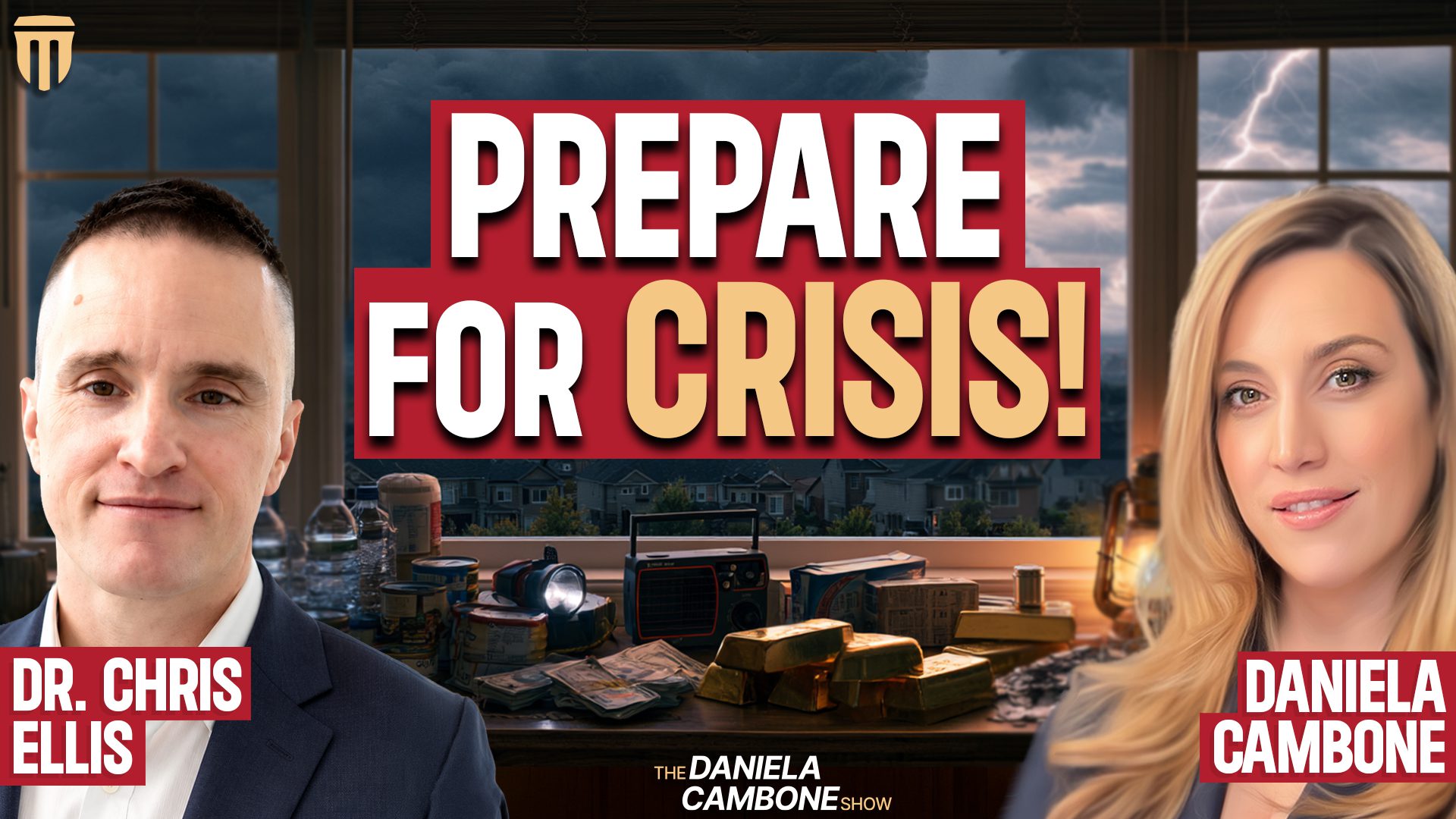
What if the people being mocked as “preppers” are simply recognizing risks the rest of America would rather ignore?
According to disaster-readiness expert Dr. Chris Ellis, potentially 20 million or more Americans are already preparing to function through prolonged disruptions—and for some, financial preparedness includes physical gold and silver.
That doesn’t mean millions of Americans are building bunkers or preparing for civilization to end.
It means they are asking a much more practical question:
What happens if the systems we take for granted suddenly stop working?
Power. Water. Transportation. Banks. ATMs. Grocery stores. Electronic payments.
The COVID era gave millions of people a glimpse of how quickly normal life can be disrupted. Hurricanes, wildfires, winter storms, cyberattacks, regional blackouts and banking disruptions continue to reinforce the same lesson.
And Ellis argues that preparedness should not be dismissed as paranoia.
It should be understood as resilience.
The 20 Million Americans Preparing for a Crisis
Dr. Ellis, a career Army officer and disaster-readiness researcher, analyzed multiple years of FEMA National Household Survey data covering 2017 through 2023.
But there is an important distinction.
The “20 million” figure is not an official FEMA estimate of the number of American preppers. Ellis created his own definition of what he calls a “resilient citizen”: someone capable of remaining at home for 31 days or longer without publicly provided assistance or essential services.
Using that definition, Ellis said his analysis identified:
- Roughly 9.6 million resilient citizens in 2017
- Approximately 15 million by 2020, around the beginning of the COVID crisis
- Roughly 20 million to 23 million people in the early 2020s
And they don’t fit the stereotype.
They include urban residents and rural residents. They cross racial and educational lines. Some live on acreage and raise livestock. Others live in apartments where storing months of food and water may be impossible.
Preparedness, in other words, is becoming less of a fringe identity and more of a practical response to uncertainty.
The Real Prepper Isn’t Who You Think
Popular culture has spent decades depicting preppers as extremists waiting for the apocalypse.
Ellis’s analysis paints a very different picture.
Many are ordinary households building additional layers of independence into their lives.
That might mean keeping emergency food and water.
It could mean learning how to bake bread, grow vegetables, preserve food, keep chickens or repair basic equipment.
For someone living in New York City, preparedness may mean having several days of necessities available and an evacuation plan.
For someone living in rural Florida or North Dakota, the risks—and therefore the preparations—could be completely different.
Ellis’s advice is deliberately incremental:
Don’t go from zero to “zombie apocalypse” overnight.
Start with the disruptions most likely to affect your own household and community.
That philosophy closely resembles mainstream disaster guidance. The American Red Cross recommends a portable “Go Kit” with at least three days of supplies and a stay-at-home kit with approximately two weeks of supplies, including food, water, medication, chargers, important records and extra cash. (American Red Cross)
The difference is that Ellis asks Americans to think beyond the first few days.
What Happens When the Financial System Goes Offline?
Food and water get most of the attention in disaster planning.
Money may be just as important.
A modern economy increasingly assumes that electricity, telecommunications, bank networks and payment processors will always be available.
Swipe the card.
Tap the phone.
Open the banking app.
Withdraw cash.
Until you can’t.
Even official emergency guidance recognizes this vulnerability. The Red Cross includes extra cash among recommended emergency supplies because normal financial infrastructure can become inaccessible during a disruption. (American Red Cross)
Ellis points to historical banking disruptions and electrical outages as reminders that financial preparedness is part of disaster preparedness.
And his analysis found a particularly interesting difference between the households he classified as resilient and everyone else.
Their incomes weren’t dramatically higher.
Ellis said the average non-prepper income in his analysis was approximately $50,000, compared with roughly $56,000 among resilient citizens.
The bigger difference was emergency savings.
According to Ellis, resilient citizens were more likely to maintain emergency savings and, depending on the year examined, held roughly $1,000 to $6,000 more in those reserves.
That changes the preparedness discussion.
Resilience isn’t necessarily about being wealthy. It is about maintaining options when something goes wrong.
Why Gold and Silver Appear in the Preparedness Conversation
When Daniela asked Ellis directly whether precious metals play a meaningful role in resilient households, his answer was unequivocal:
“Absolutely.”
Ellis described resilient citizens as investing in what he calls real assets.
That can include productive land, gardens, livestock and other tangible resources.
It can also include physical gold and silver.
Ellis even noted that he had personally added more “junk silver”—older U.S. coins valued partly for their silver content—to his own holdings.
The logic is not that gold or silver can replace food, water, medicine or community.
They cannot.
Their role is different.
Physical precious metals represent wealth held outside many of the digital and institutional systems on which modern finance depends.
Unlike a bank deposit, physical gold held directly does not require a bank to open its doors.
Unlike an electronic payment, it does not require the payment network to be online.
Unlike a bond, it is not another party’s promise to repay.
That does not mean precious metals are risk-free. Gold and silver prices fluctuate, and physical metals should not be confused with an emergency cash reserve needed for immediate expenses.
But for people thinking in terms of redundancy—multiple ways of protecting purchasing power and maintaining financial options—the appeal becomes easier to understand.
Gold vs. Dollar: Preparing for a Financial Crisis
There are really two different financial emergencies to consider.
One is a short-term infrastructure disruption.
The power goes out. Electronic payments stop. ATMs are unavailable. Stores may temporarily accept only cash.
For that kind of event, physical currency and basic emergency supplies matter.
The second is a longer-term monetary disruption.
Inflation erodes purchasing power. Confidence in financial institutions weakens. Debt levels rise. A currency loses purchasing power over years rather than hours.
That is where the gold vs. dollar discussion changes.
Gold has historically been treated as a monetary asset precisely because it is scarce, tangible and independent of any single government’s promise to pay.
Silver combines monetary history with substantial industrial demand, while offering a lower per-ounce price that makes it accessible in smaller denominations.
For investors concerned about wealth preservation, physical gold and silver can therefore occupy a different role from dollars held for immediate liquidity.
Cash can help you navigate a temporary shutdown. Tangible assets may help address a longer-term loss of purchasing power.
Those are different risks—and resilient planning recognizes the difference.
The Best Preparedness Asset May Not Be Something You Can Buy
Perhaps the most important part of Ellis’s message has nothing to do with buying anything.
He divides resilience into five categories:
Social. Physical. Intellectual. Emotional. Spiritual.
Americans, he argues, tend to obsess over the physical category.
We buy generators.
We buy food.
We buy tools.
We buy supplies.
We assume Amazon can deliver resilience in a cardboard box.
But Ellis says the “bookends”—social and spiritual resilience—may be among the most important.
Do you know your neighbors?
Do you have family members you can rely on?
Could your community organize if outside assistance were delayed?
Do you have skills that remain useful without electricity or an internet connection?
Those questions matter because in a real emergency, the first person available to help may not be a government official or professional first responder.
It may be the person living next door.
Crisis Preparedness Is About Redundancy, Not Predicting Doomsday
Nobody can prepare for everything.
Ellis readily admits that he cannot.
That is precisely why his philosophy is more practical than the caricature of “prepping.”
You do not have to predict the next pandemic, hurricane, blackout, financial crisis or geopolitical shock.
You build resilience against the consequences they may have in common.
Loss of power.
Loss of transportation.
Loss of access to money.
Supply shortages.
Communication failures.
Temporary isolation.
Financial stress.
The goal is not perfect self-sufficiency.
The goal is to become a little less fragile.
One additional week of food.
Emergency water.
Some physical cash.
A backup power source.
A family communication plan.
Stronger relationships with neighbors.
Useful skills.
Emergency savings.
And, for those seeking longer-term wealth preservation, tangible assets such as physical gold and silver.
Gold and Silver as Tangible Assets in an Uncertain World
Physical gold and silver should not be viewed as magical protection against every crisis.
They should be understood in the broader context of resilience.
A well-prepared household may maintain liquidity for immediate emergencies while also diversifying some long-term wealth outside conventional financial assets.
That is why physical precious metals have remained relevant across generations.
They are tangible.
They are scarce.
They do not depend on a corporate balance sheet.
And when the concern moves beyond a temporary blackout toward inflation, currency risk or declining confidence in the financial system, their potential role as an inflation hedge and wealth-preservation asset becomes part of a much larger conversation.
Just as Ellis does not recommend preparing for a disaster with only food—or only cash—financial resilience does not have to depend on a single asset or institution.
Redundancy is the point.
Start Local. Start Small. Start Before You Need It.
Ellis ends with a simple principle:
“Fight local, win local.”
Understand the risks around your own home.
Know whether your biggest threat is a hurricane, flood, wildfire, tornado, winter storm or earthquake.
Build relationships in your community.
Learn useful skills.
Strengthen your emergency savings.
Maintain the supplies your household would need if normal services disappeared temporarily.
And consider whether all of your financial security should depend on institutions and systems that themselves may be vulnerable during a crisis.
You do not need to prepare for the end of the world.
You need to prepare for the possibility that, for a few days, weeks—or in a severe event, considerably longer—the world around you may not function the way you expect.
Twenty million Americans may already be thinking along those lines.
The more important question is whether your household has enough resilience when the next disruption arrives.
About ITM Trading
ITM Trading has over 28 years of experience helping clients safeguard their wealth through personalized strategies built on physical gold and silver. Our team of experts delivers research-backed guidance tailored to today’s economic threats.
THINKING ABOUT PURCHASING GOLD & SILVER?
Get expert guidance from our team of analysts with 28+ years of experience.
👉 [SCHEDULE YOUR CALL HERE] or call 866-706-9061