Welcome to Era of Permanent Inflation– New Fed Chair Warsh Can’t Stop It, Warns Mark Skousen
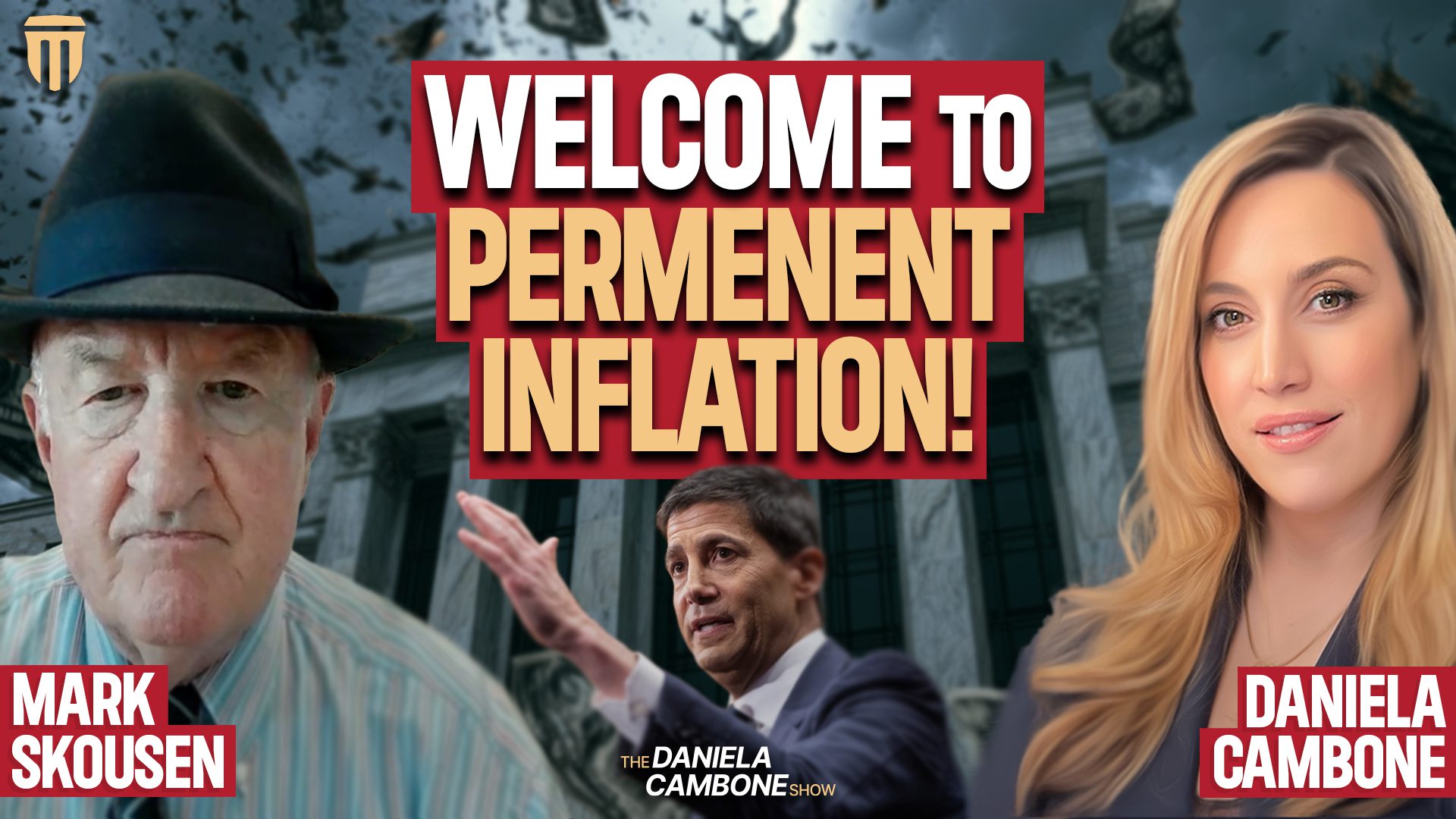
America’s Inflation Problem Isn’t Temporary Anymore
What if inflation isn’t a policy mistake—but the policy itself?
For decades, Americans were told rising prices were temporary, manageable, and necessary for economic growth. Yet every trip to the grocery store, every insurance bill, and every housing payment tells a different story.
According to renowned economist Mark Skousen, the United States has quietly entered an era of permanent inflation—a structural reality that neither politicians nor central bankers seem willing to reverse.
And despite optimism surrounding potential changes at the Federal Reserve, Skousen believes even a new Fed chair may struggle to stop what’s already been set in motion.
For retirees, savers, and anyone relying on the purchasing power of the dollar, the implications could be profound.
The Fed’s Quiet Acceptance of Permanent Inflation
The Federal Reserve was originally tasked with two primary objectives:
- Price stability
- Full employment
But somewhere along the way, the definition of “price stability” changed.
Historically, stable prices meant prices remained relatively unchanged over time. Today, the Fed openly targets approximately 2% inflation annually.
That may sound insignificant.
But over time, 2% inflation becomes a silent wealth confiscation mechanism.
Consider the math:
- 2% inflation cuts purchasing power nearly in half over 35 years
- 3% inflation reduces purchasing power by almost 60%
- Higher inflation rates accelerate wealth destruction dramatically
As Skousen points out, central bankers rarely wait for inflation to return to target levels before discussing rate cuts.
The modern monetary system has become conditioned to easy money.
And easy money inevitably creates more currency units chasing the same goods and services.
The result?
A slow but relentless decline in purchasing power.
Why the Bond Market May Be Sounding the Alarm
While many investors focus on stock indexes reaching new highs, the bond market is telling a different story.
Rising bond yields often signal growing concerns about:
- Inflation
- Government deficits
- Debt sustainability
- Currency debasement
The uncomfortable reality is that America now faces a debt burden exceeding levels once considered unimaginable.
Every percentage point increase in interest rates translates into hundreds of billions of dollars in additional financing costs.
This creates a dangerous dilemma:
Option 1: Fight Inflation Aggressively
- Higher rates
- Slower economic growth
- Increased recession risk
Option 2: Protect Economic Growth
- Lower rates
- More money creation
- Higher inflation
Politicians overwhelmingly prefer the second option.
And history suggests central banks often do as well.
Kevin Warsh: Inflation Hawk or Future Fed Insider?
One of the most intriguing developments discussed by Skousen is the growing attention surrounding Kevin Warsh as a potential Federal Reserve leader.
Warsh has historically criticized:
- Quantitative easing (QE)
- Excessive money creation
- Artificially low interest rates
His reputation as an inflation hawk has led some investors to believe he could become a modern-day Paul Volcker.
Volcker famously crushed inflation during the early 1980s by pushing interest rates to painful levels.
But today’s environment is dramatically different.
Back then:
- Federal debt was manageable
- Entitlement obligations were smaller
- Financial markets were less dependent on cheap money
Today:
- Federal debt exceeds $36 trillion
- Deficits remain historically elevated
- Markets have become addicted to liquidity
This raises a critical question:
Can any Fed chair truly fight inflation when the entire financial system depends on perpetual monetary support?
Many analysts remain skeptical.
The Illusion of Strength: Why Markets May Be Sending Mixed Signals
Mainstream headlines often point to:
- Record stock prices
- Strong employment numbers
- AI-driven growth
Yet beneath the surface, warning signs continue to emerge.
Skousen notes that smaller businesses remain under pressure while large corporations capture an increasing share of economic activity.
This creates a two-tier economy:
Winners
- Mega-cap technology firms
- AI leaders
- Government-connected industries
Strugglers
- Small businesses
- Middle-income households
- Fixed-income retirees
Meanwhile, productivity gains from artificial intelligence may not immediately translate into broad-based prosperity.
History offers a warning.
During the late 1990s dot-com boom, investors assumed revolutionary technology justified virtually any valuation.
The technology was real.
The bubble was real too.
Today’s AI revolution could produce a similar dynamic.
Why Permanent Inflation Favors Gold and Silver
If inflation becomes a permanent feature of the financial system, investors must ask a simple question:
What happens to savings held entirely in dollars?
The answer is straightforward.
Every year inflation remains positive, the purchasing power of cash declines.
That is why central banks themselves have become some of the largest buyers of gold in recent years.
Gold offers characteristics fiat currencies cannot:
- Limited supply
- No counterparty risk
- Thousands of years of monetary history
- Independence from central bank policy
Silver offers many of the same benefits while also benefiting from growing industrial demand.
Skousen himself noted that despite short-term fluctuations, he is not rushing to sell his gold holdings.
That observation speaks volumes.
When lifelong economists remain committed to precious metals despite market volatility, it reflects deeper concerns about the long-term direction of monetary policy.
Gold vs Dollar: The Wealth Preservation Debate
For decades, Americans trusted the dollar as the ultimate store of value.
Today that assumption deserves scrutiny.
The dollar remains the world’s reserve currency.
But reserve currencies throughout history have eventually faced the same challenge:
Too much debt. Too much money creation. Too many promises.
Physical gold and silver exist outside that system.
Unlike digital balances:
- They cannot be printed.
- They cannot be diluted.
- They carry no default risk.
This is why many financially conservative investors continue allocating a portion of their portfolios toward tangible assets.
Not because they expect catastrophe tomorrow.
But because they recognize that permanent inflation steadily erodes paper wealth over time.
Conclusion: Inflation May Be the New Normal
Mark Skousen’s warning is not about hyperinflation.
It’s arguably more concerning.
It’s about a future where inflation never truly disappears.
A future where central banks consistently choose monetary expansion over monetary discipline.
A future where purchasing power declines gradually, year after year, while official narratives insist everything remains under control.
Whether Kevin Warsh becomes the next Fed chair or not, the deeper issue remains unchanged:
The financial system has become dependent on inflation.
And if inflation is now permanent, investors must rethink how they protect their wealth in the years ahead.
About ITM Trading
ITM Trading has over 28 years of experience helping clients safeguard their wealth through personalized strategies built on physical gold and silver. Our team of experts delivers research-backed guidance tailored to today’s economic threats.
THINKING ABOUT PURCHASING GOLD & SILVER?
Get expert guidance from our team of analysts with 28+ years of experience.
👉 [SCHEDULE YOUR CALL HERE] or call 866-706-9061