U.S. Interest Hits $24B a Week Triggering Next Debt Crisis

The United States is now burning through roughly $24 billion every week in interest—and that money is not building a road, funding a school, or strengthening the productive economy.
It is the cost of carrying yesterday’s debt. That is why today’s U.S. interest costs matter far more than another symbolic trillion-dollar debt milestone. The debt has been rising for decades. What has changed is the speed at which interest is consuming federal resources and forcing the government to borrow even more simply to keep the machine running.
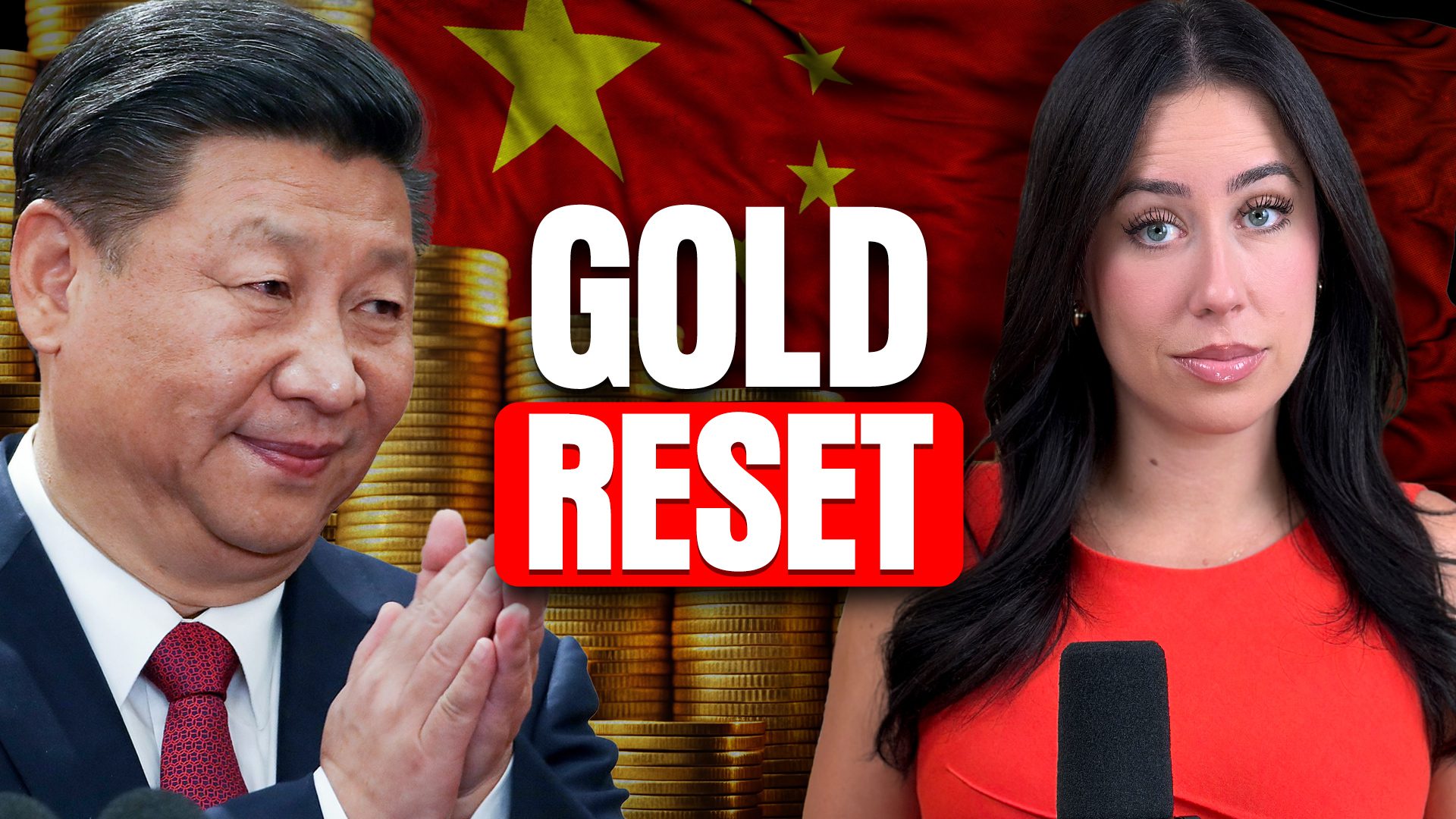
Meanwhile, central banks in Poland, China, and other nations are responding in a very different way. They are accumulating physical gold.
The institutions responsible for managing national currencies appear to understand something many Americans have not yet been told: when debt service begins compounding faster than the underlying economy, the currency becomes the pressure-release valve.
U.S. Interest Costs Have Entered the Danger Zone
The headline figure of nearly $24 billion per week is not financial clickbait.
The Bureau of Economic Analysis reported that federal government interest expenditures were running at a seasonally adjusted annual rate of approximately $1.219 trillion during the first quarter of 2026. Divided across 52 weeks, that equals roughly $23.4 billion per week.
Fortune summarized the same danger in even starker terms: the Treasury is now paying approximately $24 billion every week in interest on the nation’s debts.
There is an important accounting distinction.
The Congressional Budget Office’s narrower net-interest measure is projected to reach approximately $1 trillion for fiscal year 2026—about $19.2 billion per week. Gross and net interest are not interchangeable, but both measurements point in the same direction: debt service has become one of the federal government’s largest and fastest-growing expenses.
In June 2026 alone, Treasury reported approximately $104 billion in net-interest spending.
This is the part of the debt story most people are missing. The danger is no longer just the balance.
The danger is the carrying cost.
The National Debt Is Closing In on $40 Trillion
The total U.S. national debt has climbed to approximately $39.4 trillion, putting the government within striking distance of another historic threshold. It is easy to dismiss this as another meaningless number.
After all, the debt was $20 trillion, then $25 trillion, then $30 trillion. The government continued operating. Paychecks still cleared. Markets continued rising. But that argument ignores the mechanism through which a debt crisis develops.
A highly indebted government does not suddenly collapse because a digital debt clock changes from one number to another. The pressure builds through a chain reaction:
- Existing Treasury securities mature.
- The government must refinance that debt at current interest rates.
- Higher refinancing costs increase federal interest expenses.
- Larger interest expenses widen the budget deficit.
- The government issues additional debt to cover the shortfall.
- That new debt creates even more future interest expense.
This is the debt doom loop. The government is not merely borrowing to fund new programs. It is increasingly borrowing to service obligations created by previous borrowing.
CBO projects that debt held by the public will rise from approximately 101% of GDP in 2026 to 120% by 2036. Net-interest costs are projected to increase from 3.3% of GDP to 4.6% over that period. CBO has described the fiscal trajectory as unsustainable.
That does not mean a crisis must occur tomorrow. It means the government’s room to maneuver is shrinking.
Higher Interest Rates Create a Trap
Federal Reserve officials are again confronting persistent inflation and the possibility that interest rates may need to remain elevated—or move even higher. For gold, that can create short-term selling pressure.
Higher rates generally make interest-bearing Treasury securities more attractive relative to a non-yielding asset such as gold. Rate-hike expectations can also strengthen the dollar, creating another short-term headwind for precious metals. But there is another side to the equation.
The same higher rates that can pressure gold also make the federal debt more expensive to refinance.
Not every dollar of Treasury debt reprices immediately. But as bills, notes, and bonds mature, the government must roll them over at prevailing market rates. The longer rates remain elevated, the more the average interest cost on the debt can rise.
That leaves policymakers trapped between two dangerous outcomes:
- Keep rates high and allow federal interest expenses to compound.
- Cut rates and risk reigniting inflation or weakening confidence in the dollar.
This is why official promises to defeat inflation should be treated with skepticism.
The Federal Reserve can raise or lower the cost of money. It cannot erase nearly $40 trillion of accumulated federal obligations.
Why Is Gold Falling During a Debt and Geopolitical Crisis?
This is the question frustrating many gold owners.
If the debt is exploding, inflation remains a threat, and geopolitical tensions are rising, why has gold fallen instead of moving straight up? Gold dropped to approximately $4,000 per ounce on July 13, 2026, roughly 25% below its January high. Silver experienced an even more severe decline from its earlier peak.
During June, the gold price fell approximately 11.7%, its steepest monthly decline since October 2008. That comparison matters. During the 2008 financial crisis, investors sold assets they believed in because they needed liquidity. Margin calls, collapsing portfolios, and a rush into dollars created forced selling across multiple markets. Gold was not immune.
Yet after trading near $730 in October 2008, gold rose to approximately $1,300 by October 2010 as the consequences of bailouts, monetary expansion, and collapsing confidence became clearer.
A crisis does not always send gold higher in a straight line. In the early stages, investors may sell whatever they can sell. The repricing often comes later.
A Falling Gold Price Does Not Mean the Debt Problem Disappeared
Short-term gold prices respond to factors that may have little to do with the long-term purchasing power of the dollar:
- Expectations for Federal Reserve policy
- Changes in real interest rates
- Dollar strength
- Futures-market positioning
- ETF inflows and outflows
- Margin calls and forced liquidation
- Profit-taking after a major rally
Paper futures and leveraged financial products can dominate short-term price discovery.
However, price weakness alone is not proof of coordinated manipulation. The more defensible conclusion is that highly leveraged markets can temporarily disconnect price action from long-term monetary fundamentals.
That is why the relevant question is not simply, “What did gold do today?”
The better questions are:
- Is the federal debt declining?
- Are annual deficits disappearing?
- Are interest costs falling back to historically normal levels?
- Is the dollar gaining long-term purchasing power?
- Are central banks abandoning gold?
The answer to each of those questions remains deeply uncomfortable.
Poland and China Are Buying the Gold Dip
While many retail investors and speculators have been shaken out of the gold market, several central banks have continued accumulating bullion.
During the first quarter of 2026, central banks purchased an estimated 244 metric tons of gold on a net basis, up 17% from the previous quarter.
Poland led reported purchases with approximately 31 tons, followed by Uzbekistan with 25 tons.
Poland was also the world’s largest reported central-bank gold buyer in 2025, adding approximately 102 tons and bringing its holdings to roughly 550 tons by year-end. China has continued buying as well.
In June 2026, the People’s Bank of China reportedly added approximately 480,000 fine troy ounces—about 15 metric tons—to its reserves. It marked China’s 20th consecutive month of reported purchases and its largest monthly addition since October 2023.
These institutions are not buying gold because they expect every week to produce an immediate return.
They are buying it because gold serves a strategic reserve function that government bonds and foreign currencies cannot fully replicate.
Central Banks Are Quietly Preparing for a Different Monetary Future
The World Gold Council’s 2026 survey found that:
- 89% of responding reserve managers expect global central-bank gold reserves to increase over the next 12 months.
- A record 45% expect their own institutions to increase their gold holdings.
- 74% expect the U.S. dollar’s share of global reserves to decline over the next five years.
This does not prove that the dollar is about to disappear. It does show that the world’s reserve managers are actively diversifying away from complete dependence on dollar-denominated assets.
Central banks have accumulated an average of approximately 1,000 tons of gold annually over the past four years—double the average pace of the preceding decade. The contrast could not be clearer. Governments continue telling citizens to trust currencies that can be created electronically and devalued through policy. At the same time, many of those governments are increasing their ownership of a scarce physical asset that no central bank can print.
Watch what institutions do—not merely what they say.
Gold vs. the Dollar: What Are You Actually Measuring?
A rising dollar price for gold does not necessarily mean gold has suddenly become more useful or productive. It often means the currency unit used to measure it has weakened. That is the central issue in the gold vs. dollar debate.
The dollar is a liability issued within a debt-based monetary system. Its purchasing power depends on fiscal discipline, monetary credibility, and confidence in the issuing government. Physical gold is not another government’s promise to pay.
It has no quarterly earnings, no interest payment, and no guarantee of price appreciation. But when held directly, it also does not require a debtor to remain solvent for the asset to continue existing.
That distinction becomes more important as debt service consumes a larger share of national income.
Physical Gold and Silver as Tangible Assets
For financially conservative Americans, physical gold and silver are not necessarily about predicting an exact date for a monetary reset. They are about reducing dependence on a system carrying unprecedented levels of debt.
Physical precious metals may support a broader wealth preservation strategy because they offer:
- Ownership of tangible assets outside conventional financial accounts
- No direct dependence on a bank’s promise to repay a deposit
- Potential protection against long-term currency devaluation
- A historically recognized form of portable wealth
- Diversification away from dollar-denominated financial assets
Gold is generally viewed as the more established monetary reserve asset. Silver may offer a different role. It is typically more volatile, but it remains a tangible asset with both monetary history and widespread industrial use. Neither metal guarantees profits. An inflation hedge may fall in price for months—or even years—before longer-term monetary pressures appear in the market price.
The objective is not to chase every move. It is to decide how much of your wealth should remain entirely exposed to the banking system, government debt, and a currency whose supply can continue expanding.
The Real Reset Catalyst Is the Interest Bill
The debt itself is not new. The acceleration in its carrying cost is. At nearly $40 trillion, even modest changes in average interest rates can translate into enormous additional expenses as securities mature and are refinanced. That is why the interest bill may become the catalyst for the next stage of the monetary crisis.
The government can attempt to respond through higher taxes, spending reductions, additional borrowing, financial repression, inflation, or some combination of all five. None of those options is painless. And none changes the underlying arithmetic:
A debt cannot compound faster than the economy forever without eventually forcing a policy response.
Do Not Confuse Price Volatility With Financial Safety
Gold’s recent decline has created fear.
But a lower gold price does not reduce the national debt. It does not eliminate the deficit. It does not lower the government’s refinancing needs. And it does not reverse the long-term deterioration in the dollar’s purchasing power.
Central banks appear to recognize that distinction. Poland is buying. China is buying. Other reserve managers expect global gold holdings to continue rising.
The question is not whether gold and silver will move in a straight line. They will not.
The question is whether your retirement strategy is prepared for a world in which the government must borrow more money simply to pay interest on money it has already borrowed. That is no longer a distant theory. It is happening now.
About ITM Trading
ITM Trading has over 28 years of experience helping clients safeguard their wealth through personalized strategies built on physical gold and silver. Our team of experts delivers research-backed guidance tailored to today’s economic threats.
THINKING ABOUT PURCHASING GOLD & SILVER?
Get expert guidance from our team of analysts with 28+ years of experience.
👉 [SCHEDULE YOUR CALL HERE] or call 866-351-4219