The U.S. Debt Black Hole: A Day of Reckoning Is Coming – Don’t Get Blindsided
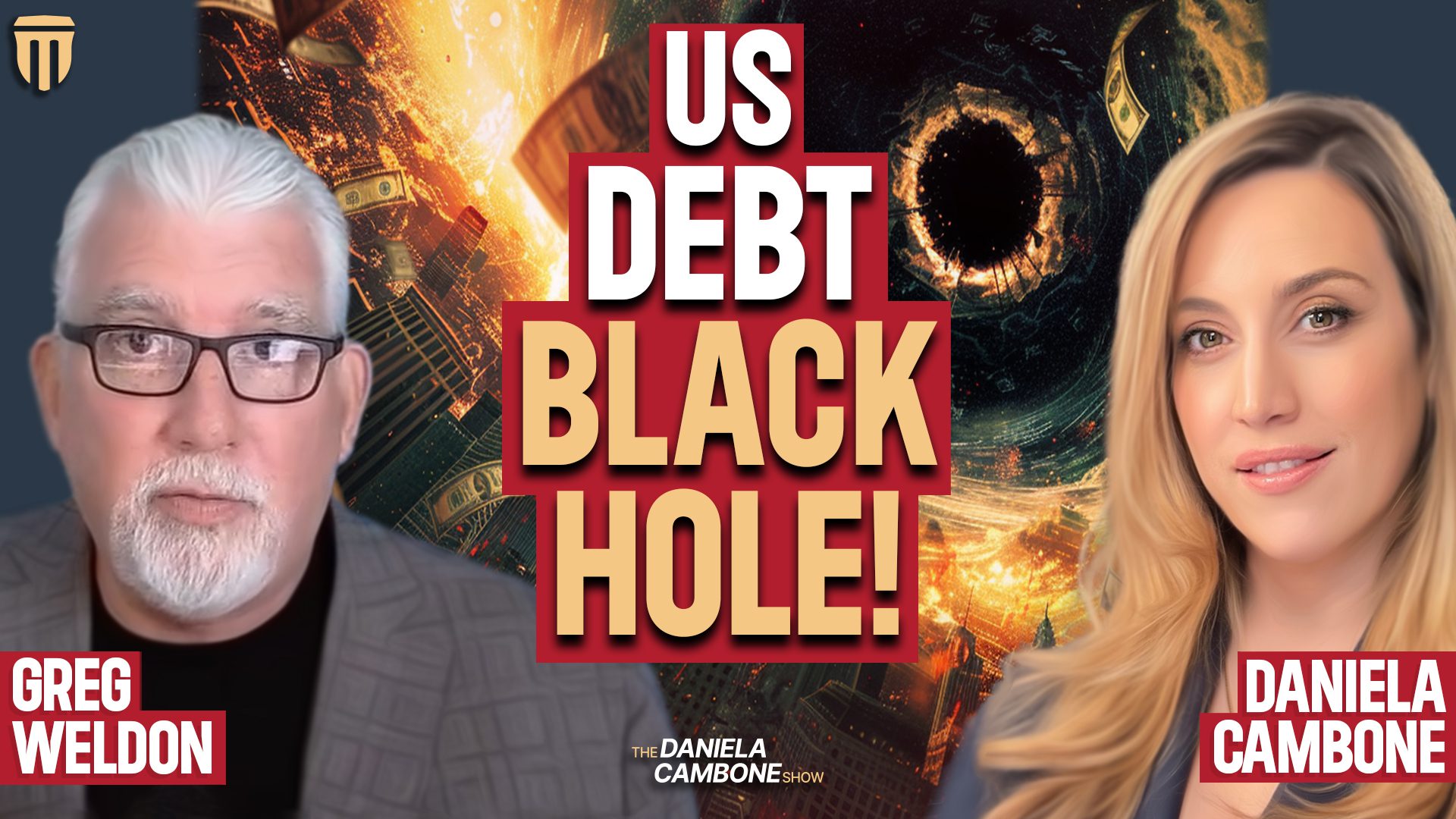
What if the U.S. Debt has already crossed the point of no return—and no one is telling you?
The U.S. debt black hole is no longer a distant threat—it may already be swallowing the financial system whole. While headlines continue to reassure investors that “everything is fine,” the underlying data tells a far more dangerous story: runaway debt, relentless money printing, and a system increasingly dependent on its own instability to survive.
This isn’t just another economic cycle. It’s a structural breakdown decades in the making.
The U.S. Debt Black Hole Explained
The concept is simple—but deeply unsettling.
Like a cosmic black hole, the U.S. debt system has an “event horizon”—a point beyond which escape becomes impossible.
According to macro strategist Greg Weldon, we likely crossed that threshold during the pandemic era when:
- Trillions were injected into the system through stimulus and QE
- Total debt began accelerating far faster than GDP
- The economy became dependent on constant liquidity injections
Key warning signs:
- Government spending has exceeded revenue by 2x in multiple periods
- Debt growth now outpaces economic growth
- The system requires more debt just to sustain current GDP levels
This creates a vicious cycle:
- More debt → requires more growth
- More growth → requires more money printing
- More printing → destroys purchasing power
The result? A system that cannot slow down without collapsing.
From 1971 to Today: The Dollar’s Silent Collapse
The roots of this crisis trace back to 1971, when the U.S. abandoned the gold standard.
Since then:
- The dollar has lost over 97% of its purchasing power
- Monetary policy has shifted toward permanent intervention
- Crises are no longer resolved—they are delayed with more debt
Major inflection points:
- 2008 Financial Crisis → Introduction of QE
- 2020 Pandemic → $6–8 trillion printed
- Today → Debt and GDP diverging at alarming rates
Translation: The dollar is no longer anchored to value—only to policy decisions.
And those decisions increasingly favor short-term survival over long-term stability.
Stagflation Is the Endgame
Forget the debate between inflation or deflation.
The real threat is stagflation—a toxic mix of both.
We’re already seeing the early stages:
- Rising cost of living (healthcare, housing, food)
- Slowing wage growth
- Increasing reliance on credit just to survive
Consider this:
- Credit card debt is at record highs
- Delinquencies are near historic peaks
- Americans are borrowing to maintain basic living standards
Even higher-income earners are beginning to feel the squeeze:
- Confidence among $100K+ earners is declining
- Expectations are shifting toward flat or negative real income
This is how systems unravel—not with a crash, but with a slow erosion of living standards.
The Global Shift Away from the Dollar
While the U.S. grapples with internal debt pressure, the rest of the world is quietly moving on.
A new financial order is emerging:
- Trade agreements increasingly bypass the U.S. dollar
- Nations are exploring gold-backed or commodity-linked systems
- Central banks are aggressively accumulating gold
Key developments:
- China expanding yuan-based trade settlement
- BRICS nations discussing alternative currency frameworks
- Oil and commodity pricing shifting away from USD dominance
This isn’t speculation—it’s already happening behind the scenes.
And when it becomes visible, it will happen fast.
Gold & Silver: The Escape From the Debt Trap
When currencies enter a debt spiral, history is clear:
Hard assets outperform.
Gold and silver are not just investments—they are:
- Wealth preservation tools
- Tangible assets outside the financial system
- Proven hedges against currency debasement
As the dollar weakens:
- Gold rises as a store of value
- Silver benefits from both monetary and industrial demand
Gold vs dollar is not a trade—it’s a long-term shift.
Central banks understand this. That’s why they’ve been accumulating gold at record pace.
The question is: will you act before or after the crowd catches on?
Conclusion: The Day of Reckoning Won’t Be Announced
Here’s the reality most investors miss:
Crises don’t arrive with warnings—they appear as “sudden realizations.”
One day:
- Markets are stable
- Confidence is intact
- The system appears functional
Then suddenly:
- A catalyst hits
- Narratives shift
- And the underlying fragility is exposed
The U.S. debt black hole is not a future event—it’s a present condition.
The only uncertainty is what triggers the reckoning—and when.
About ITM Trading
ITM Trading has over 28 years of experience helping clients safeguard their wealth through personalized strategies built on physical gold and silver. Our team of experts delivers research-backed guidance tailored to today’s economic threats.
THINKING ABOUT PURCHASING GOLD & SILVER?
Get expert guidance from our team of analysts with 28+ years of experience.
👉 [SCHEDULE YOUR CALL HERE] or call 866-706-9061