They Don’t Need a CBDC to Control Your Money

A U.S. CBDC may be blocked, but stablecoins, programmable money, and digital finance could still reshape who controls your wealth.
They Don’t Need a CBDC to Control Your Money
What if Americans win the fight against a Federal Reserve CBDC—and still end up with a financial system capable of tracking, restricting, or freezing digital money?
That may be the real CBDC risk.
The United States has officially opposed a Federal Reserve-issued CBDC. But at the same time, policymakers have encouraged dollar-backed stablecoins and other forms of digital finance.
The GENIUS Act created a regulatory framework for payment stablecoins backed by assets such as cash and short-term U.S. Treasuries.
So the debate has changed.
The question is no longer simply whether the Federal Reserve will issue a CBDC. It is how much financial control can be built into the system without ever calling it one.
Programmable Money Changes What “Control” Means
Take a $20 bill out of your wallet.
That bill does not know where you were yesterday, what you bought last week, your credit score, or whether an algorithm has flagged your account.
Digital money is different.
Digital financial systems can connect transactions with identity verification, compliance databases, account histories, and automated monitoring.
Stablecoin issuers already have technical tools that allow certain addresses or assets to be frozen under specific legal or compliance circumstances.
That does not mean America currently has a social-credit system.
But it proves that centrally issued digital money can contain control mechanisms physical cash does not.
The bigger concern comes when digital money is combined with artificial intelligence, automated compliance systems, and fewer cash alternatives.
The Algorithm Could Become the Gatekeeper
Anyone who has ever had an online account suspended by mistake understands the problem.
An algorithm flags something. Access disappears. Then the customer tries to find a human being who can explain what happened.
Now imagine that process involving your money.
As financial institutions automate fraud detection, sanctions screening, and compliance, decisions could happen faster than ever.
That may improve security, but errors could become more consequential.
For retirees depending on reliable access to savings, investments, pensions, or bank deposits, that deserves attention.
Stablecoins Could Strengthen the Digital Dollar System
There is another important piece of the story.
Dollar-backed stablecoins can create demand for U.S. government debt because issuers often hold Treasury securities as reserves.
Tether, one of the world’s largest stablecoin issuers, has accumulated tens of billions of dollars in U.S. Treasuries while also becoming a significant buyer of physical gold.
That creates an unusual situation.
A private digital-money company can simultaneously become a major holder of U.S. government debt and gold.
Washington may see stablecoins as a way to expand global dollar usage, improve settlement speed, and strengthen demand for Treasuries.
For individuals, however, the question remains: who controls the rails?
Could Digital Money Make Negative Rates Easier?
The IMF has studied how electronic money could change one of the biggest barriers to deeply negative interest rates: physical cash.
Cash effectively provides a zero-percent floor because depositors can withdraw banknotes instead of accepting deeply negative rates.
In a more digital system, that escape hatch becomes smaller.
This does not mean negative interest rates are guaranteed.
It means the technology could make policies possible that are harder to implement in a cash-based system.
When money becomes programmable, monetary policy can become more intrusive.
Why Gold and Silver Matter
This is where physical gold and silver are fundamentally different.
Gold does not require an internet connection.
Silver does not have a user agreement.
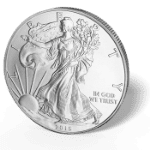
Physical precious metals held directly are tangible assets that do not depend on a bank, stablecoin issuer, software platform, or algorithm simply to exist.
That makes them important tools for wealth preservation.
The gold vs dollar debate is not only about price performance. It is also about counterparty risk and control.
A bank deposit is someone else’s liability. A bond is someone’s promise to repay.
Physical gold is an asset in its own right.
Gold and silver can fluctuate in price, and every investor should consider personal goals and risk tolerance. But throughout periods of inflation, currency uncertainty, and financial stress, precious metals have historically remained important diversification tools and potential inflation hedges.
If the Rules Changed Tomorrow, What Would You Control?
Most modern wealth exists as numbers on screens: checking accounts, brokerage accounts, 401(k)s, IRAs, pensions, and other financial claims.
That system is convenient.
But convenience and control are not the same thing.
If nearly everything you own depends on someone else’s database, rules, technology, or permission, diversification outside that system deserves serious consideration.
The next monetary system may never be called a CBDC.
It may arrive through stablecoins, tokenized deposits, digital identity, AI monitoring, and increasingly automated financial infrastructure.
So don’t focus only on the label.
Watch the architecture.
The time to ask how much of your wealth you truly control is before the rules change—not after.
About ITM Trading
ITM Trading has over 28 years of experience helping clients safeguard their wealth through personalized strategies built on physical gold and silver. Our team of experts delivers research-backed guidance tailored to today’s economic threats.
THINKING ABOUT PURCHASING GOLD & SILVER?
Get expert guidance from our team of analysts with 28+ years of experience.
👉 [SCHEDULE YOUR CALL HERE] or call 866-351-4219