Jim Rickards: Gold Price Action Straight From Jim Rogers’ Theory — Perfect Time Before $10,000
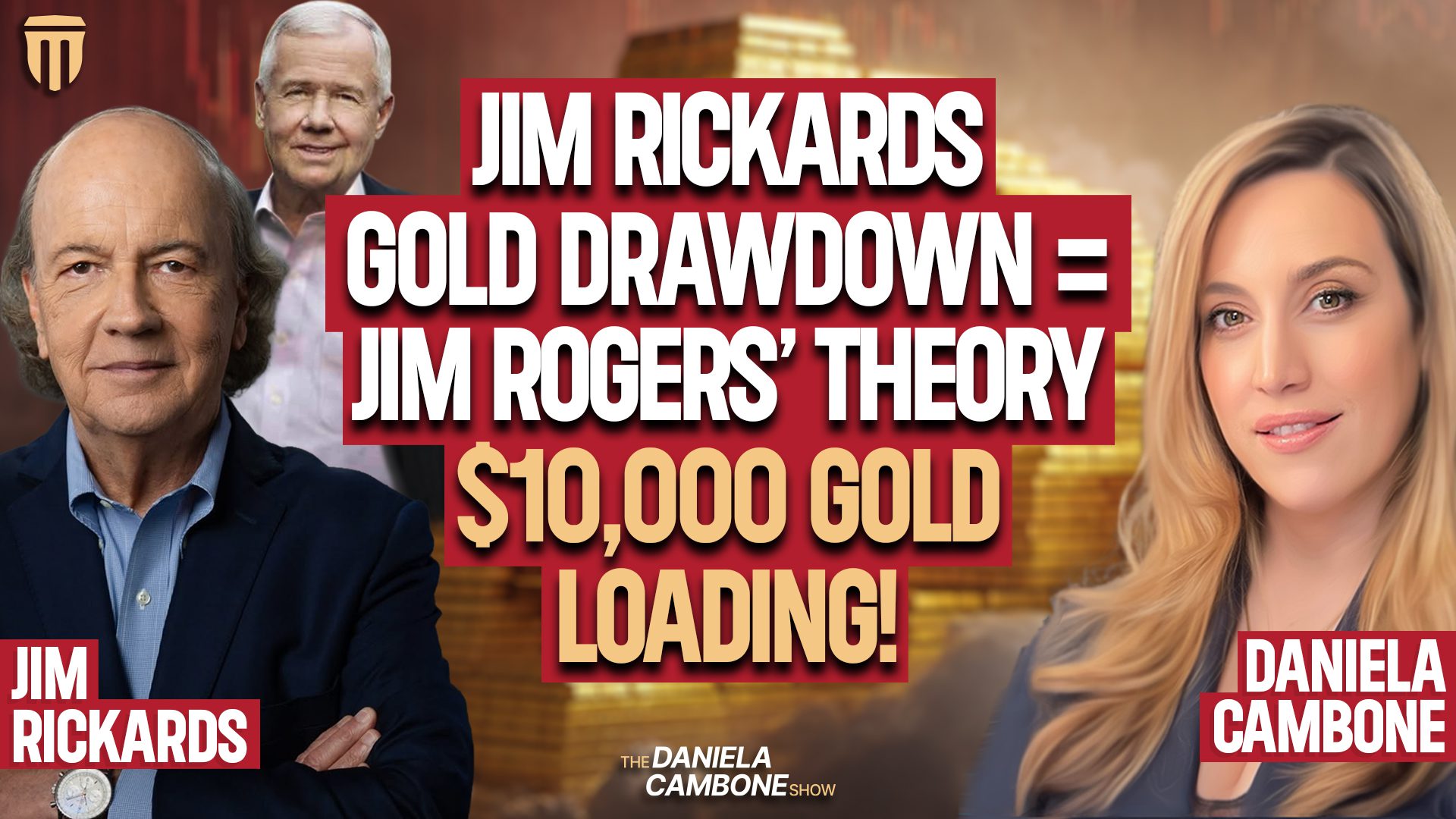
Gold’s 20% Correction Has Investors Asking the Wrong Question
What if the recent gold correction isn’t the end of the bull market—but the exact setup needed for gold’s next explosive move toward $10,000 gold?
That’s the argument legendary investor Jim Rickards is making, and it directly challenges the mainstream narrative that gold’s surge is over.
After reaching record highs earlier this year, gold has pulled back sharply. At the same time, inflation is accelerating again, oil prices are surging, and geopolitical tensions continue to escalate across the Middle East. Conventional wisdom says gold should be soaring.
So why isn’t it?
According to Rickards, understanding the answer may reveal one of the biggest wealth-preservation opportunities available today.
The Gold Correction Nobody Wants—But Every Bull Market Needs
Most investors focus on the wrong data point.
Yes, gold is only down modestly year-to-date. But from its recent peak, the metal has experienced a drawdown of more than 20%.
For many investors, that’s enough to trigger panic.
Rickards sees it differently.
He points to legendary commodities trader Jim Rogers, who famously argued that:
No commodity goes to the moon without suffering a major drawdown along the way.
History supports that view.
Consider gold’s previous bull market:
- Gold traded near $250 per ounce in 1999
- It surged to nearly $1,900 by 2011
- It then collapsed to roughly $1,050 by 2015
- The correction erased approximately 50% of the gains from that move
- Yet gold eventually went on to make new highs
According to Rickards, today’s pullback may simply be a smaller version of the same pattern.
The weak hands are being shaken out.
The strong hands are preparing for the next leg higher.
Jim Rogers’ Theory and the Mathematics Behind Gold’s Volatility
Why do these seemingly brutal corrections happen?
Rickards points to a combination of psychology, commodity market behavior, and what mathematicians call fractal patterns.
In simple terms:
- Markets repeat similar patterns at different scales.
- Corrections create fear.
- Fear triggers stop-loss orders.
- Stop-loss orders trigger additional selling.
- Momentum traders pile on.
- Prices fall further.
The process becomes self-reinforcing.
By the time retail investors capitulate, the correction is often nearing completion.
That’s why major commodity bull markets frequently experience dramatic declines before launching into their largest advances.
The result?
Investors who sell during the panic often miss the most profitable phase of the cycle.
Why Central Banks Are Suddenly Selling Gold
For years, central banks were one of the strongest forces supporting higher gold prices.
Beginning around 2010, central banks transitioned from net sellers to net buyers.
Countries accumulating gold included:
- China
- Russia
- Turkey
- Kazakhstan
- India
- Vietnam
- Mexico
This steady demand helped push gold prices higher for more than a decade.
So what changed?
The answer may surprise investors.
According to Rickards, many central banks aren’t selling gold because they have lost confidence in it.
They’re selling gold because they need oil.
As oil prices rise, nations face an unavoidable reality:
Oil Demand Is Inelastic
Countries must buy energy regardless of price.
When oil jumps from $60 to $100 per barrel:
- Governments need more dollars.
- Energy-importing nations face higher costs.
- Central banks liquidate assets to obtain liquidity.
Gold becomes the funding source.
In other words, gold isn’t being sold because it’s weak.
It’s being sold because energy has become more expensive.
That’s a critical distinction.
The Real Catalyst for Gold’s Next Move
If oil is the reason gold has corrected, then oil may also determine when the correction ends.
Rickards outlines two possible scenarios:
Scenario #1: Geopolitical Tensions Ease
If Middle East conflicts stabilize and energy flows normalize:
- Oil prices fall
- Central bank gold sales decline
- Gold demand recovers
Scenario #2: Economic Recession Triggers Demand Destruction
If consumers drive less and economic activity contracts:
- Energy demand falls
- Oil prices retreat
- Pressure on central bank reserves eases
- Gold begins recovering
Both paths ultimately point toward the same outcome:
Lower oil prices could remove one of the biggest headwinds currently facing gold.
Inflation Is Rising Again—and the Fed Is Trapped
The latest inflation data is creating another challenge.
Consumer prices have accelerated to their highest annual pace in years.
Meanwhile:
- Energy costs continue climbing
- Consumer purchasing power is shrinking
- Economic growth is slowing
- Employment data remains increasingly questionable
This creates a nightmare scenario for the Federal Reserve.
Historically, policymakers could choose between fighting inflation or supporting employment.
Today, both problems are worsening simultaneously.
Rickards argues that the Fed faces a dangerous dilemma:
- Raise rates and risk deepening a recession.
- Pause and allow inflation to accelerate.
- Cut rates and risk losing credibility altogether.
Regardless of which path the Fed chooses, confidence in monetary policy continues to erode.
And that tends to benefit hard assets over the long term.
Why Silver Could Follow Gold Higher
While much attention remains focused on gold, Rickards believes silver may eventually participate in the next major advance.
Silver differs from gold because it serves two roles:
Precious Metal
- Store of value
- Monetary asset
- Wealth-preservation tool
Industrial Metal
- Electronics
- Solar technology
- Satellites
- Manufacturing
Economic slowdowns can temporarily pressure silver demand.
However, once precious metals regain momentum, silver has historically outperformed during later stages of bull markets.
Rickards expects silver to eventually move above $100 per ounce as the broader precious metals cycle unfolds.
What Happens If Gold Reclaims Its Highs?
This is where the opportunity becomes interesting.
Many investors assume another major correction awaits every future rally.
Rickards disagrees.
The largest drawdowns typically occur during transitional phases of a bull market.
Once the cleansing process is complete, the next advance can become significantly larger.
That is why Rickards continues discussing targets of:
- $7,000 gold
- $8,000 gold
- And ultimately $10,000 gold
The current correction may not be signaling weakness.
It may be preparing the foundation for the next major move.
Gold and Silver: Wealth Preservation in an Unstable World
Investors face a growing list of risks:
- Persistent inflation
- Rising government debt
- Banking instability
- Geopolitical conflict
- Energy shocks
- Currency debasement
These risks are precisely why physical gold and silver have remained trusted forms of wealth preservation for thousands of years.
Unlike paper assets, tangible assets carry no counterparty risk.
Unlike fiat currencies, they cannot be created with the click of a mouse.
As concerns about the dollar’s long-term purchasing power continue to grow, many investors are revisiting the timeless role of precious metals as an:
- Inflation hedge
- Store of value
- Tangible asset
- Alternative to financial system risk
The debate between gold vs dollar may become increasingly important in the years ahead.
[Link to related guide or post]
Conclusion
The recent gold correction has rattled investors.
But according to Jim Rickards, history suggests these pullbacks are often a normal—and necessary—part of major commodity bull markets.
Central bank selling, rising oil prices, and market psychology may be driving today’s weakness.
Yet the long-term fundamentals supporting gold remain firmly intact.
If Rickards and Jim Rogers are right, today’s volatility could eventually be remembered as the final shakeout before gold’s next historic advance.
The question isn’t whether gold is experiencing turbulence.
The question is whether investors will still be positioned when the next move begins.
About ITM Trading
ITM Trading has over 28 years of experience helping clients safeguard their wealth through personalized strategies built on physical gold and silver. Our team of experts delivers research-backed guidance tailored to today’s economic threats.
THINKING ABOUT PURCHASING GOLD & SILVER?
Get expert guidance from our team of analysts with 28+ years of experience.
👉 [SCHEDULE YOUR CALL HERE] or call 866-706-9061