What The Biggest Oil Disruption in History Means For Gold Prices
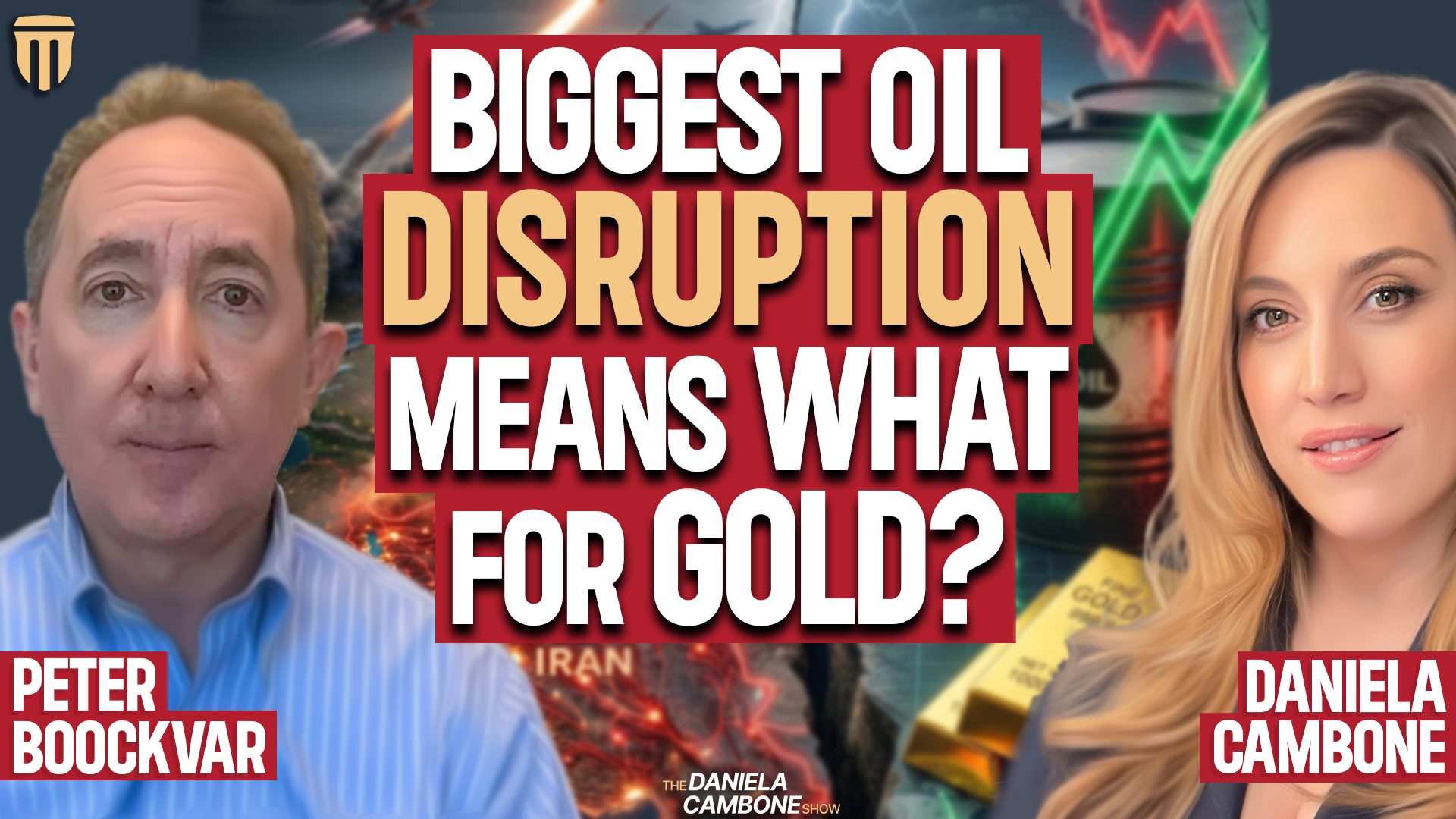
Markets don’t just fear war—they fear how long it lasts.
The Iran war impact on gold and oil is already rippling through global markets. Oil prices surged above $100 per barrel, stocks dropped, and investors rushed to reassess inflation risks and geopolitical stability.
But the real question isn’t simply whether conflict will disrupt markets.
It’s how long it lasts.
Because in global markets, duration is the devil. A short conflict might trigger temporary volatility. A prolonged one could ignite a full-blown commodity supercycle—reshaping inflation, interest rates, and investment strategy for years.
Oil Shock: The Strait That Controls Global Energy
At the center of the crisis lies one critical choke point: the Strait of Hormuz, where a large share of the world’s energy supply flows.
If the conflict continues and shipping disruptions persist, the consequences could cascade across the global economy.
Key risks include:
-
Crude oil surging past $100–$120 per barrel
-
Jet fuel prices climbing even faster than gasoline
-
Natural gas supply disruptions from the region
-
Fertilizer shortages affecting global agriculture
-
Industrial metals supply interruptions
According to market analysis, even 10% of global aluminum smelting capacity depends on shipments passing through the region.
That means the conflict isn’t just about energy.
It’s about supply chains across multiple industries.
Inflation Could Reignite Overnight
The immediate effect of rising oil prices is already hitting consumers.
Gasoline prices have increased roughly 50 cents per gallon in just a week, highlighting how quickly geopolitical shocks feed into everyday costs.
If the conflict continues, the inflation impact could expand rapidly:
Potential inflation drivers
-
Higher transportation costs
-
Rising fertilizer prices → higher food costs
-
Increased manufacturing input costs
-
Elevated energy prices across the economy
This creates a dangerous feedback loop:
War → Commodities rise → Inflation spikes → Central banks trapped
And that could mean interest rates staying higher for longer.
The Hidden Market Shift: The End of the AI Stock Boom?
The timing of the crisis is particularly dangerous because U.S. markets were already showing signs of fragility.
For years, a handful of mega-cap tech companies powered the market higher. But cracks are beginning to appear.
Key concerns include:
-
Massive capital spending on data centers
-
Shrinking cash flow for AI infrastructure companies
-
Overconcentration of market leadership
Some analysts warn that nearly half of the S&P 500’s momentum has been tied to the AI infrastructure boom.
If that leadership fades while commodities surge, markets could undergo a major sector rotation.
In other words:
Tech dominance fades → commodities rise → inflation resurfaces.
The Commodity Bull Market May Just Be Starting
Even if the conflict subsides, one powerful trend may already be locked in.
A new global commodity bull market.
Several factors support this thesis:
-
Strategic oil reserves depleted in recent years
-
Countries rebuilding energy stockpiles
-
China aggressively expanding energy reserves
-
Supply chain vulnerabilities exposed by war
For example, China has reportedly built reserves capable of supplying its refineries for roughly 200 days.
This global stockpiling effort creates a powerful floor under commodity prices, even if oil temporarily pulls back.
And historically, commodity bull markets often coincide with strong moves in gold and silver.
Why Gold Remains a Strategic Asset in Geopolitical Chaos
During geopolitical crises, markets often rediscover the value of tangible assets.
Gold and silver play a unique role because they are:
-
Monetary metals
-
Crisis hedges
-
Inflation protection
-
Assets outside the financial system
Even when short-term volatility pushes prices around—often due to currency fluctuations or algorithmic trading—the underlying demand for gold tends to increase during unstable geopolitical periods.
Another powerful force supporting gold is central bank demand.
Central banks have been major buyers since 2022, helping fuel the current precious metals bull market.
And while some countries may consider selling gold to fund military spending, the broader trend remains clear:
Global diversification away from the U.S. dollar is accelerating.
That shift alone could support gold prices for years.
Gold vs. Dollar: The Global Diversification Trend
Perhaps the most important long-term story unfolding behind the headlines is the quiet shift away from dollar dependence.
Countries across the world are increasingly:
-
Diversifying reserves
-
Increasing gold holdings
-
Reducing reliance on dollar assets
Geopolitical conflict tends to accelerate this trend.
Why?
Because sanctions, trade disruptions, and financial warfare highlight a simple truth:
Dollar-based assets come with geopolitical risk.
Gold, by contrast, is politically neutral and globally recognized.
This makes it one of the few assets that can function as true financial insurance during systemic uncertainty.
Conclusion: Markets Fear Time More Than War
History shows that markets can absorb shocks.
What they struggle with is prolonged uncertainty.
If the Iran conflict resolves quickly, markets may stabilize.
But if disruptions continue for months, the consequences could include:
-
A sustained commodity surge
-
Renewed inflation pressures
-
Weakening tech leadership
-
Higher global interest rates
In that environment, investors often rediscover assets that have endured every financial crisis in modern history.
Physical gold and silver.
Because when geopolitical shocks expose the fragility of financial systems, tangible assets become more than investments—they become protection.
About ITM Trading
ITM Trading has over 28 years of experience helping clients safeguard their wealth through personalized strategies built on physical gold and silver. Our team of experts delivers research-backed guidance tailored to today’s economic threats.
THINKING ABOUT PURCHASING GOLD & SILVER?
Get expert guidance from our team of analysts with 28+ years of experience.
👉 SCHEDULE YOUR CALL HERE or call 866-706-9061