Celente: Rate Cuts Coming Before Midterms to Rig Markets – False Flag Will Blow It Up
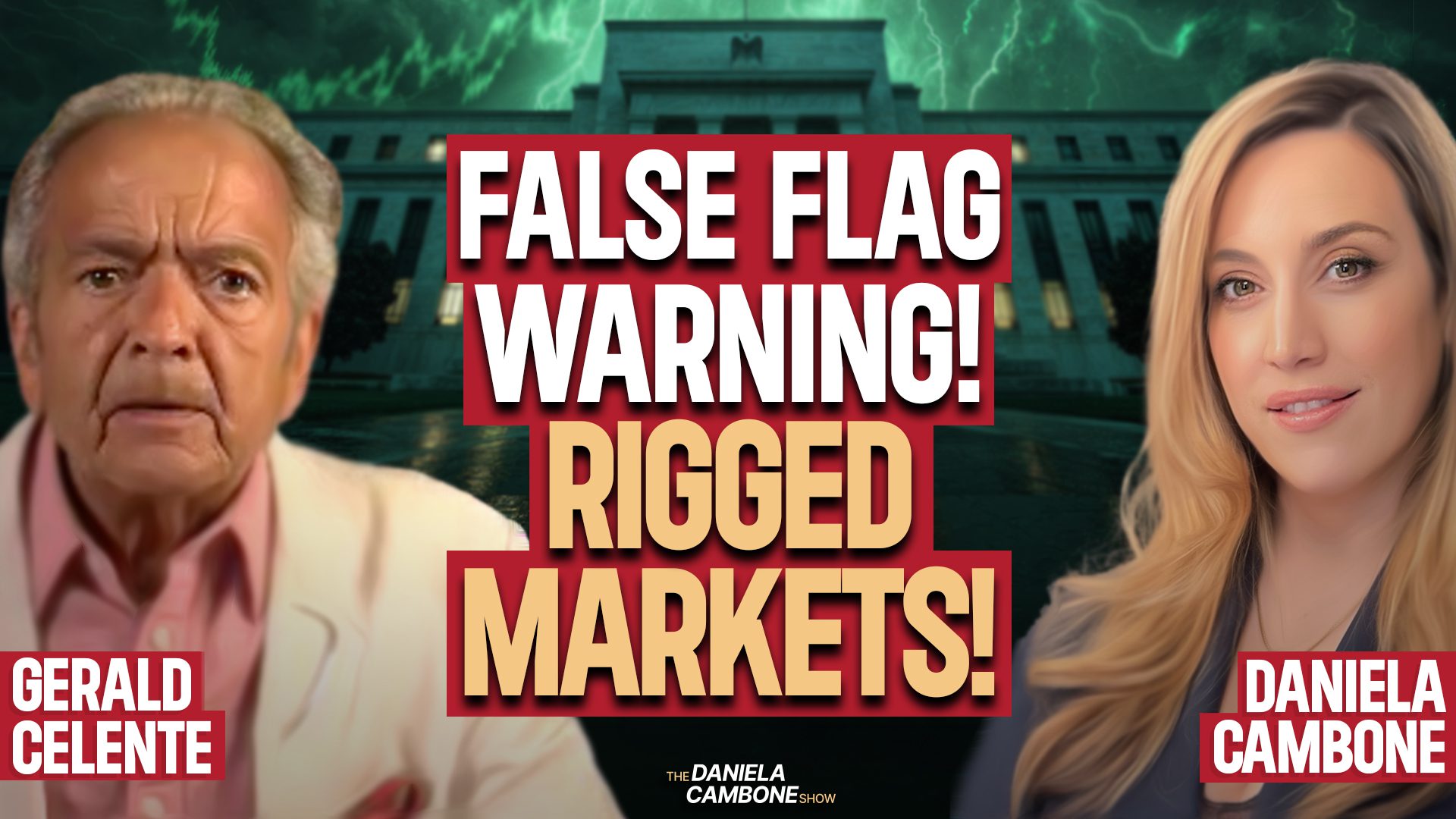
Are Markets Being Propped Up Ahead of the Midterms?
What if today’s record-breaking stock market isn’t reflecting economic strength—but political strategy?
That’s the alarming possibility trend forecaster Gerald Celente explored during his latest conversation with Daniela Cambone. According to Celente, Washington’s next move may not be about fighting inflation or restoring economic stability. Instead, he believes policymakers could slash interest rates before the midterm elections to manufacture confidence, inflate financial assets, and keep consumers optimistic—at least temporarily.
If he’s right, rate cuts before midterms may provide a short-lived boost to stocks while creating far more dangerous consequences beneath the surface. A weaker U.S. dollar, stubborn inflation, mounting debt, and escalating geopolitical tensions could all collide at once.
For investors trying to preserve purchasing power, this raises an uncomfortable question:
Are financial markets being managed for economic health—or political survival?
Why Gerald Celente Believes Rate Cuts Are Coming
The Federal Reserve has spent years insisting that every policy decision is “data dependent.” Yet political pressure has never completely disappeared from monetary policy.
According to Celente, that pressure is becoming impossible to ignore.
President Trump has repeatedly called for lower interest rates, arguing they would stimulate growth and strengthen the economy heading into the next election cycle. Celente believes those demands won’t simply disappear—and that eventually the Federal Reserve could accommodate them.
If rates are reduced while inflation remains elevated, several things could happen simultaneously:
- Stock prices receive another liquidity-driven boost.
- Borrowing becomes cheaper.
- The U.S. dollar weakens.
- Gold becomes more attractive worldwide.
- Inflation pressures return with greater force.
History suggests this isn’t unprecedented.
Election years have frequently been accompanied by fiscal stimulus, accommodative monetary policy, or aggressive government spending designed to maintain confidence. While central banks insist on independence, markets often react as though politics and monetary policy are deeply intertwined.
For investors, the concern isn’t simply whether rates fall.
It’s why they fall.
If cuts are designed to postpone economic pain rather than solve structural problems, today’s market gains could become tomorrow’s losses.
Artificial Markets Create Artificial Confidence
Throughout the interview, Celente repeatedly argued that today’s financial markets are becoming increasingly disconnected from economic reality.
Corporate earnings remain under pressure in many industries.
Consumer debt continues climbing.
Government deficits are expanding.
Commercial real estate remains stressed.
Yet major equity indexes continue pushing toward new highs.
Celente argues this divergence isn’t natural.
Instead, he believes policymakers are determined to keep markets elevated regardless of underlying fundamentals.
His concern centers on what happens when markets become dependent on constant intervention.
Rather than allowing price discovery to function naturally, governments and central banks increasingly rely on:
- Interest-rate manipulation
- Liquidity injections
- Massive deficit spending
- Emergency lending facilities
- Government guarantees
- Constant public messaging designed to calm investors
Each intervention may stabilize markets temporarily.
Collectively, however, they increase systemic risk.
When confidence depends on continuous support, the financial system becomes increasingly fragile.
Eventually, a single unexpected event can trigger a much larger correction than would have occurred naturally.
Could Geopolitical Conflict Become the Trigger?
One of Celente’s strongest warnings involved the growing conflict in the Middle East.
Rather than seeing recent ceasefires as lasting solutions, he believes geopolitical tensions remain extremely fragile.
His concern is that another major incident—a military escalation, disruption in energy supplies, or another unexpected international crisis—could quickly reverse investor optimism.
History demonstrates how rapidly geopolitical shocks spread through financial markets.
Energy prices spike.
Inflation accelerates.
Shipping costs rise.
Supply chains tighten.
Consumer confidence deteriorates.
Financial markets suddenly reprice risk.
This combination becomes particularly dangerous if central banks are already cutting rates and governments are running historically large deficits.
Instead of cushioning the economy, lower rates could amplify inflation while reducing confidence in paper currencies.
That environment has historically favored tangible assets over financial assets.
Why Gold Often Benefits When Confidence Declines
One of the most important themes throughout Daniela Cambone’s interview was remarkably simple:
Gold doesn’t require confidence in politicians, central bankers, or government promises.
Unlike paper assets, physical gold carries no counterparty risk.
It cannot be printed.
It cannot be digitally created.
It cannot be diluted through monetary policy.
Celente noted that despite periodic pullbacks, his long-term strategy has remained unchanged for decades.
“I buy it and hold it.”
That philosophy reflects a broader trend now occurring among central banks themselves.
Countries around the world continue increasing gold reserves while, in many cases, repatriating bullion back to domestic vaults rather than storing it abroad.
This shift suggests governments themselves increasingly value direct ownership of tangible assets during periods of geopolitical uncertainty.
For individual investors, the lesson is similar.
Short-term price volatility doesn’t necessarily change the long-term purpose of owning physical gold.
Its role is not speculation.
Its role is wealth preservation.
About ITM Trading
ITM Trading has over 28 years of experience helping clients safeguard their wealth through personalized strategies built on physical gold and silver. Our team of experts delivers research-backed guidance tailored to today’s economic threats.
THINKING ABOUT PURCHASING GOLD & SILVER?
Get expert guidance from our team of analysts with 28+ years of experience.
👉 [SCHEDULE YOUR CALL HERE] or call 866-706-9061