U.S. Debt Crisis Erupts as China Ramps Up Massive Selloff
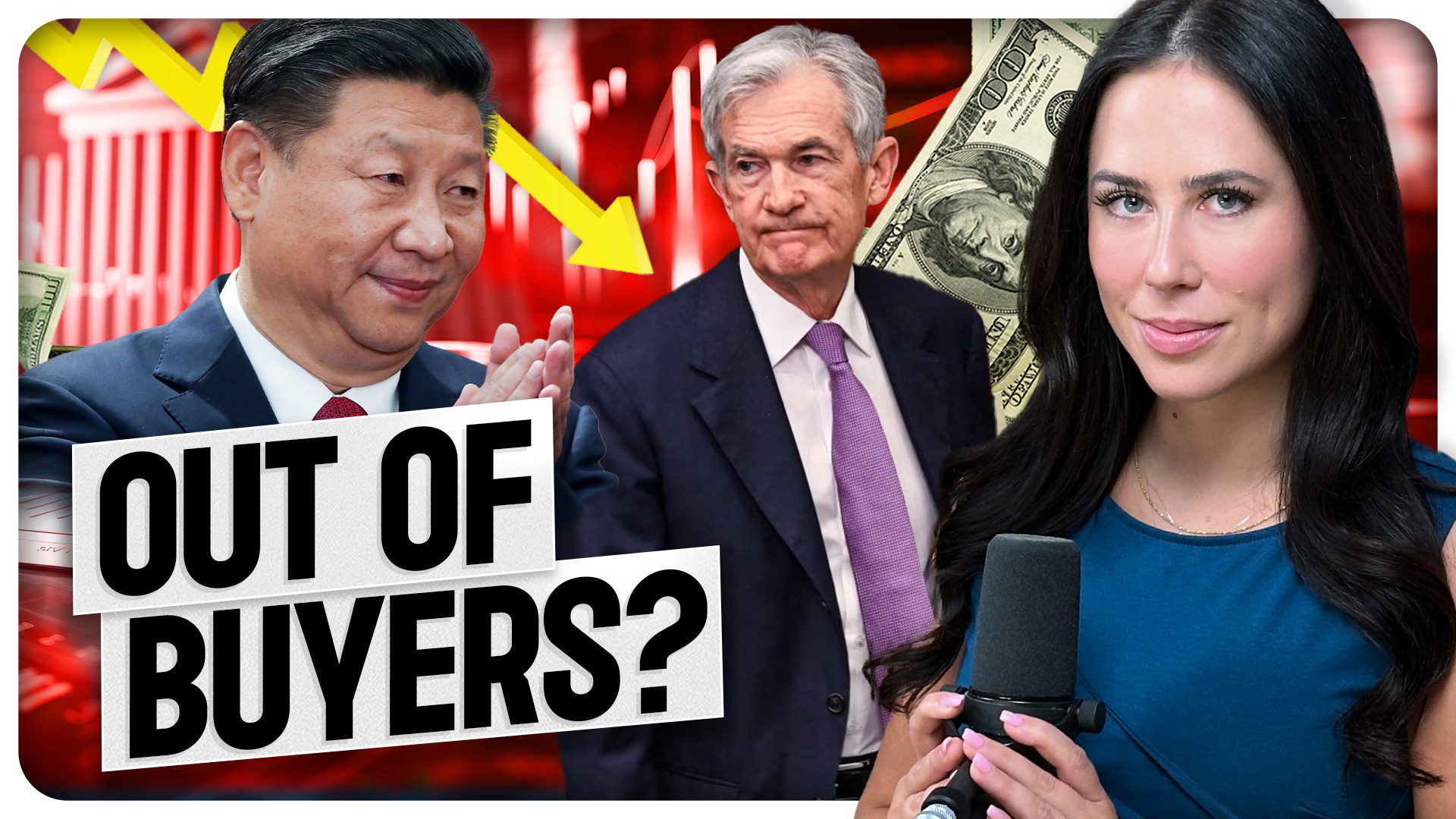
China Treasury dump accelerates de-dollarization as $9T in US debt nears refinancing. What it means for inflation, the dollar, gold, and silver.
If you think today’s cost of living crisis is painful, just wait until the China Treasury dump accelerates.
For years, China has been quietly cutting its U.S. Treasury holdings. But now something has changed. This is no longer a slow portfolio rebalance — it’s starting to look like a structural shift away from the dollar itself.
And with more than $9 trillion in U.S. debt set to refinance by 2026, the timing couldn’t be worse.
This isn’t just a geopolitical chess move. It directly impacts:
- Your retirement savings
- Your bank deposits
- Your purchasing power
- The future value of the U.S. dollar
- And yes — the role of gold and silver
Let’s break down what’s really happening.
China Treasury Dump: A Decade in the Making
Over the last 10 years, China has cut its U.S. Treasury holdings roughly in half.
While China is no longer the largest foreign holder of U.S. debt, it remains the third-largest foreign creditor — meaning its actions still matter enormously.
But this isn’t happening in isolation.
We’re seeing:
- Growing BRICS coordination
- Increased trade settlement outside the dollar
- Public discussions of a multi-polar monetary system
- Direct guidance from Beijing urging banks to curb U.S. bond exposure
Even more concerning? Reports indicate Chinese authorities have advised private institutions to slow or reduce Treasury exposure entirely.
That’s not portfolio management. That’s positioning.
The U.S. Debt Market Is More Fragile Than It Looks
On the surface, Treasury holdings appear stable. But that stability is misleading.
Here’s why:
- U.S. debt is exploding — now exceeding $34 trillion
- Annual deficits are running near $2 trillion
- Over $9 trillion must be refinanced by 2026 at higher rates
If foreign buyers step back, someone must fill the gap.
And increasingly, that “someone” has been:
- U.S. allies (Japan, Norway, Canada)
- Domestic banks
- Pension funds
- Social Security trust funds
- Private investors
But there’s a problem.
The debt is growing faster than the buyer base.
That gap is where the crisis brews.
Private Investors Replaced Central Banks — That’s a Major Risk
In 2022, the Federal Reserve launched the fastest rate hike cycle in modern history.
Suddenly, higher Treasury yields attracted private capital.
Problem solved?
Not exactly.
Central banks buy Treasuries for:
- Reserve stability
- Trade settlement
- Strategic positioning
Private investors buy for one reason:
- Return
The moment risk outweighs yield, they sell.
That introduces:
- Volatility
- Liquidity crunches
- Rapid funding gaps
And if China’s banking system reduces exposure, private selling pressure could accelerate. This is how a “stable” market becomes unstable very quickly.
Moody’s Downgrade: A Warning Shot
Last year, Moody’s stripped the U.S. of its final perfect credit rating — the first time since 1919.
The reasoning?
- Massive deficits
- Exploding interest costs
- Political dysfunction
- No credible fiscal repair plan
The U.S. dollar sits at the center of the global monetary system. When confidence in that foundation weakens, it doesn’t go unnoticed. The system runs on trust. And trust is eroding.
Domestic Absorption: The Snake Eating Its Tail
If foreign demand falls, Washington turns inward.
That means more Treasury absorption by:
- U.S. banks
- Pension funds
- Social Security
- The Federal Reserve
But this diverts capital from productive investment into debt maintenance.
Meanwhile:
- U.S. banks are sitting on hundreds of billions in unrealized losses from low-yield bonds
- Selling those bonds exposes balance sheet weakness
- We already saw how this plays out with Silicon Valley Bank
The system isn’t collapsing overnight. But it’s balancing on a razor’s edge.
The Federal Reserve’s Inevitable Move: More QE
If the funding gap widens, there are limited options.
Raise rates further? Risk recession.
Cut spending? Politically unlikely.
Default? Unthinkable.
That leaves:
Quantitative Easing.
More money printing.
More balance sheet expansion.
More currency debasement.
Every time liquidity dries up, the Federal Reserve steps in.
And every time it does:
- The dollar loses purchasing power
- Inflation pressures rise
- Savers are punished
This is how a China Treasury dump becomes your cost-of-living crisis.
Gold vs Dollar: Wealth Preservation in a Currency Reset
When fiat systems stretch beyond sustainability, history shows they respond with currency debasement.
That’s where physical gold and silver matter.
Unlike dollars:
- Gold cannot be printed
- Silver cannot be digitally created
- Both carry no counterparty risk
During periods of:
- Inflation
- Monetary resets
- Sovereign credit stress
- Dollar weakness
Gold has historically acted as a wealth preservation tool.
Silver, often more volatile, can amplify moves during monetary disruptions. This isn’t theory. It’s monetary history. As confidence in sovereign debt declines, tangible assets rise in importance.
What Happens Next?
Let’s connect the dots:
- $9 trillion refinancing wall
- $2 trillion annual deficits
- Foreign buyers stepping back
- Private capital becoming more volatile
- Banks holding underwater bonds
- A downgraded credit rating
- Growing de-dollarization momentum
If even one piece accelerates, pressure builds rapidly.
This isn’t a collapse tomorrow.
But it is a structural shift already underway.
And once confidence cracks, it moves fast.
Conclusion
The China Treasury dump isn’t just a headline.
It’s a signal. A signal that the era of unquestioned dollar dominance is facing serious stress. A signal that refinancing America’s debt mountain will not be painless. And a signal that those holding wealth purely in dollar-denominated assets face increasing risk of silent erosion through inflation and currency debasement.
The question isn’t whether the system changes.
It’s whether you’re positioned before it does.
About ITM Trading
ITM Trading has over 28 years of experience helping clients safeguard their wealth through personalized strategies built on physical gold and silver. Our team of experts delivers research-backed guidance tailored to today’s economic threats.
THINKING ABOUT PURCHASING GOLD & SILVER?
Get expert guidance from our team of analysts with 28+ years of experience.
👉 SCHEDULE YOUR CALL HERE or call 866-351-4219