

Turkey Sold, Poland Caved: Gold ‘Crash’ Was Just a Liquidity Mirage – Gentile Is Loading Up
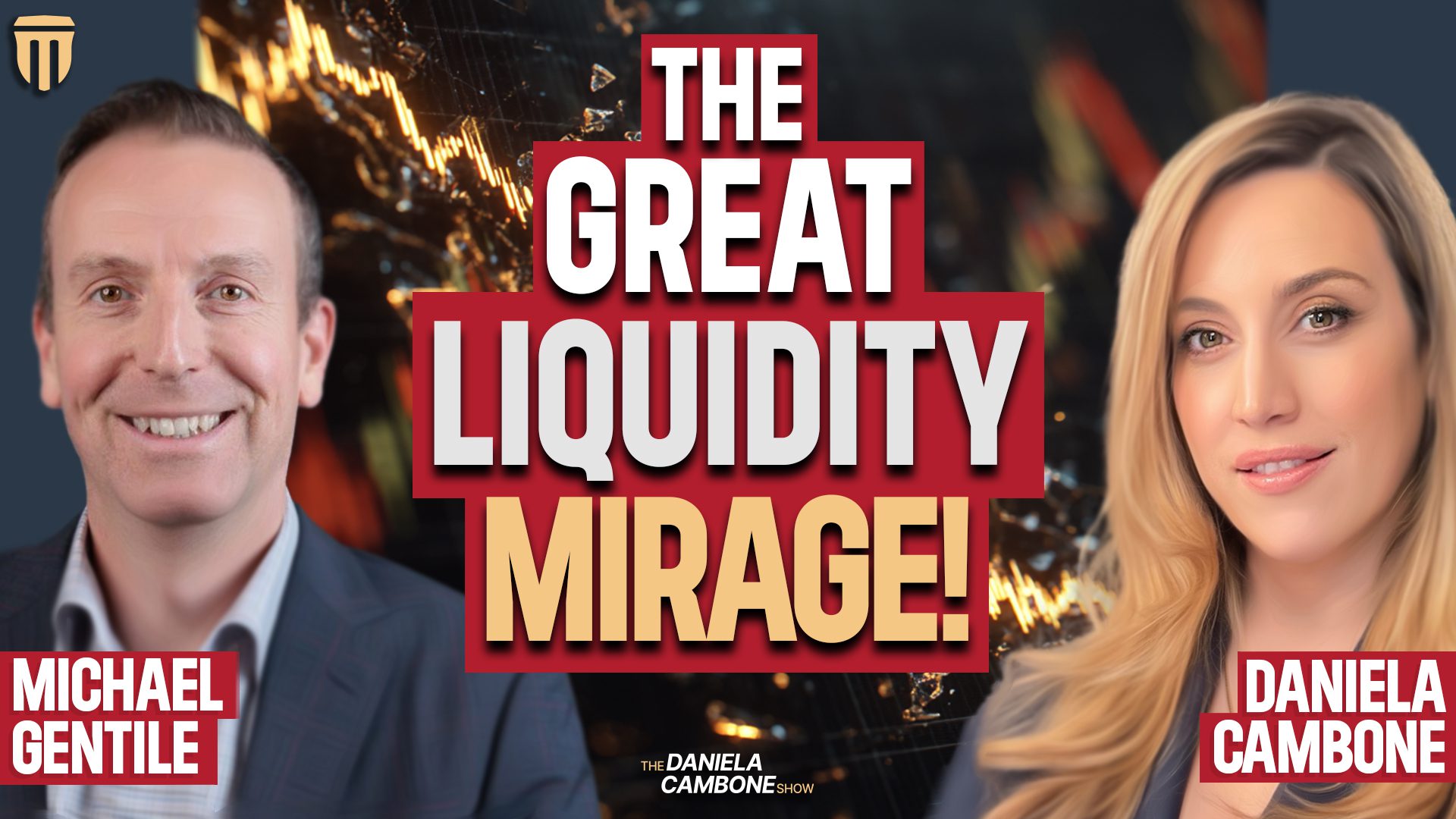
Was gold’s sharp pullback a warning shot—or the setup for the next explosive leg higher?
If Michael Gentile is right, the answer is clear: $5,000 gold is still very much on the table, and what investors just witnessed was not a collapse in the long-term thesis—but a temporary liquidity event masquerading as a trend reversal.
That distinction matters.
Because while mainstream commentary rushed to frame gold’s drop as proof the “safe haven trade” had failed, Gentile sees something very different: a healthy washout, a sentiment reset, and a market now reloaded for the next move higher. In a world defined by war spending, debt monetization, inflation pressure, and currency fragility, the real story may not be gold’s pullback at all.
It may be what comes next.
Why Gold’s Pullback Wasn’t Bearish—It Was a Sentiment Flush
At the start of the year, the precious metals space had become overheated.
There was no shortage of euphoric predictions:
- Gold racing endlessly higher
- Silver launching into fantasy-price territory
- Junior miners priced for perfection
- Retail speculation getting far ahead of fundamentals
That kind of setup rarely ends well in the short term.
And according to Gentile, that’s exactly why he turned cautious earlier this year—not because the long-term case for gold and silver had broken, but because the market had become too crowded, too fast.
What changed?
The correction did what all healthy corrections do:
- It flushed out weak hands
- It reset sentiment
- It destroyed short-term speculation
- It brought valuations back into reality
This is the part most investors miss. A pullback inside a secular bull market does not invalidate the bull market.
It often strengthens it.
And that’s exactly the case Gentile is making now.
Gold may be off its highs, but it’s still sitting at levels that would have seemed unthinkable just months ago. That’s not weakness. That’s a repricing of reality.
The “Liquidity Mirage” That Shook the Gold Market
One of the most important takeaways from this conversation is Gentile’s explanation for why gold sold off so hard during a period when, on paper, it should have been surging.
At first glance, it looked contradictory:
- Rising geopolitical conflict
- Inflation pressure still unresolved
- Deficit spending accelerating
- Global instability increasing
And yet gold got hit.
Why?
Because in a liquidity squeeze, investors and governments don’t sell what they want to sell—they sell what they can sell.
That’s the heart of the liquidity mirage.
In a crisis, gold becomes collateral
When currencies come under pressure, when governments need funding, and when financial stress spikes, liquid assets become funding tools.
That means:
- Central banks may sell reserves to stabilize currencies
- Sovereigns may raise cash to defend domestic markets
- Investors may dump winners to cover losses elsewhere
In other words, gold can fall in the short term precisely because it is valuable.
That doesn’t make it broken.
It makes it liquid.
And that’s a critical distinction for anyone trying to understand the current environment.
Why this matters for the long-term gold thesis
If the selloff was driven by liquidity needs—not a collapse in confidence in gold—then the macro backdrop remains intact.
And that macro backdrop is getting harder to ignore:
- Massive government deficits
- Expanding debt service burdens
- Elevated energy prices
- Inflation that refuses to die
- Escalating geopolitical instability
- Accelerating distrust in fiat systems
That’s not bearish for gold.
That’s the kind of backdrop that historically lays the foundation for much higher prices.
$5,000 Gold Is Still in Play Because the Macro Has Only Gotten Worse
This is where the mainstream narrative starts to break down.
The dominant financial media line tends to go something like this: if gold corrects, the bull case must be over.
But that logic only works if the underlying drivers have disappeared.
They haven’t.
If anything, they’ve intensified.
The forces pushing gold higher are still here
Let’s look at the big picture:
1. Debt is still exploding
The U.S. is running structurally unsustainable deficits, and there is no serious political appetite for fiscal discipline.
2. War is inflationary
Conflict drives spending, supply chain disruptions, and commodity shocks—all of which pressure consumer prices higher.
3. Oil remains a wildcard
Higher energy costs feed directly into inflation and recession risk at the same time.
4. Currency debasement is accelerating
Governments facing economic stress almost always choose inflation over austerity.
5. De-dollarization hasn’t disappeared
If anything, geopolitical fractures are increasing the incentive for countries to move away from dollar dependence.
That’s the real bull case.
Not hype. Not momentum. Not social media speculation.
A structural loss of confidence in debt-soaked fiat systems.
And that’s exactly why gold and silver continue to matter.
Silver Could Be the High-Octane Trade—But It Comes With More Volatility
If gold is the foundation, silver is often the accelerant.
Gentile describes silver as the higher-octane expression of the precious metals trade. That means when sentiment is strong and retail money comes back into the space, silver can move much faster than gold.
But there’s a catch.
It also tends to get hit harder when markets correct.
Why silver behaves differently
Silver sits at the intersection of:
- Monetary metal demand
- Retail investor speculation
- Industrial usage
- Momentum-driven trading
That makes it powerful—but also more unstable.
What that means for investors
Silver can offer upside leverage, but it also requires a stronger stomach.
For investors focused on:
- wealth preservation
- stability
- long-term purchasing power
- lower volatility exposure
gold often remains the cleaner core holding.
For investors looking for:
- more upside torque
- cyclical momentum
- stronger participation in precious metals rallies
silver can play an important complementary role.
The key is understanding the difference.
Because in this environment, owning both gold and silver may make more sense than chasing paper assets priced for perfection.
Why Gold Miners and Junior Mining Stocks Got Hammered
One of the more revealing points in this discussion is what happened to mining equities—especially juniors.
If gold remained historically elevated, why did the miners get punished so severely?
Simple: conviction is still low.
That’s actually more bullish than bearish.
What the selloff in miners is really telling you
When every dip gets bought aggressively, you’re often late in the cycle.
But when investors still panic-sell quality names at the first sign of turbulence, it suggests the sector remains under-owned, under-trusted, and misunderstood.
That’s usually what the early stages of a bull market look like.
Gentile’s interpretation is important here:
The precious metals equity cycle may still be much earlier than many investors think.
That matters because historically, the biggest gains in the sector don’t come when everyone believes.
They come before broad conviction returns.
Why juniors could become takeover targets
This also feeds directly into the M&A story.
According to Gentile, many smaller mining companies remain dramatically undervalued relative to the cost of finding and building ounces from scratch.
That creates a major opportunity for larger producers flush with cash.
Why bigger miners may start buying juniors
- They have stronger balance sheets than in past cycles
- Many are generating serious free cash flow
- Organic discovery is difficult and expensive
- Buying undervalued developers can be cheaper than building new projects internally
That means the juniors—especially quality projects in stable jurisdictions—could become a major hunting ground.
And when that happens, the upside can reprice fast.
Inflation Isn’t Going Away—And That’s the Bigger Story
Forget the sanitized CPI headlines for a moment.
Ask a simpler question:
Does life feel cheaper?
For most Americans, the answer is obvious.
The costs that actually matter—food, shelter, transportation, energy, insurance, and daily necessities—have all moved materially higher. And while official inflation data may suggest moderation, lived reality tells a different story.
That’s why Gentile’s inflation warning deserves attention.
Structural inflation is not a temporary glitch
The inflation problem is being driven by deeper forces:
- Chronic deficit spending
- Debt monetization
- Supply chain fragility
- Energy shocks
- Geopolitical fragmentation
- Reshoring and deglobalization
These are not one-quarter distortions.
These are systemic inflation drivers.
And if governments respond to economic weakness the way they usually do—with more stimulus, more debt, and more currency creation—then inflation pressure may not just persist.
It may accelerate.
Is hyperinflation on the table?
That’s still an extreme scenario.
But it’s no longer irrational to ask.
Because once a system becomes dependent on money creation to sustain itself, confidence—not just economics—becomes the variable that matters most.
And confidence, once broken, is very hard to restore.
That’s where gold vs dollar becomes more than an investment debate.
It becomes a trust equation.
Gold and Silver as Wealth Preservation in a Fragile Financial System
This is where the conversation becomes deeply practical.
Because not everyone buying gold and silver is trying to speculate.
Many are simply trying to answer a more important question:
How do I preserve what I’ve already built?
That’s where physical precious metals have historically stood apart.
Why physical gold and silver still matter
In an increasingly digitized, debt-dependent financial system, tangible assets matter more—not less.
Physical gold and silver offer something paper assets can’t:
- No counterparty risk
- No earnings miss risk
- No central bank policy dependency
- No default exposure
- No algorithmic repricing in a panic
That’s why they remain central to serious wealth preservation strategies.
Gold vs dollar: a different way to think about risk
The average investor is taught to think in nominal returns.
But the real question is purchasing power.
If your portfolio rises in dollar terms while the dollar itself loses value, are you actually getting ahead?
That’s why gold vs dollar is such an important lens right now.
Because in a structurally inflationary environment, protecting purchasing power may matter more than outperforming a benchmark.
And for many financially conservative Americans, that means holding some portion of wealth in:
- physical gold
- physical silver
- other inflation hedge assets
- real, unencumbered stores of value
This isn’t fear-based investing.
It’s defensive realism.
Conclusion
Michael Gentile’s core message is simple—but powerful:
Don’t confuse a liquidity event with a broken thesis.
Gold’s pullback may have looked dramatic, but the bigger forces driving this cycle haven’t gone away. If anything, they’ve become more dangerous:
- more debt
- more inflation pressure
- more geopolitical instability
- more strain on fiat credibility
- more reasons to own real assets
That’s why $5,000 gold is not some fringe fantasy.
It’s a logical destination in a world where governments keep choosing devaluation over discipline.
And for investors willing to look past short-term volatility, this recent correction may not have been a warning.
It may have been an invitation.
About ITM Trading
ITM Trading has over 28 years of experience helping clients safeguard their wealth through personalized strategies built on physical gold and silver. Our team of experts delivers research-backed guidance tailored to today’s economic threats.
THINKING ABOUT PURCHASING GOLD & SILVER?
Get expert guidance from our team of analysts with 28+ years of experience.
👉 [SCHEDULE YOUR CALL HERE] or call 866-706-9061