


Creating Crisis to Control Your Money — It’s All Part of the Plan | Catherine Austin Fitts
What if the biggest financial threat isn’t the crisis dominating the headlines—but the changes happening to your money while everyone is distracted?
Financial control, programmable money, and the growing dependence on digital banking systems are raising serious questions about who ultimately holds power over your wealth.
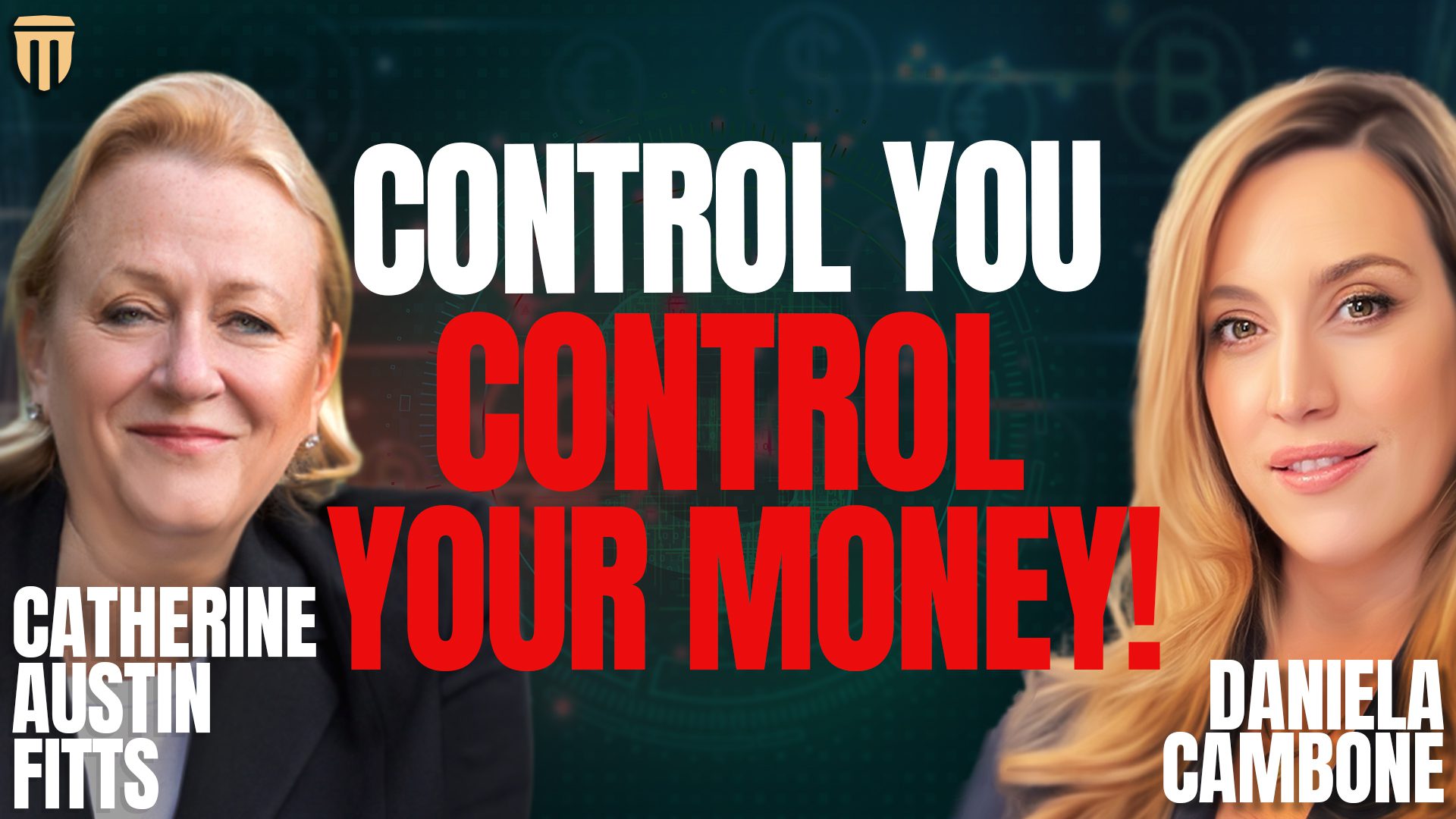
In a revealing conversation with ITM Trading’s Daniela Cambone, former Wall Street managing director and former Assistant Secretary of Housing Catherine Austin Fitts warns that the constant cycle of fear, financial instability, and institutional disruption may be obscuring a much larger transformation of the financial system.
Fitts calls this relentless stream of alarming headlines the “Shriek-O-Meter”—a machine that keeps people frightened, distracted, and reacting emotionally while fundamental changes unfold beneath the surface.
Her central warning is simple: The greatest danger may not be the next crisis itself, but how fear influences the financial decisions people make during it.
The “Shriek-O-Meter”: Is Financial Fear Distracting Americans From What’s Really Happening?
According to Fitts, the public is repeatedly pulled into cycles of panic about geopolitical conflict, cyberattacks, market volatility, and institutional failures.
But while attention remains fixed on the latest emergency, she argues that money, resources, and institutional power are steadily moving into new systems.
Fitts describes this long-term shift as a “financial coup.”
In her view, the process involves transferring influence away from traditional government institutions and toward increasingly powerful corporate and technological structures.
The resulting vulnerabilities may become visible through:
- Disruptions to banking and financial services.
- Cybersecurity threats affecting critical infrastructure.
- Growing dependence on centralized digital platforms.
- Artificial intelligence reshaping financial and government operations.
- Heightened uncertainty surrounding personal financial access.
Fitts questions whether institutional failures are simply the result of incompetence, technological complexity, or something more deliberate.
The distinction matters. But for ordinary Americans, the consequences of an operational failure can be serious regardless of its cause.
And those consequences become especially concerning when they involve access to money.
Programmable Money and CBDCs: Who Will Control Your Financial Transactions?
One of Fitts’ most significant concerns is the development of increasingly sophisticated digital financial infrastructure.
She warns that programmable money could eventually allow authorities or financial intermediaries to impose restrictions on how, when, and where money is spent.
Imagine a financial system in which transactions are not determined solely by whether you have sufficient funds.
Instead, access could also depend on permissions embedded within the payment infrastructure.
That possibility raises questions about:
- Financial privacy: Who can monitor transactions and spending patterns?
- Financial independence: Could institutions restrict certain purchases or transfers?
- Systemic vulnerability: What happens if centralized payment networks experience widespread outages?
- Institutional accountability: Who determines the rules governing access to digital money?
Central bank digital currencies (CBDCs) have become a major part of this debate.
However, an important distinction is necessary: a CBDC is not the same as an ordinary electronic bank transfer or instant-payment service.
The Federal Reserve says its FedNow system is not a CBDC. The legal and policy landscape also places significant restrictions on establishing a U.S. central bank digital currency.
The concern Fitts raises is not proof that a programmable control system has already been installed. It is a warning about the potential consequences of concentrating financial authority within digital infrastructure.
For Americans who value financial independence, the question is worth examining before technology and policy decisions become deeply embedded in everyday transactions.
Banking Disruptions Reveal a Bigger Risk: Having Money Doesn’t Always Mean Having Access
During the conversation, Cambone raises reports of banking customers experiencing difficulty accessing their funds.
Fitts acknowledges that technology upgrades, cyberattacks, and operational disruptions can have different explanations.
She does not establish that these incidents are coordinated attempts to introduce programmable money.
Nevertheless, they expose an important weakness in a highly digitized financial system.
A bank balance is not the same thing as immediate, uninterrupted access to purchasing power.
Consider what happens when:
- Online banking becomes temporarily unavailable.
- Payment-processing networks experience outages.
- Cybersecurity incidents interrupt financial services.
- Electricity or communications failures prevent electronic transactions.
Even a temporary disruption can become a serious problem for households that rely entirely on digital access.
For retirees and Americans managing their life savings, operational resilience is therefore an important part of financial planning.
That does not mean abandoning banks. It means understanding where financial dependencies exist and preparing reasonable alternatives.
Artificial Intelligence and Financial Power: Who Benefits From the Next Technology Shift?
Fitts also raises concerns about the concentration of power in artificial intelligence.
Her discussion contrasts open-source AI systems with large, centrally managed models operated by major technology companies.
She questions whether the economic incentives surrounding AI development could encourage companies to seek regulatory advantages, government support, or restrictions on competitors.
The interview includes speculative allegations about corporate conflicts and market activity that have not been independently established.
But the broader financial issue deserves attention.
As AI becomes increasingly integrated into banking, investment management, cybersecurity, and government operations, questions emerge about competition, accountability, and control.
When critical financial infrastructure depends on a small number of technology providers, operational problems can affect far more than one company.
For investors, this makes technological concentration and counterparty risk important considerations—not just stock prices and earnings forecasts.
Why Gold and Silver Matter When Confidence in the Financial System Weakens
As the interview turns toward the precious metals market, Fitts highlights a distinction investors frequently overlook.
Gold can experience sharp price declines during periods of geopolitical conflict and financial stress.
She notes that investors sometimes sell gold to raise liquidity, cover losses elsewhere, or respond to changing market conditions.
This means gold does not necessarily rise every time markets become fearful.
Yet the long-term demand for physical gold remains significant.
According to the World Gold Council, central banks purchased approximately 863 metric tons of gold in 2025, while net purchases reached another 675 metric tons during the first three quarters of 2026.
That continued accumulation demonstrates the importance many monetary authorities place on gold as a reserve asset.
For individuals, physical gold and silver offer different characteristics from conventional financial holdings.
Gold vs. Dollar: Understanding the Wealth Preservation Argument
The dollar is essential for everyday spending, while precious metals can serve a different purpose in a diversified financial strategy.
- Physical gold: A tangible asset with a long monetary history that does not depend on the creditworthiness of a corporate issuer.
- Physical silver: A tangible precious metal with both investment and industrial demand, though generally greater price volatility than gold.
- U.S. dollars: Highly liquid and useful for immediate obligations, but their purchasing power can erode through inflation.
- Digital financial assets: Convenient for trading and transferring value, but typically dependent on financial institutions, networks, and technological infrastructure.
Gold is often considered a long-term inflation hedge and a tool for wealth preservation. However, neither gold nor silver guarantees protection against inflation over shorter periods.
They can decline in value, generate no income, and involve storage, insurance, and transaction costs.
The primary appeal of directly owned physical precious metals is different.
They provide an opportunity to hold part of one’s wealth outside conventional electronic financial claims.
That distinction may become increasingly relevant as Americans evaluate the risks of currency depreciation, centralized payment systems, and financial-market instability.
Catherine Austin Fitts’ Most Important Advice: Don’t Let Fear Make Your Financial Decisions
Perhaps the most practical message from the interview is also the least sensational.
Fitts explicitly warns against making financial decisions out of panic.
She recalls encountering people who became frightened about the financial system and subsequently lost money to fraudulent precious-metals dealers or financial imposters promising protection.
Her advice is unequivocal:
“Never make a financial decision based on fear.”
That warning carries particular weight in an environment where financial scams can exploit concerns about bank failures, CBDCs, inflation, and government overreach.
Fitts recommends replacing emotional reactions with deliberate risk management.
For households seeking greater resilience, that can mean:
- Reviewing exposure to individual banks, financial institutions, and investment platforms.
- Maintaining appropriate emergency liquidity.
- Preparing for temporary disruptions to power, communications, and payment services.
- Conducting thorough due diligence before purchasing gold, silver, or other assets.
- Avoiding high-pressure offers that promise guaranteed protection or immediate profits.
- Addressing essential household projects and supply-chain dependencies before emergencies arise.
Fitts also describes maintaining extensive household emergency preparations, including independent access to basic necessities.
Her underlying point is that preparedness should be a continuous discipline—not something triggered by the latest alarming headline.
Financial Freedom Starts With Preparation, Not Panic
Catherine Austin Fitts’ warning challenges Americans to look beyond the crisis of the moment and examine the systems increasingly governing their financial lives.
Digital infrastructure, cybersecurity, artificial intelligence, and monetary policy are transforming how money moves.
Whether that transformation ultimately expands convenience, concentrates power, or introduces new vulnerabilities depends on the technologies, laws, and institutions involved.
What remains clear is that financial resilience requires more than watching markets rise and fall.
It requires understanding your assets, your counterparties, and your ability to access resources when circumstances change.
For those considering physical gold and silver, the objective should not be to react impulsively to alarming headlines. It should be to determine whether tangible assets belong within a carefully considered, long-term wealth preservation strategy.
Because the most valuable response to uncertainty is not fear.
It’s preparation, informed decisions, and maintaining control over the choices still within your reach.
About ITM Trading
ITM Trading has over 28 years of experience helping clients safeguard their wealth through personalized strategies built on physical gold and silver. Our team of experts delivers research-backed guidance tailored to today’s economic threats.
THINKING ABOUT PURCHASING GOLD & SILVER?
Get expert guidance from our team of analysts with 28+ years of experience.
👉 [SCHEDULE YOUR CALL HERE] or call 866-706-9061