
The Financial Reset Has Begun. Here’s What Comes Next

The financial reset is accelerating as digital currencies, inflation, energy costs, and central bank gold buying reshape the monetary system.
The Digital Euro Is Moving From Theory to Infrastructure
For years, central bank digital currencies (CBDCs) sounded theoretical. That is changing.
In September 2026, the Eurosystem launched Pontes, infrastructure allowing transactions involving tokenized assets to settle in central bank money. Meanwhile, preparations for a potential retail digital euro continue, with an operational pilot expected to begin in the second half of 2027.
Europe has not launched a retail CBDC that consumers are forced to use. But the infrastructure is advancing, and that deserves attention.
The ECB argues a digital euro could preserve access to central bank money while supporting privacy, resilience, and European monetary sovereignty. Critics ask a different question: once money becomes fully digital, how much control could eventually be built into the system?
$6.53 Diesel Is an Inflation Warning
The digital transformation isn’t the only warning sign.
The U.S. Energy Information Administration reported average U.S. on-highway diesel at $6.529 per gallon on September 21, 2026, $2.78 higher than a year earlier.
Diesel powers trucking, agriculture, construction, and distribution. When transportation becomes more expensive, those costs can eventually reach consumers through groceries, manufactured products, shipping, and other everyday expenses.
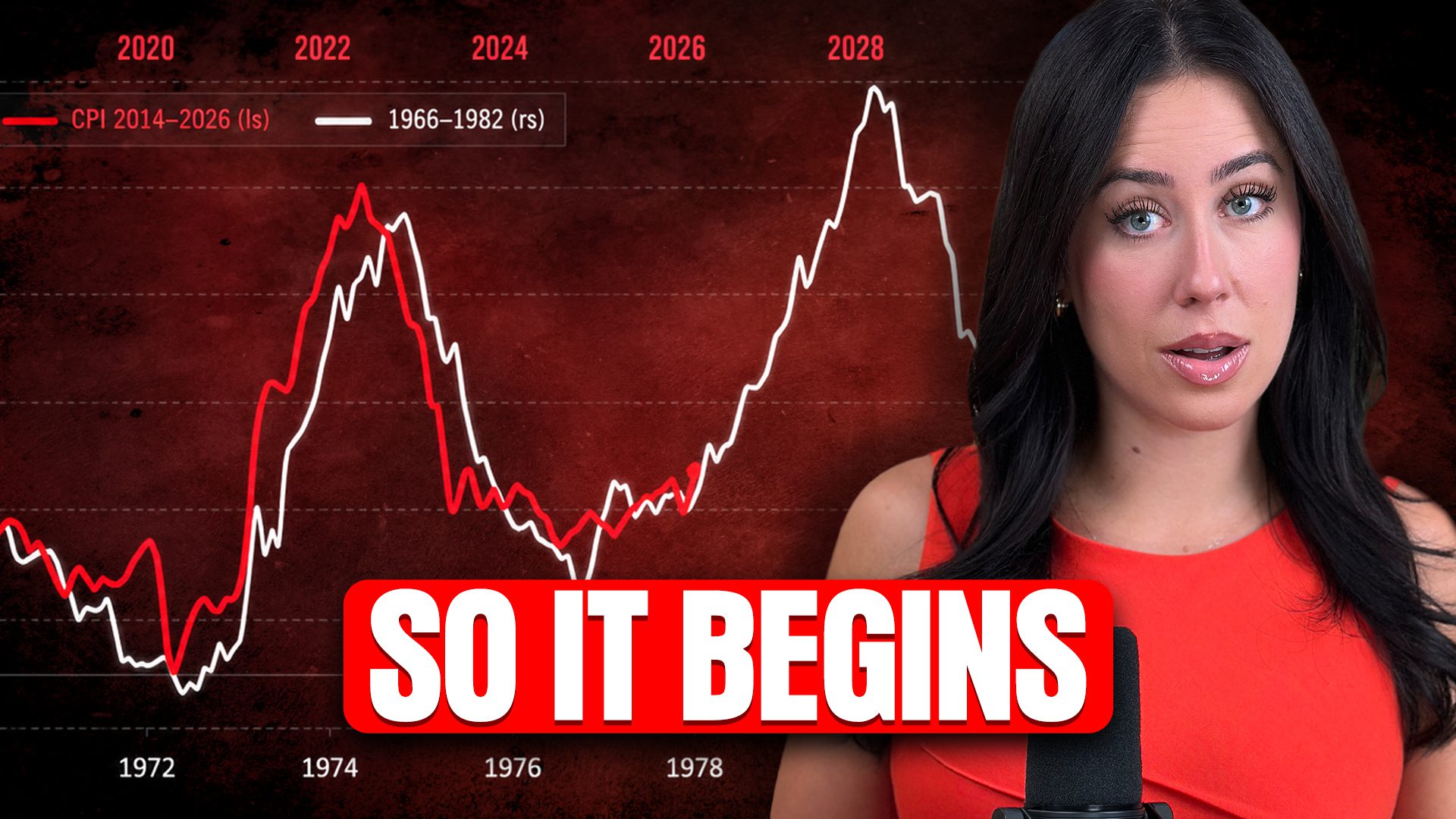
Meanwhile, CPI increased 3.4% over the 12 months ending August 2026.
Remember: lower inflation does not mean lower prices. It means prices are increasing more slowly.
For retirees living on fixed or relatively fixed incomes, that distinction matters.
The Financial Reset Is About Purchasing Power
A brokerage account can show a larger dollar balance while purchasing power quietly deteriorates.
That is why investors should ask more than, “Is my portfolio up?”
The bigger question is: What will those dollars actually buy five, ten, or twenty years from now?
Persistent inflation, enormous government debt, changing payment systems, and geopolitical realignment make that question increasingly difficult to ignore.
Central Banks Are Buying Gold
Now look at what the institutions managing the world’s monetary reserves are doing.
According to the World Gold Council, central banks have accumulated roughly 1,000 tonnes of gold annually on average over the past four years, approximately double the preceding decade’s average.
Why?
Gold has no issuing central bank. It cannot be printed with a keystroke. And unlike debt instruments, physical gold is not simultaneously somebody else’s liability.
This doesn’t prove central banks know a specific financial reset is imminent. But their behavior demonstrates that gold remains strategically important during periods of monetary and geopolitical uncertainty.
Gold and Silver in a Financial Reset
For individuals concerned about wealth preservation, physical gold and silver offer something fundamentally different from digital balances and paper financial claims: tangible assets.
Physical precious metals can be held outside traditional banking and brokerage infrastructure. Gold has historically served as a monetary asset and potential inflation hedge, while silver combines monetary characteristics with significant industrial demand.
The gold vs. dollar question isn’t simply about gold’s price next month. It’s about what you want to own when purchasing power and confidence in financial institutions come under pressure.
Gold and silver aren’t replacements for every financial asset, and prices can fluctuate. But tangible assets without traditional counterparty risk can play a fundamentally different role in a diversified strategy.
Don’t Wait for Someone to Announce the Reset
A financial reset probably won’t arrive with a headline declaring the old monetary system officially over.
It develops piece by piece: new infrastructure, rising debt, persistent inflation, changing reserves, and shifting monetary relationships.
Those pieces are already moving.
Nobody can predict the exact timetable. But you can stress-test your retirement strategy, understand your exposure to inflation and currency risk, and determine whether your wealth is positioned for a monetary system that may look very different from the one you spent decades building it in.
About ITM Trading
ITM Trading has over 28 years of experience helping clients safeguard their wealth through personalized strategies built on physical gold and silver. Our team of experts delivers research-backed guidance tailored to today’s economic threats.
THINKING ABOUT PURCHASING GOLD & SILVER?
Get expert guidance from our team of analysts with 28+ years of experience.
👉 [SCHEDULE YOUR CALL HERE] or call 866-351-4219