

They’re Coming for Your SAVINGS and Europe Just Admitted It

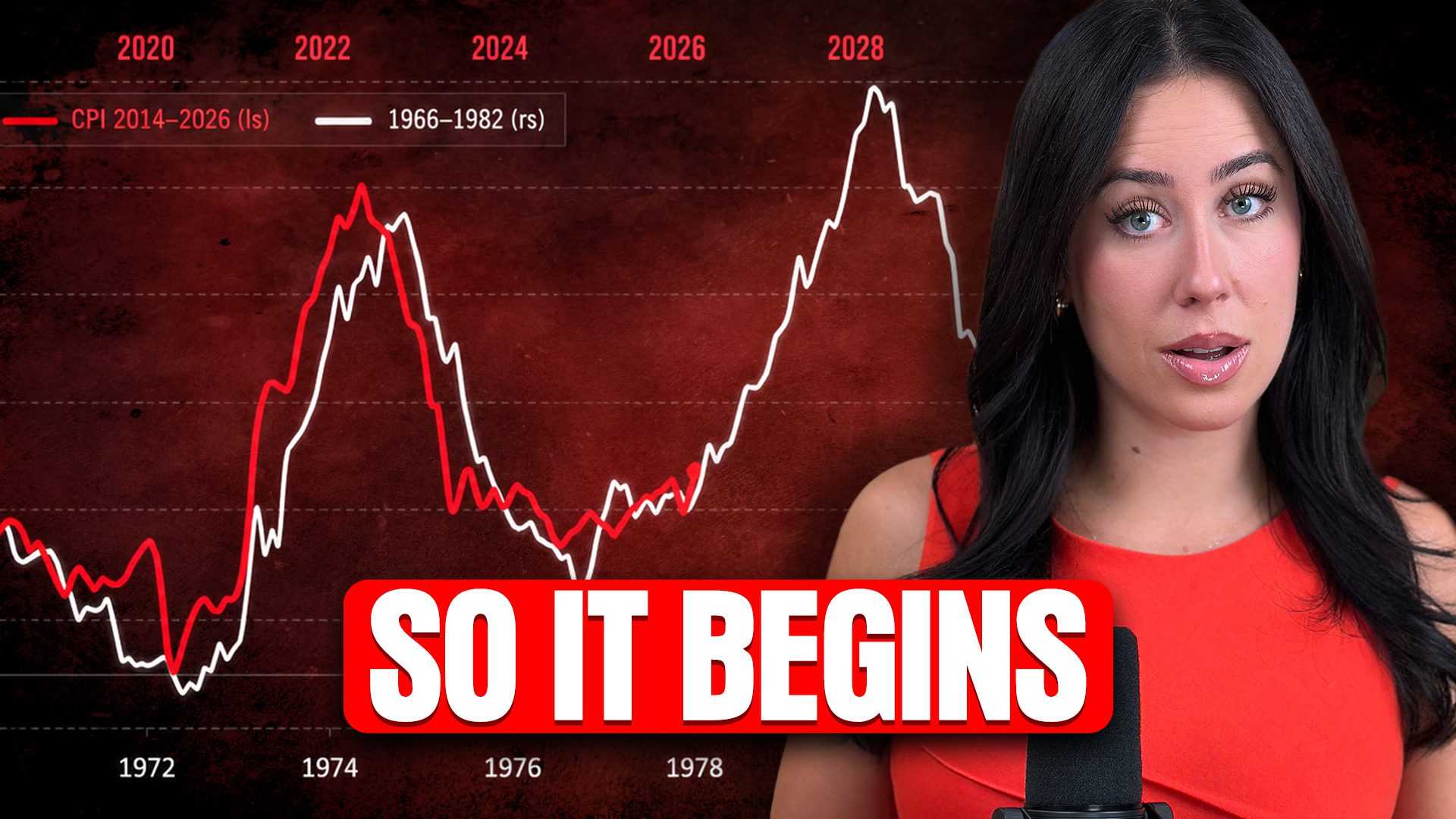
Europe wants to mobilize trillions in household savings. Could similar policies eventually threaten the independence of American savers?
Europe Is Looking at Your Savings Differently
What happens when governments stop viewing your savings as your financial safety net—and start viewing them as capital that needs to be put to work?
That question is becoming increasingly important in Europe.
European Commission President Ursula von der Leyen recently highlighted roughly €10 trillion in European household savings sitting in bank deposits, arguing that more of that money should be directed toward European businesses and investment.
Europe is not announcing a plan to seize bank deposits. But its new Savings and Investments Union is specifically designed to encourage households to move more savings into capital markets and “productive investments.”
And that deserves attention.
Europe Has a Massive Funding Problem
Several major European economies are already carrying debt loads exceeding 100% of GDP, while the continent also needs enormous additional investment for defense, infrastructure, energy, technology, and artificial intelligence.
The Draghi competitiveness report estimated Europe may require roughly €750 billion to €800 billion in additional investment every year through 2030.
Public money alone cannot cover it.
So policymakers are increasingly turning toward private capital.
And sitting directly in front of them are trillions of euros held by ordinary households.
The EU’s Savings and Investments Union aims to channel that money through new investment accounts, tax incentives, pension reforms, and deeper capital markets.
The concern isn’t that savings are being confiscated today. It’s that policymakers increasingly see household wealth as a solution to government and corporate funding problems.
Digital ID and the Digital Euro Are Moving Forward
At the same time, Europe is building out its digital financial infrastructure.
The EU has been advancing a continent-wide digital identity wallet, while the European Central Bank continues preparations for a potential digital euro.
The ECB currently says the digital euro would supplement cash rather than replace it and would not be programmable money that restricts what people can purchase.
But the broader trend is still worth watching.
More financial activity is moving into centralized, digital systems where regulations, access, and infrastructure are controlled by large institutions.
Rules that are optional today do not necessarily remain unchanged forever.
Could American Retirement Savings Be Next?
Similar developments are unfolding in the United States.
New Department of Labor proposals would make it easier for retirement plans to consider alternative investments such as private equity and private credit.
The pitch is greater access and potentially higher returns.
But private markets also come with risks, including:
Higher fees
Less transparency
Limited liquidity
Complex valuations
Long investment time horizons
That matters because parts of the private-credit market are already experiencing rising defaults and increased redemption pressure.
Wall Street also sees retirement wealth as a massive source of long-term investment capital for infrastructure, AI data centers, and private markets.
Europe sees household deposits.
Wall Street sees retirement accounts.
Either way, institutions are increasingly looking at private savings as capital that can fund their priorities.
Why Physical Gold and Silver Matter
This is where physical gold and silver are different.
A bank deposit depends on a financial institution.
A stock depends on a corporation.
A bond depends on a borrower.
A retirement account depends on custodians, markets, and regulations.
Physical gold and silver held directly are tangible assets that do not require another institution to fulfill a financial promise.
That is why precious metals have historically played a role in wealth preservation, particularly during periods of inflation, banking instability, currency weakness, and declining confidence in financial institutions.
For investors concerned about the gold vs. dollar relationship, physical metals can provide diversification outside traditional financial infrastructure.
Gold and silver are not risk-free, and prices fluctuate. But direct ownership offers something increasingly rare:
Wealth that exists outside someone else’s digital promise.
The Bottom Line
Europe is not confiscating savings today, and Americans are not being forced into private credit.
But governments, corporations, and Wall Street all need enormous amounts of capital.
And household savings represent one of the largest pools of money available.
That makes it increasingly important to understand where your wealth is held, what risks you are taking, and how much of your financial future depends entirely on institutions whose rules can change.
For many conservative investors, physical gold and silver can provide an important layer of independence and long-term wealth preservation.
About ITM Trading
ITM Trading has over 28 years of experience helping clients safeguard their wealth through personalized strategies built on physical gold and silver.
THINKING ABOUT PURCHASING GOLD & SILVER?
Get expert guidance from our team of analysts with 28+ years of experience.
👉 [SCHEDULE YOUR CALL HERE] or call 866-351-4219