

China Shuts Down Paper Gold in 24 Hours
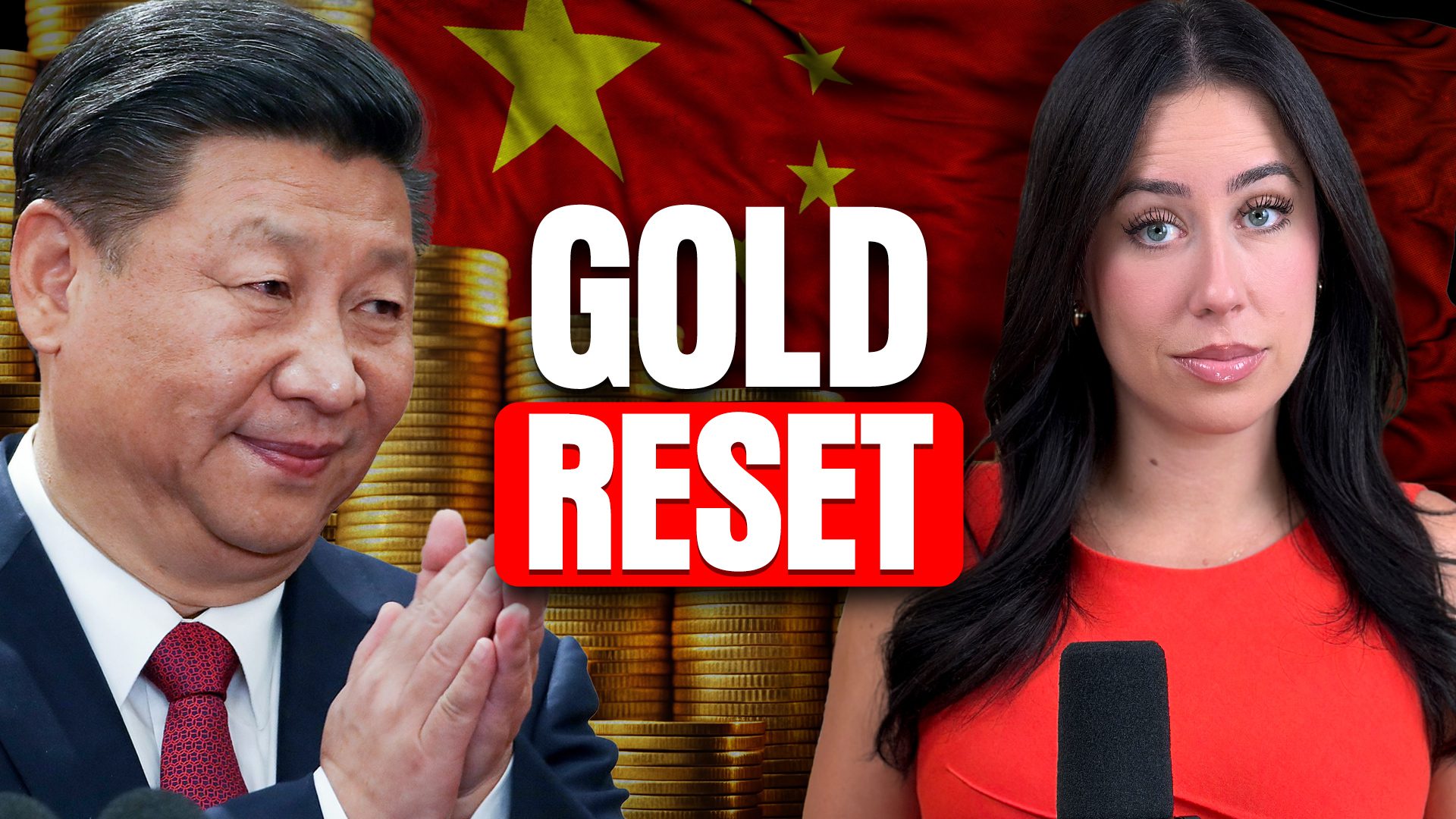
China’s paper gold shutdown exposes the widening divide between leveraged price exposure and physical gold and silver ownership.
What China’s Paper Gold Shutdown Actually Changes
Industrial and Commercial Bank of China, Postal Savings Bank of China, Ping An Bank, China Guangfa Bank and China Construction Bank are among the institutions reportedly restricting or terminating certain retail precious-metals trading services after the July 24 settlement.
The affected products include margin-based and deferred-settlement gold and silver contracts offered through bank platforms.
That distinction matters.
China is not prohibiting citizens from owning gold. Instead, its banks are withdrawing products that allow retail traders to control a larger precious-metals position with borrowed money or margin.
The products being removed can expose customers and banks to several risks:
- Rapid margin calls during sharp price swings
- Forced liquidation after a sudden decline
- Losses exceeding a customer’s initial cash deposit
- Credit exposure for the bank offering the product
- Speculation disconnected from long-term physical ownership
Gold’s violent move from nearly $5,600 an ounce in January 2026 toward the $4,000 level provided a blunt reminder of what leverage can do. A 20% or 30% correction is painful for an outright owner. For a leveraged trader, it can be fatal to the position.
The official explanation—investor protection and risk management—is therefore credible.
But it may not be the entire story.
The Paper Gold Machine Is Larger Than the Metal It Represents
For decades, international gold pricing has been heavily influenced by London’s over-the-counter bullion market and New York futures trading.
These markets serve legitimate purposes. Producers hedge future output. Manufacturers manage input costs. Traders provide liquidity. Investors gain price exposure without arranging transportation, insurance or storage.
Yet exposure to the price of gold is not necessarily ownership of gold.
Futures contracts can be physically settled, but most traders close or roll their positions before delivery. CME Group states that fewer than 3% of futures contracts result in physical delivery across its physically delivered markets. The delivery mechanism still connects futures to the underlying commodity, but the overwhelming majority of trading does not end with a bar changing hands.
This creates two very different forms of participation:
Paper exposure
- A futures contract, derivative or unallocated claim
- Often designed for trading, hedging or speculation
- May depend on an exchange, broker, bank or fund structure
- Can involve leverage and margin
- Usually settled or closed without the investor receiving metal
Physical ownership
- Specific gold or silver coins and bars
- Fully paid rather than purchased with margin
- Held directly or through clearly allocated storage
- Not dependent on a future price contract
- Intended primarily for long-term wealth preservation
The paper system does not automatically mean fraud or manipulation. Futures markets can provide liquidity and help connect buyers and sellers.
But the larger the volume of financial claims relative to the metal that participants actually demand, the more the system depends on confidence that most claimholders will never request delivery at the same time.
That is where counterparty risk enters the picture.
The Spoofing Scandals Were Not a Conspiracy Theory
Investors have good reason to question whether precious-metals prices always reflect honest supply and demand.
In 2020, JPMorgan agreed to pay more than $920 million to resolve criminal charges involving schemes in precious-metals futures and U.S. Treasury markets. According to the U.S. Department of Justice, traders on the bank’s precious-metals desk engaged in tens of thousands of unlawful trading sequences over roughly eight years.
The strategy included placing large orders traders intended to cancel before execution—a practice known as spoofing. Those orders were designed to create false signals about buying or selling interest.
Former JPMorgan precious-metals traders were later convicted and sentenced for fraud, attempted price manipulation and spoofing.
That does not prove every drop in gold or silver is manipulated.
It does prove something more uncomfortable: large institutions have used deceptive orders to distort the appearance of supply and demand in precious-metals markets—and the misconduct continued for years before enforcement caught up.
The question is not whether manipulation has ever happened.
The court records settled that debate.
The question is how much confidence investors should place in a market where the financial trading volume can vastly exceed the amount of metal moving through the physical system.
China Is Cutting Paper While Accumulating Physical Gold
The July 24 deadline becomes more significant when viewed alongside China’s broader gold strategy.
The People’s Bank of China reported purchasing 15 metric tons of gold in June 2026, its largest monthly addition since October 2023. That extended China’s officially reported purchasing streak to 20 consecutive months and lifted reported holdings to approximately 2,346 metric tons.
China added 40 tons during the first half of 2026 alone.
Meanwhile, central banks globally have accumulated an average of roughly 1,000 metric tons of gold annually over the past four years—about twice the average pace of the preceding decade. Reserve managers cite geopolitical uncertainty, diversification and concerns about the international monetary system among their reasons for holding gold.
Consider the contrast:
- Chinese retail investors are losing access to certain leveraged gold trades.
- China’s central bank continues accumulating physical reserves.
- Physical bullion ownership remains legal and available.
- China is building infrastructure to store, clear and settle physical gold.
- Hong Kong is being positioned as a larger regional bullion hub.
Beijing appears less interested in stopping gold ownership than in deciding what kind of gold market it wants to encourage.
Speculative leverage is being restricted.
Sovereign accumulation and physical infrastructure are moving forward.
Hong Kong Is Building the Plumbing for Physical Gold
In June 2025, the Shanghai Gold Exchange launched its first offshore certified delivery vault in Hong Kong, along with contracts that allow delivery in the city.
The project extended the SGE’s trading, clearing, settlement and vaulting network beyond mainland China.
China and Hong Kong accelerated that effort in July 2026.
Hong Kong launched a central precious-metals clearing system and a “Delivery Connect” program with the Shanghai Gold Exchange. The city also announced ambitions to increase gold storage capacity to more than 2,000 metric tons by 2030—over ten times its current capacity.
Hong Kong officials are also developing yuan-denominated futures and offering incentives intended to attract more international gold trading and settlement.
These developments do not mean London and New York will suddenly lose control of global gold pricing on July 24.
Market dominance requires more than vaults. It requires liquidity, transparent rules, international trust, convertibility and deep participation from global financial institutions.
But infrastructure comes before market share.
And China is methodically building that infrastructure.
The emerging pattern is difficult to ignore: reduce reliance on Western financial channels, accumulate strategic metal and create an Asian system capable of pricing, clearing and delivering gold in renminbi.
That does not guarantee a new monetary order.
It does create an alternative.
Could Physical Gold Eventually Dictate the Price?
The most important consequence of China’s strategy may not be an immediate gold-price surge.
It may be a gradual change in how the market determines value.
In a paper-dominated system, enormous financial positions can be created and closed without large quantities of physical gold moving. Liquidity, leverage, interest rates, currency moves and speculative positioning can dominate short-term pricing.
In a physical-first system, availability matters more.
When buyers demand specific bars, in approved locations, for actual delivery, supply becomes a harder constraint. A seller cannot manufacture another physical ounce by entering a new line on a trading screen.
That could produce:
- Higher regional premiums when physical demand surges
- Greater competition for available bullion
- Increased influence for Asian trading hours
- More renminbi-denominated gold activity
- A wider distinction between physical prices and leveraged financial exposure
This is a long-term possibility, not a prediction that prices will explode immediately after July 24.
China’s bank decision alone is unlikely to overturn global gold markets. The affected retail products represent only one section of a much larger international system.
But the decision is another brick in a wall that has been under construction for years.
The West still tends to treat gold primarily as a trade.
The East increasingly treats it as a reserve asset, a settlement instrument and monetary insurance.
Silver Is Sending Its Own Physical Warning
Silver may ultimately face an even tighter physical equation.
The Silver Institute expects the global silver market to remain in deficit in 2026 for the sixth consecutive year, with a projected shortfall of approximately 67 million ounces. Industrial fabrication is forecast near 640 million ounces, supported by demand from electronics, artificial intelligence infrastructure, automotive applications and solar technology.
Silver occupies two worlds at once.
It is a monetary metal with thousands of years of history, but it is also an essential industrial input.
That means available supply must satisfy:
- Investment demand
- Solar-panel manufacturing
- Electronics and electrical equipment
- Automotive applications
- Jewelry and silverware
- Physical coin and bar demand
A paper silver contract can create price exposure.
It cannot be installed in a solar panel, electrical connection or data center.
Persistent physical deficits do not guarantee an immediate price increase. Inventories, recycling, investor selling and substitution can delay the consequences. But deficits cannot continue indefinitely without eventually forcing an adjustment somewhere—through price, demand destruction or new supply.
Physical Gold and Silver: Ownership Versus Price Exposure
The China paper gold shutdown exposes a distinction every investor should understand:
Are you trying to trade the price, or are you trying to protect wealth?
Paper instruments may be appropriate for short-term speculation, portfolio liquidity or hedging. They are often easier to buy and sell, and they eliminate the immediate burden of storing metal.
But they may also introduce dependence on:
- A bank
- A brokerage firm
- A fund sponsor
- An exchange
- A clearinghouse
- A custodian
- The continued functioning of the financial system
Physical gold and silver held directly are among the few financial assets that are not someone else’s debt obligation.
They still carry practical considerations, including premiums, storage, security, insurance and resale spreads. No asset is without risk.
The difference is that a physical coin or bar does not require a corporate issuer, central bank or trading counterparty to honor a future promise.
That is why precious metals have historically served as:
- Tangible assets outside the digital banking system
- A potential inflation hedge over long periods
- A tool for wealth preservation
- Monetary insurance against currency devaluation
- Protection from certain forms of counterparty risk
- A hedge in the enduring gold vs. dollar debate
July 24 Is a Signal, Not a Finish Line
China’s July 24 policy change will not automatically send gold and silver prices vertically higher.
It will not shut down COMEX.
It will not instantly replace London or New York with Shanghai and Hong Kong.
But it reveals where China may be heading.
While Western markets continue expanding financial claims, derivatives and price exposure, China is accumulating bullion, building vaults, creating clearing networks and reducing retail leverage inside its banking system.
The immediate market reaction may be muted.
The strategic direction is not.
The global gold market is slowly dividing into two philosophies: one built around trading promises and another increasingly built around controlling the physical asset.
For retirement savers and financially conservative investors, the lesson is straightforward. It is not enough to ask how much exposure you have to gold or silver.
You must understand what you own, where it is held, who controls it and what must continue functioning for you to access it.
Because in a crisis, the difference between owning an asset and owning a promise can become painfully clear.
About ITM Trading
ITM Trading has over 28 years of experience helping clients safeguard their wealth through personalized strategies built on physical gold and silver. Our team of experts delivers research-backed guidance tailored to today’s economic threats.
THINKING ABOUT PURCHASING GOLD & SILVER?
Get expert guidance from our team of analysts with 28+ years of experience.
👉 [SCHEDULE YOUR CALL HERE] or call 866-351-4219