
Trump’s Fed Will Be Forced to Print Money Like “CRAZY” – Clem Chambers
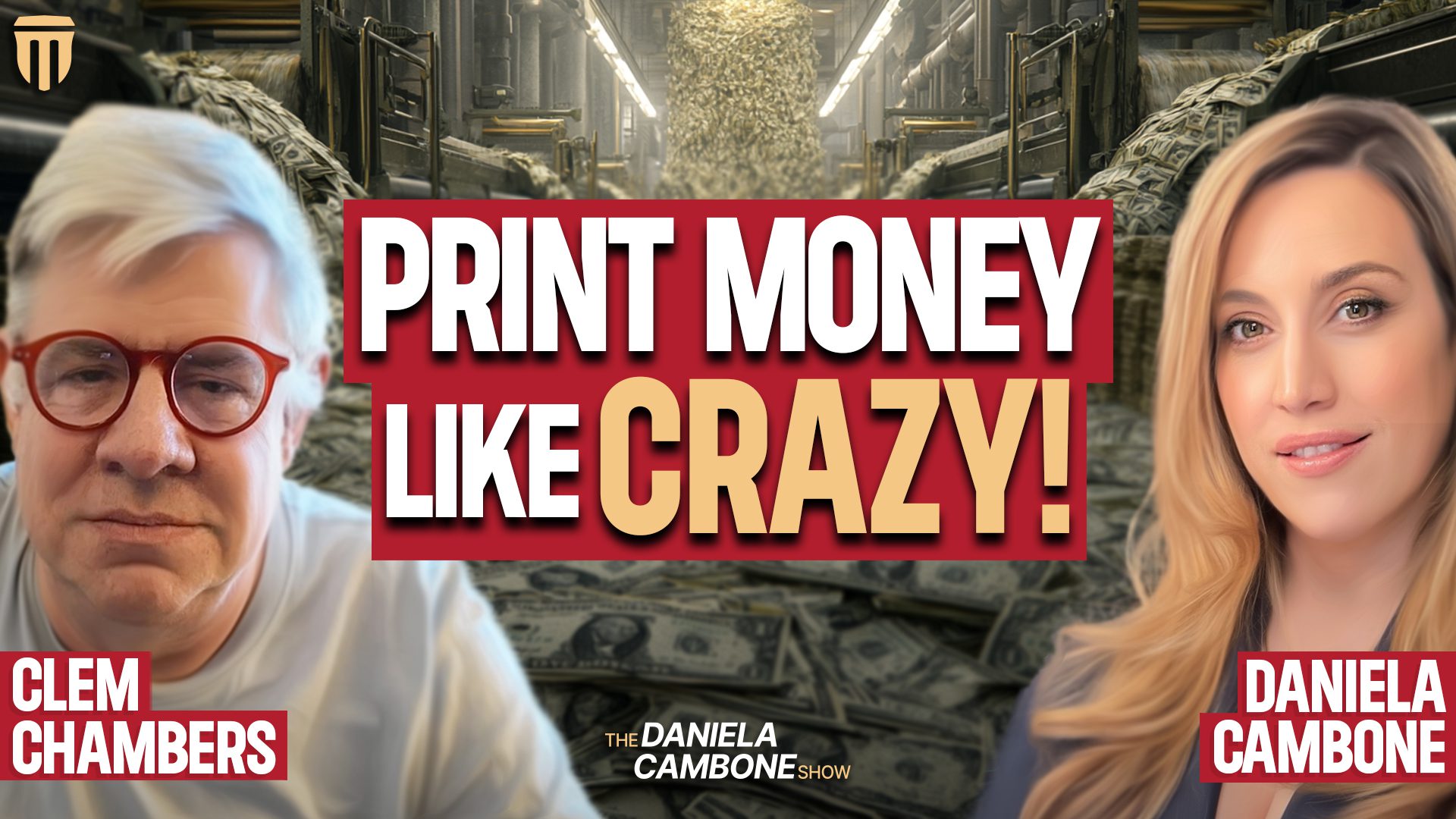
Is America About to Enter a New Era of Endless Money Printing?
The latest labor market data may have grabbed headlines, but Fed money printing could ultimately become the far bigger story. According to financial commentator Clem Chambers, the United States is approaching a point where monetary expansion may no longer be optional—it may become the only path policymakers believe they have left.
With manufacturing reshoring, trillion-dollar AI investments, and record government deficits all demanding capital simultaneously, Chambers argues that the next Federal Reserve could be forced into an extended period of accommodative monetary policy. If that happens, investors should ask one question:
What happens to the purchasing power of the dollar?
For anyone concerned about wealth preservation, inflation, and the long-term role of gold and silver, the answer matters.
Fed Money Printing Could Become the New Economic Strategy
Recent economic data has painted an increasingly mixed picture.
While unemployment remains relatively low, payroll growth has slowed considerably, coming in well below expectations. Markets immediately shifted from expecting additional rate hikes to anticipating a much more dovish Federal Reserve.
According to Chambers, however, interest rate debates may be missing the larger structural issue.
He argues that three enormous financial obligations now face the United States simultaneously:
- Massive federal budget deficits
- Rebuilding domestic manufacturing
- Financing America’s AI infrastructure race
Each of these objectives requires enormous amounts of capital.
Attempting to accomplish all three while maintaining restrictive monetary policy, Chambers suggests, could severely weaken economic growth and financial markets.
Can America Rebuild Without Easy Money?
One of Chambers’ central arguments is that America cannot simultaneously:
- Reshore manufacturing
- Compete technologically with China
- Finance AI expansion
- Maintain high interest rates
His conclusion is straightforward:
Loose monetary policy may become politically and economically unavoidable.
He even coined the phrase “printathon” to describe what he believes may be required.
Whether or not investors agree with that outlook, the underlying reality remains clear: rebuilding industrial capacity while financing massive public deficits would place extraordinary pressure on monetary policy.
Why Inflation May Stay Elevated for Years
During the interview, Chambers argued that future money creation may not immediately resemble historical episodes of runaway inflation.
Instead, he believes newly created liquidity would likely flow first into financial assets and large-scale investment projects before filtering into the broader economy.
His expectation is for inflation to remain persistently above recent historical norms over the coming decade rather than quickly returning to the Federal Reserve’s long-term target.
If inflation proves stickier than expected, cash savings could steadily lose purchasing power.
That possibility explains why many long-term investors continue to diversify into tangible assets.
The China Challenge Is Bigger Than Interest Rates
Another major theme was America’s growing competition with China.
According to Chambers, rebuilding domestic manufacturing is no longer simply an economic objective—it’s increasingly viewed as a national security issue.
He highlighted several vulnerabilities:
- Dependence on overseas semiconductor production
- Rare earth mineral supply chains
- Industrial manufacturing capacity
- Critical technology infrastructure
Whether one agrees with every conclusion or not, supply chain resilience has become a central policy discussion in Washington and among global investors alike.
What Does This Mean for Gold and Silver?
If monetary expansion accelerates while inflation remains elevated, history suggests investors often seek assets that cannot be created with the stroke of a keyboard.
That is where physical gold and physical silver frequently enter the conversation.
Chambers explained that while he actively manages his own positions, he believes long-term investors should begin thinking about gradually rebuilding exposure through dollar-cost averaging rather than attempting to perfectly time market bottoms.
His reasoning is simple:
- Persistent inflation reduces purchasing power.
- Hard assets have historically preserved wealth over long periods.
- Precious metals provide diversification during monetary uncertainty.
Gold vs Dollar: Why Tangible Assets Still Matter
Periods of aggressive monetary expansion have historically raised important questions about fiat currency purchasing power.
While no asset guarantees future performance, gold has repeatedly served as a store of value during periods of:
- Elevated inflation
- Currency debasement
- Financial uncertainty
- Geopolitical instability
Silver has also attracted investors seeking both monetary and industrial exposure.
For many financially conservative Americans, owning physical precious metals isn’t about chasing short-term price moves.
It’s about wealth preservation.
Unlike paper assets, physical gold and silver carry no counterparty risk and cannot be printed into existence.
As concerns over government debt, deficits, and future monetary policy continue to grow, tangible assets remain an important component of many diversified portfolios.
Related reading: [Link to related guide or post]
Conclusion
The debate over interest rates may dominate today’s headlines, but the larger question centers on the future direction of U.S. monetary policy.
If rebuilding industry, funding AI expansion, and financing record government spending require significantly easier money, investors may face years of elevated inflation and continued pressure on the purchasing power of cash.
Whether or not the Federal Reserve ultimately follows the path Clem Chambers outlined, preparing for multiple economic outcomes has never been more important.
For investors focused on long-term financial security, understanding the role that gold, silver, and other tangible assets can play in a diversified strategy remains as relevant as ever.
About ITM Trading
ITM Trading has over 28 years of experience helping clients safeguard their wealth through personalized strategies built on physical gold and silver. Our team of experts delivers research-backed guidance tailored to today’s economic threats.
THINKING ABOUT PURCHASING GOLD & SILVER?
Get expert guidance from our team of analysts with 28+ years of experience.
👉 [SCHEDULE YOUR CALL HERE] or call 866-706-9061