I Grew Up Poor – How I’m Preparing My Kids for the Dying Fiat World Before Next Crash
The Greatest Wealth Transfer May Not Be Fiat
What if the most valuable asset you leave your children isn’t your investment portfolio—but their understanding of money itself?
As governments continue printing trillions, central banks aggressively accumulate gold, and debt levels spiral beyond historical precedent, many parents are asking a difficult question: How do you prepare children for a financial system that appears increasingly unstable?
The challenge is even greater for those who grew up with very little.
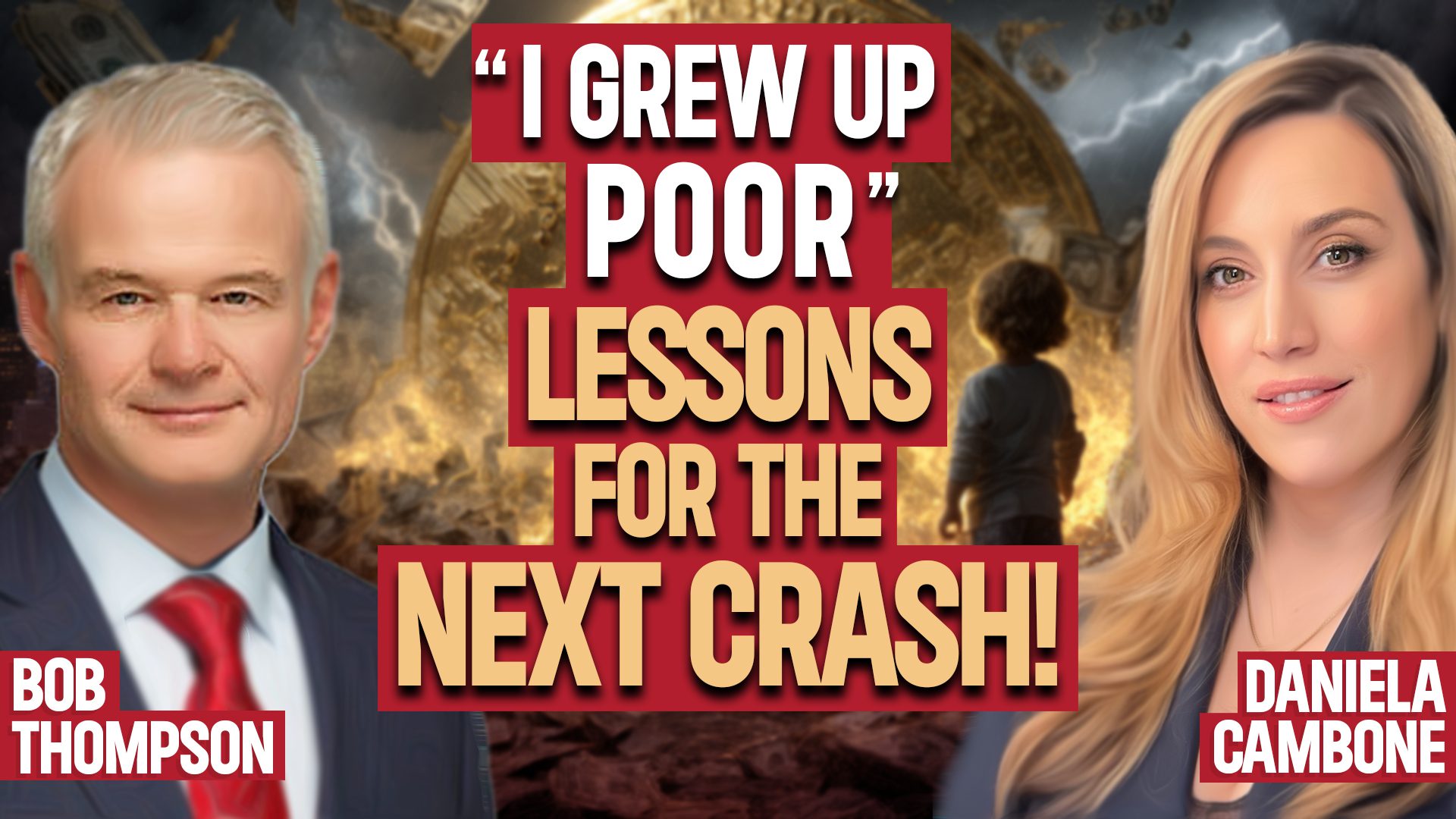
Veteran portfolio manager Bob Thompson recently shared a deeply personal story about growing up poor, learning hard lessons about money, and why he’s now teaching his young children principles that most schools never touch.
His message carries a warning that many investors are only beginning to recognize:
The next generation may inherit a world where understanding money matters more than ever before.
Growing Up Poor Taught Lessons Wealth Never Could
In today’s culture of instant gratification, it’s easy to forget that adversity often creates resilience.
Thompson recalls growing up with a single father after his parents divorced. Money was scarce.
After soccer games, other children would head to McDonald’s while he quietly told his father they didn’t need to go because he understood the family couldn’t afford it.
One memory never left him.
A local barber offered him free haircuts after learning about his family’s financial struggles.
While grateful, Thompson remembers telling his father:
“I don’t want people giving us things because we’re poor.”
That moment became a turning point.
Rather than creating bitterness, hardship created motivation.
The experience ultimately led him to study investing, saving, compound growth, and wealth building—skills that eventually transformed his future.
Today, many parents face the opposite problem.
Their children may never experience the adversity that taught previous generations how money really works.
And that creates a different kind of risk.
The Fiat Money Trap Most Children Are Never Taught
For decades, financial literacy has steadily disappeared from mainstream education.
Schools teach algebra.
They teach history.
But they rarely teach:
- Compound interest
- Inflation
- Asset ownership
- Dividend income
- Currency debasement
- Gold and silver ownership
- Wealth preservation
The result?
Many adults enter the workforce without understanding how money is created, how purchasing power erodes, or why tangible assets matter.
This becomes especially dangerous during periods of monetary instability.
Since 2020 alone:
- Trillions of dollars have been created globally.
- Government debt has exploded.
- Inflation has permanently reduced purchasing power.
- Central banks have purchased record amounts of gold.
Meanwhile, many families remain almost entirely dependent on fiat currency and traditional financial assets.
The next generation could face a financial landscape dramatically different from the one their parents inherited.
How One Investor Is Teaching His Kids About Real Wealth
Rather than waiting until adulthood, Thompson began teaching financial principles early.
His Thompson Learning Academy focuses on children as young as six years old.
One lesson stands out.
Every child uses three jars:
Jar #1: Saving
Learning delayed gratification.
Jar #2: Helping Others
Learning generosity and responsibility.
Jar #3: Spending
Learning budgeting and decision-making.
Simple.
Yet profoundly effective.
The goal isn’t merely teaching children how to earn money.
It’s teaching them what money actually represents.
Value.
Effort.
Responsibility.
Freedom.
Why Ownership Changes Everything
One of Thompson’s most powerful lessons involves stock ownership.
He purchased small positions in companies his children already understood—McDonald’s and Disney.
The result surprised him.
During a visit to McDonald’s, his eight-year-old observed the busy restaurant and immediately connected customer traffic to profits.
Then came the breakthrough moment.
He explained:
“The more people buy here, the more money they make and the more dividends they pay me.”
At just eight years old, he understood something many adults never fully grasp:
Owners think differently than consumers.
This mindset shift is critical in a world increasingly dominated by debt-fueled consumption.
Gold, Silver, and Building Generational Thinking
Perhaps the most fascinating lesson involves physical gold.
When each of his sons was born, Thompson purchased a one-ounce gold coin.
Those coins are not investments to be traded.
They’re symbols.
A permanent reminder of real wealth.
His children already understand:
- Gold cannot be printed.
- Gold retains purchasing power.
- Gold has survived every fiat currency experiment in history.
- Gold belongs to them for life.
In a world increasingly built on digital promises, introducing children to tangible assets may prove invaluable.
Why Gold and Silver Could Be Entering Their Most Powerful Phase Yet
While Western investors remain largely absent, central banks continue buying gold at historic levels.
This divergence matters.
According to Thompson, one of the strongest bullish signals is that most investors still haven’t participated.
Historically, bull markets end when everyone owns the asset.
Today’s reality looks very different.
Many wealthy investors still hold minimal allocations to gold.
Meanwhile:
- Central banks continue accumulating.
- Sovereign debt keeps rising.
- Currency debasement accelerates.
- Geopolitical tensions remain elevated.
Silver may offer even greater upside.
The gold-to-silver ratio remains historically high, suggesting silver has significant room to outperform if precious metals continue higher.
As Thompson notes:
The crowd is not yet fully engaged.
And that’s often when the biggest opportunities still remain.
Wealth Preservation in a World of Financial Bubbles
While enthusiasm surrounding artificial intelligence and technology stocks continues to grow, Thompson warns investors to remember history.
Every major bubble follows a familiar pattern:
- Excess speculation
- Massive IPO activity
- Euphoric sentiment
- Capital concentration
- Eventual reversal
The concern isn’t necessarily that technology fails.
The concern is valuation.
When markets become crowded, capital eventually seeks alternatives.
That rotation could become a major catalyst for gold and silver.
As confidence in traditional assets weakens, investors historically migrate toward hard assets that cannot be created by central banks.
That is where gold and silver have traditionally excelled.
Gold vs Dollar: The Ultimate Long-Term Test
For decades, investors have debated gold versus the dollar.
But the comparison misses a critical point.
Gold is not trying to outperform the dollar.
Gold is measuring the dollar’s loss of purchasing power.
Every major fiat currency in history has eventually declined.
The U.S. dollar remains the world’s reserve currency, but debt expansion, deficits, and monetary intervention continue to raise concerns about its long-term trajectory.
This is why many financially conservative families continue allocating a portion of their wealth to:
- Physical gold
- Physical silver
- Tangible assets
- Wealth preservation strategies
Not because they expect the end of the world.
Because they understand history.
Preparing Children for the Next Financial Era
The greatest lesson from Bob Thompson’s story may have nothing to do with investing.
It is about values.
Growing up poor taught him resilience.
It taught him gratitude.
It taught him discipline.
Those same principles are now being passed to his children through lessons about ownership, responsibility, saving, and precious metals.
The next financial crisis may arrive differently than the last.
But one reality remains constant:
Families that understand money typically navigate uncertainty far better than those who don’t.
Whether the future brings inflation, recession, market volatility, or continued currency debasement, teaching the next generation how money truly works may be one of the most valuable investments a parent can make.
🔴 REGISTER NOW: Behind The Curtain
Date: Wednesday, June 3rd 2026
Time: 9:00am PST / 12:00pm EST
Save Your Seat: https://my.demio.com/ref/EryXzqHhuNS0VIii?utm_source=yt&utm_medium=video
About ITM Trading
ITM Trading has over 28 years of experience helping clients safeguard their wealth through personalized strategies built on physical gold and silver. Our team of experts delivers research-backed guidance tailored to today’s economic threats.
THINKING ABOUT PURCHASING GOLD & SILVER?
Get expert guidance from our team of analysts with 28+ years of experience.
👉 [SCHEDULE YOUR CALL HERE] or call 866-706-9061