The Next Big Crash Lurks: How They Plan to Take Everything From You
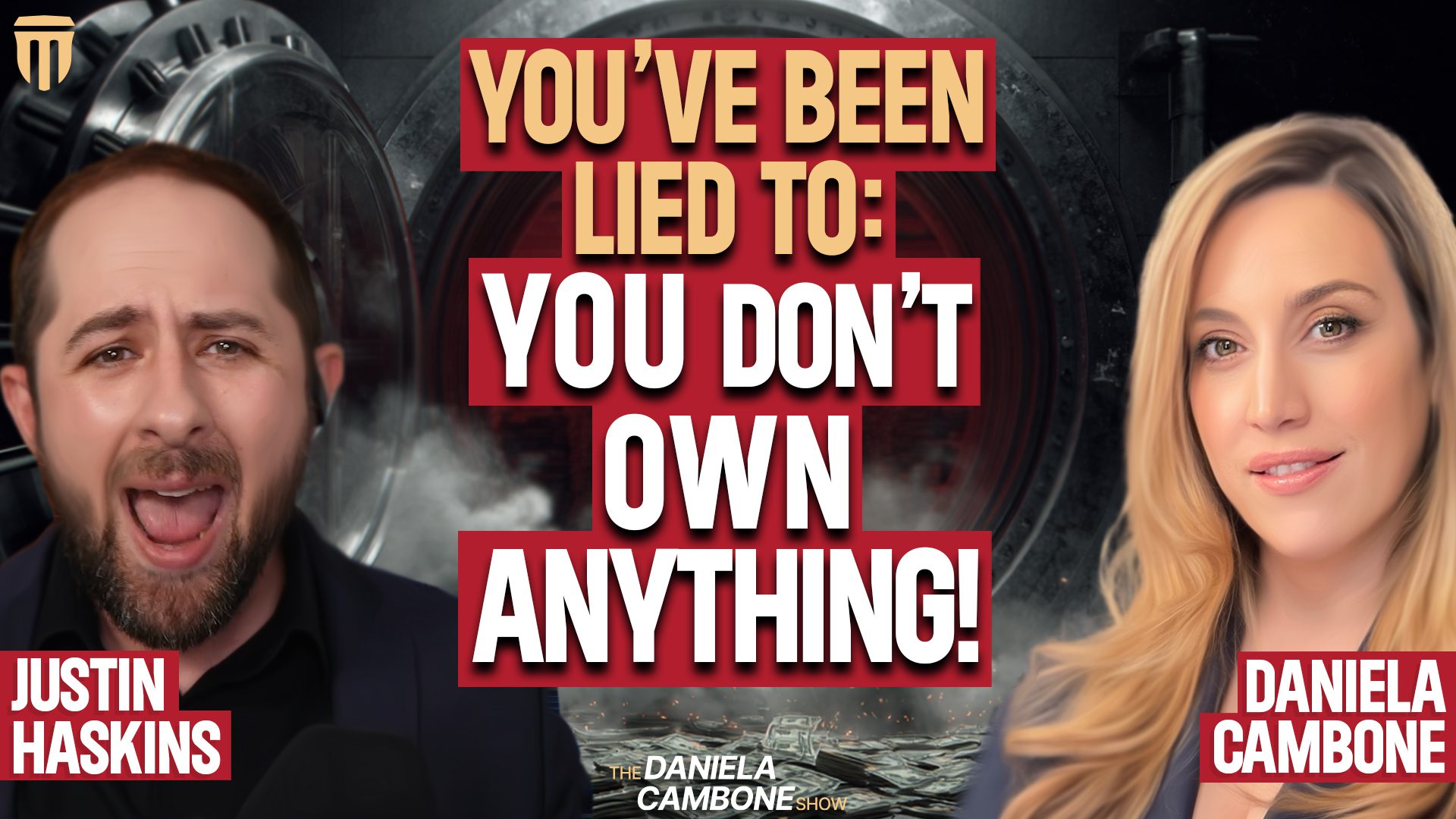
As fears of the Next Big Crash intensify, bestselling author Justin Haskins is warning Americans that the real danger isn’t just inflation, market volatility, or another banking crisis. The real threat may be far more disturbing: legally speaking, you may not actually own the stocks, bonds, ETFs, or retirement assets sitting in your brokerage account.
That’s not conspiracy theory rhetoric. It’s the hidden structure of the modern financial system.
Behind every 401(k), IRA, and brokerage account sits a little-known institution called the Depository Trust Company (DTC), a centralized system that controls nearly all securities ownership in America. And according to Haskins, that structure could become the foundation for the largest transfer of wealth in history if a systemic collapse hits Wall Street.
For Americans nearing retirement, the implications are staggering.
The Hidden Reality Behind Your Retirement Account
Most investors assume ownership is simple:
- You buy shares
- They belong to you
- Your broker safeguards them
But according to Haskins, that assumption is dangerously incomplete.
Legally, most Americans are merely “beneficial owners” of their investments — not the direct registered owners. That distinction matters enormously during periods of financial stability… and even more during periods of crisis.
The system changed decades ago during the Wall Street “paperwork crisis” of the 1960s and 1970s. As trading volumes exploded, financial institutions sought a faster, centralized method to process securities transactions.
Their solution?
Centralize ownership.
Instead of investors directly owning stock certificates, ownership was consolidated through the DTC system. Today, roughly $100 trillion in securities moves through this structure.
The convenience came with a hidden cost:
Americans surrendered direct ownership rights.
How the DTC System Changed Everything
The Depository Trust Company was marketed as a modernization effort designed to streamline trading and eliminate paperwork chaos.
But critics argue it created something far more dangerous:
- A hyper-centralized financial control system
- Reduced property rights for investors
- Massive leverage opportunities for Wall Street
- The explosive growth of derivatives markets
The result was a financial machine capable of generating enormous profits for major institutions while quietly distancing ordinary Americans from direct ownership of their wealth.
And the timing wasn’t accidental.
The restructuring of securities ownership happened alongside:
- The abandonment of the gold standard
- The rise of fiat currency dominance
- Expanding Federal Reserve power
- Increasing debt dependency across the economy
Many financially conservative analysts see these shifts as interconnected pieces of a broader transformation away from sound money and tangible ownership.
Why the Derivatives Market Could Trigger the Next Big Crash
Wall Street’s derivatives market has become one of the greatest systemic risks in modern financial history.
Depending on the methodology used, global derivatives exposure is estimated in the hundreds of trillions — with some estimates exceeding $1 quadrillion in notional value.
That’s not real productive wealth.
It’s leverage stacked upon leverage.
It’s financial engineering layered on top of debt.
And according to Haskins, the modern ownership structure made this expansion possible because securities could now be rehypothecated, collateralized, and leveraged throughout the system.
In plain English:
Your retirement assets may already be serving as collateral deep inside the financial plumbing of Wall Street.
If that sounds eerily similar to the 2008 financial crisis, that’s because it is.
Back then:
- Mortgage-backed securities imploded
- Counterparty risk spread everywhere
- Financial institutions faced insolvency
- Governments rushed to backstop the system
The next collapse could be even larger.
Warning Signs Are Flashing Everywhere
The establishment insists the economy remains resilient.
But beneath the surface, the warning signs continue piling up:
Exploding Government Debt
America’s debt spiral has become mathematically unsustainable.
Persistent Inflation
Despite official narratives, the purchasing power of the dollar continues eroding.
Commercial Real Estate Weakness
Office vacancies and refinancing risks threaten regional banks.
Consumer Debt Crisis
Credit card balances, auto loans, and student debt remain near historic highs.
Global Instability
Wars in Europe and the Middle East continue fueling geopolitical uncertainty.
Fragile Banking System
Confidence in banks remains shaken after recent regional bank failures.
None of these problems exist in isolation.
Together, they form the conditions for a potential systemic event — the kind policymakers may use to justify extraordinary financial interventions.
“You’ll Own Nothing” May Already Be Here
The World Economic Forum’s infamous phrase — “You’ll own nothing and be happy” — sparked outrage because it touched a nerve.
For many Americans, ownership itself has become increasingly abstract.
- Your money sits digitally inside banks
- Your retirement exists inside centralized custodians
- Your investments operate through layered intermediaries
- Your purchasing power depends entirely on central bank policy
The shift away from tangible ownership toward institutional dependency has unfolded slowly enough that most people never noticed it happening.
Until now.
And if another major financial crisis erupts, critics fear governments and financial institutions may prioritize systemic survival over individual property rights.
History suggests they always do.
Why Gold and Silver Matter More Than Ever
This is precisely why physical gold and silver continue attracting investors seeking real wealth preservation.
Unlike digital assets trapped inside financial institutions:
- Physical gold has no counterparty risk
- Silver cannot be printed by central banks
- Tangible assets exist outside the derivatives system
- Precious metals historically preserve purchasing power during currency debasement
For thousands of years, gold and silver have functioned as trusted stores of value during:
- Banking crises
- Inflationary periods
- Currency collapses
- Political instability
- Sovereign debt crises
Today’s environment increasingly resembles the conditions that historically drive investors toward hard assets.
That’s why central banks themselves have been aggressively accumulating gold reserves while publicly reassuring citizens that inflation is “under control.”
The contradiction speaks volumes.
Gold vs Dollar: A Growing Divide
The modern dollar system depends on confidence.
Gold depends on scarcity and history.
As debt expands and monetary intervention accelerates, many Americans are rediscovering the importance of owning tangible assets they can directly control.
Not paper promises.
Not digital entries.
Not leveraged claims buried inside Wall Street infrastructure.
Real ownership.
How to Think About Wealth Preservation Now
No one can predict the exact timing of the next major financial crisis.
But the structural vulnerabilities are impossible to ignore.
That’s why many financially conservative investors are increasingly focused on:
- Diversification outside traditional markets
- Physical gold and silver ownership
- Tangible assets with intrinsic value
- Reducing dependence on debt-based systems
- Protecting retirement wealth from systemic risk
The key lesson is simple:
If your entire financial future exists inside institutions you do not control, you are exposed to risks most Americans still do not fully understand.
And when crises hit, governments and large financial institutions rarely absorb the losses first.
Conclusion
The greatest danger to your retirement may not be a stock market correction.
It may be the realization that the system itself was designed differently than you were led to believe.
As debt bubbles grow larger, derivatives markets expand, and confidence in fiat currencies weakens, the possibility of a systemic financial event becomes harder to dismiss.
Whether the “Next Big Crash” arrives next year or later this decade, one reality remains unchanged:
Those who own tangible assets historically fare far better than those relying entirely on paper promises.
In uncertain times, understanding the difference between perceived ownership and real ownership may become one of the most important financial lessons of all.
Image Alt Text Suggestions:
- “Gold bars protecting wealth during financial crisis”
- “Wall Street crash and retirement savings risk”
- “Physical silver coins and inflation hedge”
- “Federal Reserve and market collapse concept”
- “Retirement portfolio danger during economic crash”
About ITM Trading
ITM Trading has over 28 years of experience helping clients safeguard their wealth through personalized strategies built on physical gold and silver. Our team of experts delivers research-backed guidance tailored to today’s economic threats.
THINKING ABOUT PURCHASING GOLD & SILVER?
Get expert guidance from our team of analysts with 28+ years of experience.
👉 [SCHEDULE YOUR CALL HERE] or call 866-706-9061