Trump Reopens Fort Knox as GOLD Revaluation Questions Mount
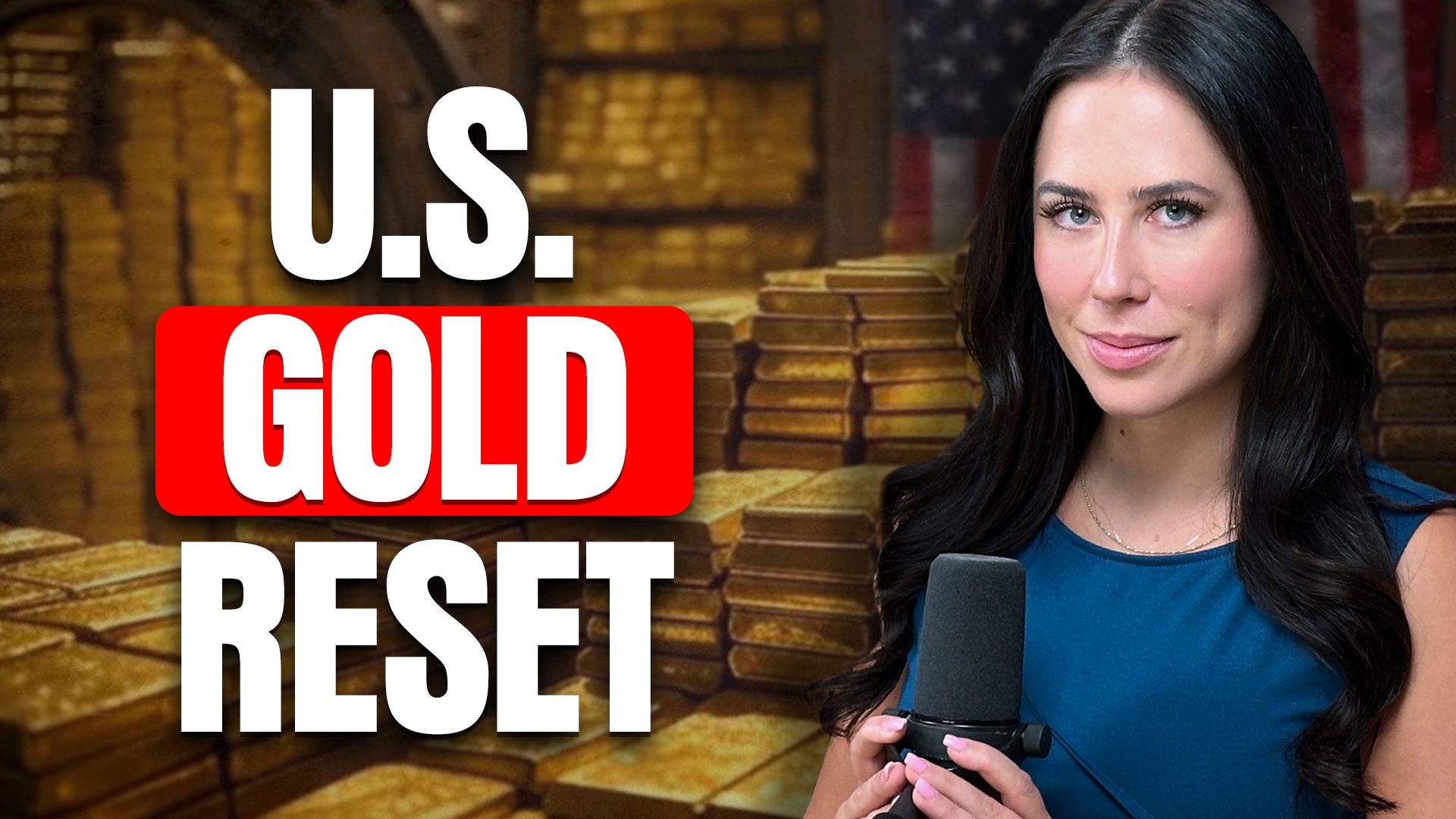
Trump revives Fort Knox audit talk as gold revaluation questions mount amid debt, dollar pressure, and central bank gold buying.
What if the Fort Knox story is not really about whether the gold is there—but about what happens if Washington finally admits what gold is worth?
The gold revaluation question is back in the headlines after President Trump again raised the idea of going to Fort Knox to see whether America’s gold is still there. According to recent reporting, Trump said he wanted to “see if the gold is there” and questioned whether it had been left untouched, reviving a debate that has haunted U.S. monetary policy for decades.
And the timing is hard to ignore.
The U.S. is drowning in debt. Interest costs are exploding. Foreign central banks are still accumulating gold. Meanwhile, America’s official gold hoard remains booked at a statutory price of $42.2222 per troy ounce, a figure unchanged since 1973—even while market prices trade thousands of dollars higher.
So the question is no longer just: Is the gold there?
The bigger question is: Why is Washington suddenly talking about it again?
Why Fort Knox Is Back in the Spotlight
Fort Knox is not just a vault. It is a confidence symbol.
For generations, Americans were told that the U.S. dollar, the Treasury market, and the broader financial system were backed by institutional credibility. But credibility is precisely what is now being questioned.
The U.S. Mint’s own historical record confirms that the 1974 Fort Knox inspection was an extraordinary event, allowing members of Congress into the depository after years of strict no-visitor policy. The Mint also noted that a special settlement audit was scheduled to begin after that inspection.
But for skeptical Americans, that did not settle the matter.
The issue is not whether cameras once saw gold bars. The issue is whether the public has ever received the kind of full, modern, independent audit that would restore confidence.
That matters because gold is not just another government asset. It is the asset central banks run to when trust breaks down.
And today, trust is breaking down everywhere:
- Trust in fiat currency
- Trust in deficit spending
- Trust in Treasury markets
- Trust in central banks
- Trust in official inflation narratives
- Trust in the dollar’s long-term purchasing power
This is why the Fort Knox question refuses to die. It sits at the intersection of gold, debt, sovereignty, and financial survival.
The Gold Revaluation Math Washington Does Not Want to Discuss
Here is the quiet accounting absurdity hiding in plain sight.
The U.S. Treasury reports America’s gold reserves at a book value of $42.22 per fine troy ounce. Treasury data shows total U.S. government gold reserves of roughly 261.5 million fine troy ounces, booked at just over $11 billion under that statutory value.
That number is not market reality.
It is a political accounting relic.
The Federal Reserve confirms that the statutory price has been constant at $42.22 per fine troy ounce since 1973, and that the book value does not fluctuate with the market price of gold.
That means the U.S. government is carrying one of the most important monetary assets in the world at a price that belongs to another era.
If gold were marked closer to modern market levels, the balance sheet impact would be massive.
And if policymakers ever chose to revalue gold dramatically higher, the implications could be even bigger:
- The Treasury’s asset side could instantly look stronger.
- The dollar could be implicitly devalued against gold.
- Gold holders could see a dramatic repricing of purchasing power.
- Americans holding only cash could be left exposed.
- Physical gold and silver demand could spike as confidence in paper assets cracks.
This is why the gold revaluation debate is so explosive. It is not just about gold. It is about admitting what the dollar has lost.
The Debt Crisis Makes Gold Revaluation More Than a Fringe Theory
For years, mainstream economists treated gold revaluation talk like a conspiracy theory.
But the balance sheet math is getting harder to mock.
As of May 5, 2026, total gross U.S. national debt stood at about $38.91 trillion, according to the Joint Economic Committee’s debt tracker. The Congressional Budget Office projects a $1.9 trillion federal deficit in fiscal year 2026, rising to $3.1 trillion by 2036, with rising net interest costs driving much of the increase.
Meanwhile, interest on the debt has become its own crisis.
The Peter G. Peterson Foundation reported that the U.S. paid $970 billion in interest costs in 2025, with interest costs projected to climb further as a share of GDP. Reuters reported that April 2026 interest payments hit a record monthly high of $112 billion.
That is not a budget problem. That is a monetary regime problem.
When a government cannot tax enough, borrow cheaply enough, or inflate quietly enough, it eventually starts looking at the asset side of the ledger.
And what is the most obvious underpriced asset on Washington’s books?
Gold.
The Federal Reserve Has Already Put Revaluation on the Table
The most important part of this story may not be Trump.
It may be the Federal Reserve.
In 2025, the Fed published a research note titled “Official Reserve Revaluations: The International Experience.” The paper examined how reserve revaluations work and noted that when gold reserves are revalued higher, central bank assets increase, while valuation gains can be distributed to the government’s account.
That does not mean the Fed announced a U.S. gold revaluation.
But it does mean the mechanics are no longer buried in the shadows.
When the central bank starts publishing research on reserve revaluations, financially conservative Americans should pay attention.
The sequencing matters:
- The government discusses transparency around Fort Knox.
- The Fed examines international reserve revaluation mechanics.
- Debt and interest costs reach historic stress levels.
- Central banks globally keep buying gold.
- Gold flows shift between London, Switzerland, and U.S. markets.
Individually, each event can be explained away.
Together, they look like a pattern.
And patterns are what matter before financial resets.
Central Banks Are Buying Gold While the Public Is Told Not to Worry
While everyday Americans are told to trust paper promises, central banks are doing something very different.
They are buying gold.
The World Gold Council reported that a record 43% of central banks surveyed planned to increase their own gold holdings, up from 29% in 2024, while none expected to reduce their holdings. It also reported that 95% of respondents expected global official gold reserves to increase over the next 12 months.
That is not random.
Central banks understand what history has repeatedly shown:
- Gold is no one else’s liability.
- Gold cannot be printed by politicians.
- Gold does not require a functioning banking system to retain value.
- Gold is trusted when fiat credibility weakens.
- Silver often follows as a monetary metal and crisis hedge for individuals.
At the same time, gold market flows have become harder to ignore. Reuters reported that gold moved from London vaults into U.S. COMEX stocks after tariff fears, with COMEX gold stocks rising 126% and London reserves falling to a five-year low by February 2025. The World Gold Council also noted that late-2024 COMEX inventories rose as tariff concerns affected gold flows and trading patterns.
When central banks, bullion banks, and governments are all suddenly paying attention to physical gold movement, retirement savers should not be asleep at the wheel.
Gold vs Dollar: What Past Revaluations Teach Us
Gold revaluation is not fantasy. It has happened before.
In 1934, after Americans were ordered to turn in most gold coins, bullion, and certificates, the official gold price was raised from $20.67 to $35 per ounce. The result was a major dollar devaluation against gold.
In 1973, the U.S. statutory gold price moved to the framework that left gold booked at $42.22 per ounce, the same accounting value still referenced by the Treasury and Federal Reserve today.
The historical lesson is brutal:
Those who hold paper promises before revaluation often discover they own the asset being devalued. Those who hold the monetary metal own the asset being repriced.
That distinction matters now because today’s debt problem is vastly larger than the debt problem of the 1930s or 1970s.
If Washington ever uses gold revaluation to improve its balance sheet, the move would likely happen suddenly—not with a polite warning to retirees, savers, and dollar holders.
No government announces a monetary reset early enough for the public to prepare comfortably.
That is not how resets work.
Why Physical Gold and Silver Matter Now
This is where theory becomes personal.
If the U.S. eventually moves toward gold revaluation, the average American will not be invited into the room where the decision is made.
They will experience the aftermath.
That aftermath could include:
- Higher gold prices
- Greater dollar weakness
- Rising inflation expectations
- Stricter capital controls
- Banking stress
- Reduced purchasing power for cash-heavy savers
- A rush into tangible assets after the repricing has already happened
This is why physical gold and silver remain central to wealth preservation.
Gold has historically served as a long-term inflation hedge and monetary anchor when confidence in paper systems breaks. Silver offers many of the same tangible-asset qualities, often with more accessibility for individuals building a position over time.
The gold vs dollar equation is simple: one can be created by policy, the other must be mined, refined, transported, stored, and trusted.
That is why physical gold and silver are different from stocks, bonds, ETFs, bank deposits, and digital balances on a screen.
They are tangible assets.
They are outside the promise chain.
They are not dependent on the solvency of a bank, broker, or government program.
And in a world where central banks are accumulating gold while governments drown in debt, that distinction may be the difference between reacting late and preparing early.
The renewed Fort Knox discussion is a warning flare.
America’s gold is still officially valued at $42.22 per ounce on government books, even as debt approaches $39 trillion and interest costs consume an ever-larger share of federal spending. The Fed has openly studied reserve revaluations. Central banks are still signaling demand for more gold. And Trump has put Fort Knox back into the national conversation.
Maybe nothing happens.
But financially conservative Americans have seen this movie before: officials deny the risk, markets ignore the warning, and the public gets the memo after the insiders have already moved.
The question is not whether you can predict the exact date of a gold revaluation.
The question is whether your wealth strategy assumes the dollar system can continue indefinitely without consequence.
History says that is a dangerous assumption.
About ITM Trading
ITM Trading has over 28 years of experience helping clients safeguard their wealth through personalized strategies built on physical gold and silver. Our team of experts delivers research-backed guidance tailored to today’s economic threats.
THINKING ABOUT PURCHASING GOLD & SILVER?
Get expert guidance from our team of analysts with 28+ years of experience.
👉 [SCHEDULE YOUR CALL HERE] or call 866-351-4219