Peter Grandich: Nailed The Gold Top In January, Then Went All-In On March 23, What’s Next?
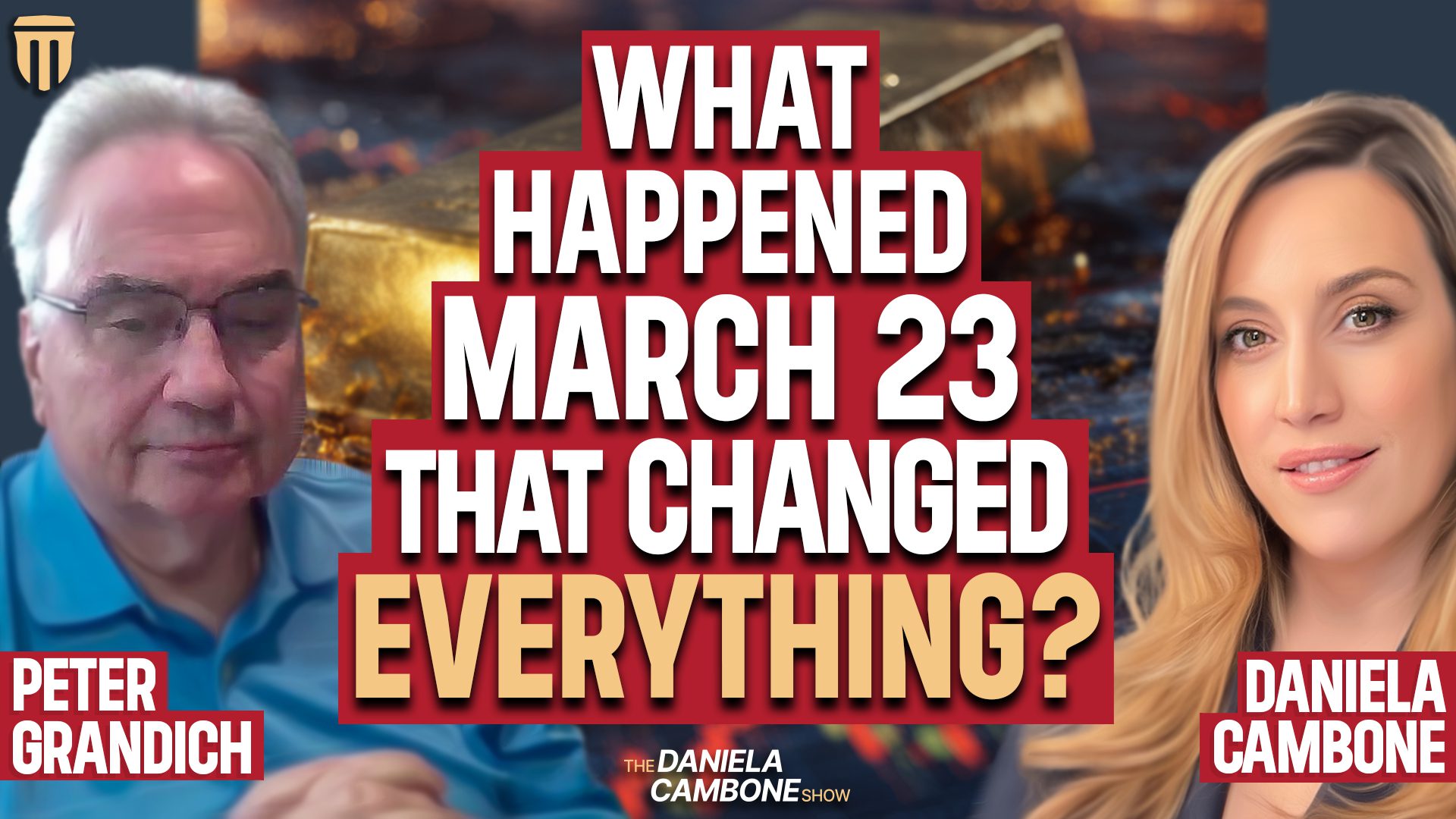
Why Gold’s Pullback Is the Setup Smart Money Was Waiting For
Gold investors just got a reminder that bull markets do not move in straight lines. And if you were rattled by the recent gold pullback, you’re not alone. But beneath the panic, something much more important may be happening: the weak hands are getting flushed out while the long-term case for gold and silver gets stronger.
That matters now because this isn’t just about price action. It’s about a bigger collision already underway—retirement insecurity, geopolitical instability, debt saturation, monetary distortion, and a financial system that looks increasingly fragile by the month. In that environment, gold and silver are not relics—they’re signals.
Gold’s Pullback Wasn’t a Collapse—It Was a Reset
One of the biggest mistakes investors make is confusing volatility with failure.
In the interview, Peter Grandich made a point most mainstream analysts conveniently ignore: gold had become parabolic, and that kind of move almost always invites a correction. He noted that after a dramatic run higher, the market simply got “ahead of itself” before excess speculation was finally wrung out.
That’s not bearish. That’s how bull markets survive.
Why this matters:
- Parabolic moves attract fast money
- Fast money leaves at the first sign of weakness
- Healthy corrections remove speculation
- Long-term trends often emerge stronger afterward
This is exactly why seasoned investors often treat pullbacks as opportunity, not failure.
And that’s the part many retail investors miss:
When gold falls after a euphoric run, it doesn’t necessarily mean the thesis is broken. It often means the market is washing out emotional buyers before the next leg higher.
Wall Street Is Finally Waking Up to Gold
Here’s the real shift—and it may be more important than the short-term chart.
For decades, gold was treated by mainstream finance as something fringe. Something “doomers” bought. Something outside the “serious” portfolio conversation.
That’s changing.
According to Grandich, major firms are now beginning to talk about gold as a legitimate portfolio component, even alongside traditional stock-and-bond allocations. That is a major psychological and institutional shift.
Translation:
The same Wall Street machine that mocked gold for years is now being forced to acknowledge:
- Bonds are no longer the safe haven they once were
- Equities are increasingly vulnerable to macro shocks
- The 60/40 portfolio is breaking down
- Gold is re-entering the mainstream allocation conversation
And once institutional money starts treating gold as a strategic asset instead of a curiosity, that changes demand dynamics in a big way.
This is not a fringe trade anymore.
This is a confidence trade against the system itself.
The Bigger Threat Isn’t Just Inflation—It’s Systemic Fragility
If this were only about inflation, the conversation would be simpler.
But it’s not.
The deeper concern running through this discussion is that the U.S. economy—and frankly, much of the developed world—is becoming structurally unstable. Grandich described this as one of the most bearish periods of his career, arguing that capital preservation may now matter more than capital appreciation.
That’s a profound statement.
Because when veteran market watchers start prioritizing not losing money over chasing returns, it usually means they see stress building beneath the surface.
What’s fueling that stress?
- Persistent inflation and elevated living costs
- Debt-dependent households living beyond their means
- Retirement shortfalls
- Higher medical and late-life expenses
- Government budget pressure
- A public increasingly dependent on unstable institutions
That’s not a “soft landing.”
That’s a slow-motion squeeze.
And when households are already stretched, even modest shocks—job losses, market corrections, tax increases, or another inflation spike—can trigger a much bigger unraveling.
Retirement Insecurity Is the Crisis No One Wants to Talk About
This may be one of the most important takeaways from the conversation.
The modern retirement model is breaking.
Grandich highlighted a grim reality: many Americans are entering retirement with far too little saved, while the actual cost of aging—especially healthcare—is far higher than most people were led to believe.
That creates a dangerous trap:
- People assume Social Security or public systems will carry more weight than they can
- They underestimate inflation over a 10–20 year retirement window
- They overestimate the protection offered by paper assets
- They delay hard decisions until it’s too late
This is where gold and silver enter the conversation in a very real way.
Because if your retirement is built entirely on:
- dollar-denominated savings,
- equity market performance,
- and confidence in policy makers…
…you are far more exposed than you may realize.
That doesn’t mean gold replaces a plan.
It means gold and silver may help anchor one.
Gold and Silver Still Benefit from a World Breaking Down
The irony here is simple: the more unstable the world becomes, the stronger the long-term case for precious metals.
Grandich made it clear that while the path may be less explosive than before, he still sees gold heading much higher over time, with selective opportunities in mining and continued strength in the metals themselves.
That makes sense.
Because the tailwinds for gold and silver are not going away. If anything, they’re multiplying:
Bullish drivers for gold and silver:
- Persistent inflation
- Currency debasement
- Geopolitical conflict
- Trade war fallout
- Debt monetization
- Banking fragility
- Declining trust in central banks
- Rising demand for portfolio hedges
Silver, in particular, remains compelling because it offers both:
- monetary protection
- and industrial upside
Gold protects purchasing power.
Silver adds volatility—and often torque—when confidence in the system begins to crack.
AI, Job Losses, and the Next Economic Shock
There’s another underreported risk here that could become far more visible over the next 6–12 months: AI-driven job displacement.
Grandich warned that while many are still focused on AI as a stock market story, the bigger issue may soon be what it does to employment.
That’s a major point.
Because once AI starts materially replacing white-collar workflows, service roles, and administrative labor at scale, it could intensify:
- consumer weakness
- household stress
- retirement anxiety
- tax base erosion
- political instability
And if that unfolds while central banks are already boxed in by inflation and debt, the result could be a very familiar policy response:
More money creation. More intervention. More distortion.
Which is exactly the kind of environment where gold vs dollar becomes a very serious conversation—not a theoretical one.
Why Physical Gold and Silver Matter in a Fragile Financial World
This is where the distinction matters.
There’s a difference between:
- trading paper exposure
- and holding tangible assets
And in a world increasingly defined by digital systems, policy overreach, financial surveillance, and rising uncertainty, that difference matters more than ever.
Gold & Silver Tie-In: Wealth Preservation in the Real World
Physical gold and silver are not someone else’s promise.
They are:
- tangible assets
- outside the banking system
- not dependent on a counterparty
- historically recognized stores of value
That’s why they remain central to any serious conversation about:
- wealth preservation
- inflation hedge
- currency risk
- gold vs dollar protection
- systemic uncertainty
When trust in institutions starts to erode, people don’t run toward more complexity.
They run toward clarity, control, and tangible ownership.
That’s what physical precious metals offer.
Not hype.
Not yield-chasing.
Not another Wall Street product wrapped in jargon.
Just real money in your possession.
Conclusion: The Pullback May Be the Opportunity, Not the Warning
The recent gold pullback may have felt unsettling—but zoom out, and the message looks very different.
This wasn’t necessarily a collapse in the gold story.
It may have been a stress test.
A flush.
A reset.
A clearing event before the next move.
And against the backdrop of:
- retirement insecurity,
- economic fragility,
- inflation pressure,
- geopolitical escalation,
- and declining trust in financial institutions…
…the long-term case for gold and silver may be getting harder—not easier—to ignore.
The mainstream will likely keep calling it a “barbarous relic” right up until they need it.
By then, the smart money may already be positioned.
About ITM Trading
ITM Trading has over 28 years of experience helping clients safeguard their wealth through personalized strategies built on physical gold and silver. Our team of experts delivers research-backed guidance tailored to today’s economic threats.
THINKING ABOUT PURCHASING GOLD & SILVER?
Get expert guidance from our team of analysts with 28+ years of experience.
👉 [SCHEDULE YOUR CALL HERE] or call 866-706-9061