Gerald Celente’s Final Warning: Prepare Now: Greatest Depression, Banking Crisis, Gold Surge
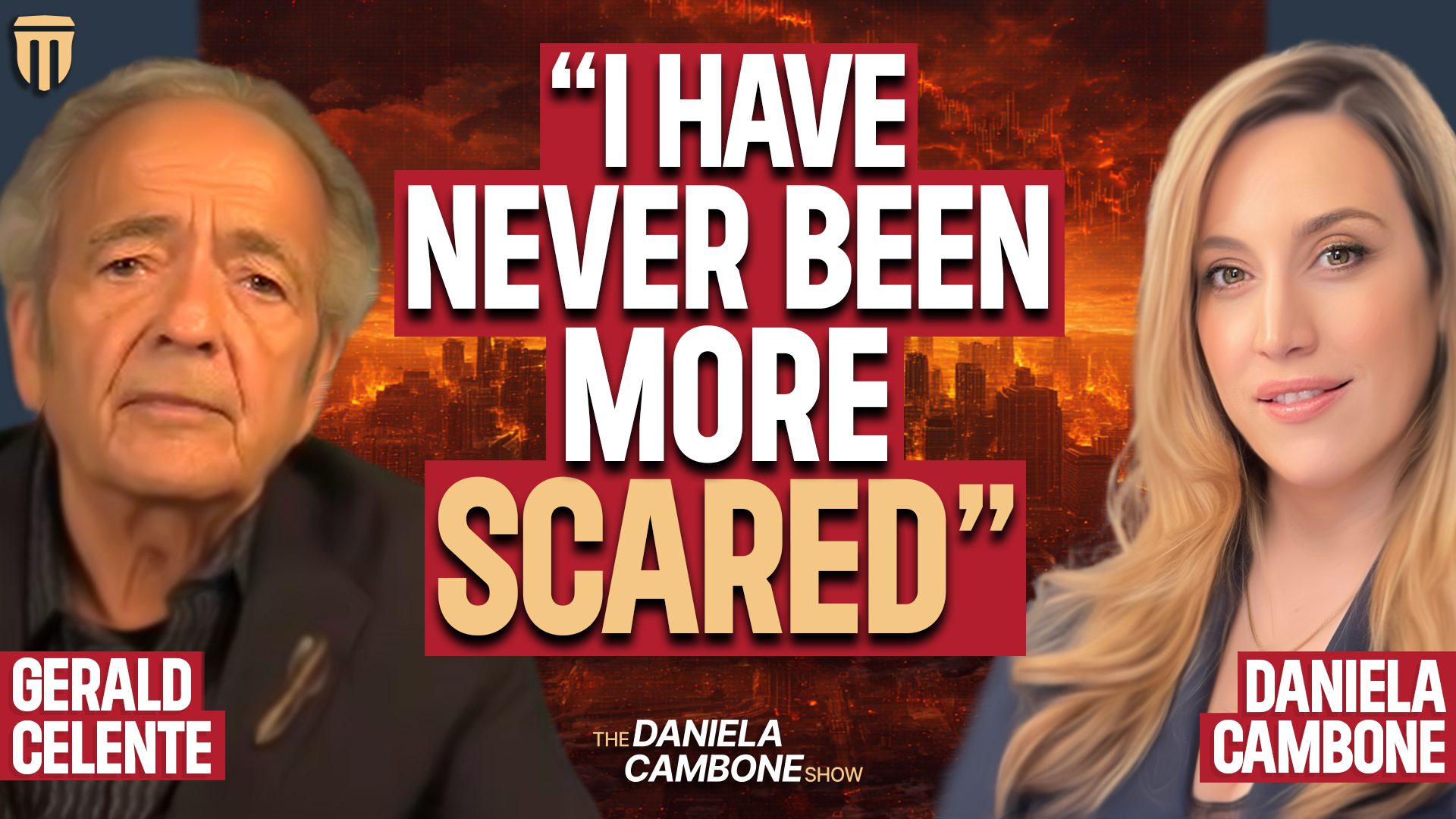
What if the next financial collapse doesn’t begin on Wall Street—but in war rooms, debt markets, and a digital monetary reset?
That’s the core of Gerald Celente’s final warning: a banking crisis is not some distant tail risk—it’s the logical outcome of war escalation, debt addiction, monetary debasement, and a system already cracking under pressure. And if he’s right, Americans are not heading into a routine recession. They’re heading into something far uglier: a Greatest Depression-style unraveling.
In Celente’s view, the danger isn’t just inflation. It’s simultaneous geopolitical chaos, market fragility, rising debt costs, and collapsing trust in the institutions that claim they still have everything under control.
And when confidence dies, gold and silver don’t just become “investments.” They become financial insurance.
Why Gerald Celente Thinks This Crisis Is Different
Gerald Celente has been warning about systemic shocks for decades, but in this interview, his tone is unmistakably darker: this is, in his words, the most dangerous period of his lifetime.
Why?
Because today’s risks are no longer isolated. They’re converging.
The current danger stack includes:
- Escalating geopolitical conflict
- A vulnerable banking and private equity system
- Unsustainable federal debt
- Sticky inflation and rising living costs
- A weakening dollar
- Growing pressure for digital monetary control
That’s not a normal cycle. That’s a system under strain from every direction.
And history shows what happens when weak financial systems collide with war, debt, and political desperation: governments print, markets distort, currencies lose credibility, and ordinary savers get crushed.
The Banking Crisis Isn’t Over—It May Be Mutating
Most Americans were told the banking panic was “contained.” That was the narrative after regional bank failures and emergency interventions.
But Celente points to a more dangerous reality: the next banking crisis may not arrive through one giant bank collapse. It may come through private equity, debt rollover stress, liquidity freezes, and forced asset selling.
That matters because the modern financial system is built on leverage, opacity, and confidence.
Once that confidence starts to crack, the dominoes can fall fast.
Warning signs investors should not ignore:
- Private equity redemption pressure
- Debt-heavy firms unable to refinance cheaply
- Commercial real estate strain
- Consumer confidence deterioration
- A Fed trapped between inflation and financial instability
This is how systemic crises often begin: not with a headline apocalypse, but with a slow-motion funding squeeze.
And when the squeeze intensifies, investors sell what they can—not necessarily what they want to.
That’s often why gold can temporarily pull back during broader market stress.
Not because the thesis is broken.
But because liquidity panic forces liquidation.
Why Gold Pulled Back—And Why That Doesn’t Change the Bigger Picture
One of the most important points in the interview is Celente’s explanation for gold’s occasional short-term weakness. He argues the pullback is not a rejection of the metal—it’s a symptom of broader market stress.
Translation:
When stocks, private equity, or leveraged bets start breaking, investors often sell profitable positions to raise cash.
That includes:
- gold
- silver
- commodity winners
- liquid hedges
This is not unusual. It’s happened in past crises too.
Here’s the key distinction:
Short-term volatility does not invalidate long-term monetary reality.
And that long-term reality is brutal:
- The U.S. debt burden keeps climbing
- Interest costs keep rising
- Deficits are structurally embedded
- Monetary discipline is politically impossible
- The dollar’s purchasing power keeps eroding
That is exactly the environment where gold and silver historically reprice higher.
So if gold pulls back during a panic, the real question isn’t “Why is gold weak?”
It’s:
“What is the system breaking underneath it?”
The Real Debt Problem Is Bigger Than Washington Admits
Official debt figures are bad enough.
But the deeper issue is that America’s financial model now depends on permanent borrowing, permanent intervention, and permanent confidence management.
That’s not strength. That’s dependency.
Celente’s thesis is simple: when a government is drowning in debt and still expanding military spending, bailout capacity, and monetary distortions, the eventual cost lands somewhere.
And that “somewhere” is usually:
- currency debasement
- inflation
- financial repression
- wealth destruction for savers
This is where many retirees and conservative investors get blindsided.
Because even if the market doesn’t “crash” tomorrow, your purchasing power can still be destroyed over time.
That’s the quieter collapse.
And for many households, it’s already underway.
Signs of stealth wealth destruction:
- Higher insurance costs
- Rising grocery bills
- Medical inflation
- Shrinking real returns on savings
- Elevated housing and tax burdens
This is why many financially conservative Americans are asking a different question now:
Not “How do I maximize upside?”
But:
“How do I preserve what I’ve already built?”
That is a completely different mindset—and it’s the right one for this phase of the cycle.
From Stagflation to “Dragflation”: A More Dangerous Setup
Celente uses a term that deserves more attention: dragflation.
It’s similar to stagflation—but with a more persistent, grinding effect.
Dragflation looks like this:
- Economic growth weakens
- Consumer demand erodes
- Debt loads rise
- Inflation stays stubborn
- The standard of living keeps slipping
This is especially dangerous for:
- retirees
- pension-dependent households
- fixed-income savers
- anyone relying on “safe” paper assets
Why?
Because dragflation slowly destroys both sides of the traditional retirement playbook.
It pressures:
Stocks through weaker growth and valuation stress
Bonds through inflation and debt issuance
That’s a nightmare setup for conventional portfolios.
And it’s one reason why gold and silver become more important—not less—when the economy enters this kind of drawn-out decline.
The Quiet Reset: Stablecoins, CBDCs, and Financial Surveillance
Here’s where Celente’s warning becomes even more relevant for ITM’s audience.
He believes the current crisis environment creates the perfect political opening for a digital monetary reset.
And whether it comes through CBDCs, “regulated stablecoins,” or some hybrid system, the implications are the same:
A fully digitized currency system can mean:
- Every transaction is trackable
- Spending can be monitored
- Tax enforcement becomes frictionless
- Financial privacy disappears
- Access can become conditional
That’s not just a technology shift.
That’s a power shift.
And once money becomes fully programmable, it is no longer simply “your money” in the traditional sense.
It becomes:
- permissioned
- observable
- controllable
That should concern anyone who values:
- financial independence
- privacy
- autonomy
- wealth preservation
This is one reason physical gold and silver matter so much.
They exist outside the digital permission structure.
They are not a line of code.
They are not a platform liability.
They are not dependent on a policy promise.
They are tangible assets.
And in a world moving toward centralized financial visibility, that distinction matters more every year.
Gold vs Dollar: Why the Monetary Case Is Strengthening
The mainstream still frames gold as a “fear trade.”
That’s far too simplistic.
Gold is not just a panic asset.
It is a monetary signal.
When gold rises over time, it is often telling you something policymakers don’t want to admit:
Confidence in fiat is deteriorating.
That doesn’t mean the dollar disappears tomorrow.
It means the real purchasing power of the dollar continues to weaken.
Gold vs dollar is really a question of trust:
- Do you trust central banks to restore discipline?
- Do you trust governments to stop overspending?
- Do you trust debt-based systems to deleverage voluntarily?
- Do you trust paper promises more than tangible reserves?
If your answer is “not particularly,” then the case for physical gold becomes straightforward.
And silver deserves equal attention.
Why?
Because silver often plays a dual role:
- monetary metal
- hard asset with industrial relevance
In periods of systemic stress, both can become essential tools for wealth preservation.
Why Physical Gold and Silver Matter in a Banking Crisis
This is where theory becomes practical.
When people say they want “safety,” what they often actually mean is:
“I want to know part of my wealth is outside the system.”
That is exactly why physical gold and silver continue to matter.
In a true banking crisis, physical metals can offer:
- No counterparty risk
- No direct bank exposure
- No dependence on a fund manager
- No reliance on a digital ledger
- A historically proven inflation hedge
That doesn’t mean gold and silver are magic.
It means they serve a different function than paper assets.
They are not there to chase quarterly performance.
They are there for:
- wealth preservation
- monetary defense
- portfolio resilience
- financial optionality
And in a world where trust is eroding, tangible assets become more valuable precisely because they are tangible.
Why many investors are revisiting gold and silver now:
- Inflation remains structurally embedded
- Debt is exploding
- Banking fragility hasn’t been resolved
- The dollar is under long-term pressure
- Digital financial control is expanding
This is the core of the inflation hedge argument—but it goes beyond inflation.
This is also about systemic hedge.
Prepare Now—Because Crises Don’t Wait for Consensus
One of the biggest mistakes investors make is waiting for everyone else to agree that the danger is real.
By then, the repricing has usually already happened.
That’s true in:
- bank runs
- currency events
- inflation waves
- geopolitical shocks
- precious metals breakouts
The crowd rarely moves early.
It moves late.
That’s why Celente’s warning lands with force: by the time the crisis is obvious to everyone, your options may be narrower, your costs may be higher, and your flexibility may be gone.
Preparation is not panic.
Preparation is prudence.
And for financially conservative Americans, that means asking hard questions now:
Questions worth asking today:
- How much of my wealth depends on the banking system?
- How exposed am I to paper promises?
- What happens if inflation reaccelerates?
- What happens if markets freeze?
- What portion of my assets are truly tangible?
If those answers make you uncomfortable, that discomfort is useful.
Because it’s telling you where your blind spots are.
Conclusion
Gerald Celente’s warning is not just about war, or markets, or the Fed.
It’s about systemic fragility.
A debt-saturated economy.
A banking structure under pressure.
A dollar being stretched past credibility.
A political class with no appetite for restraint.
And a growing push toward digital control just as trust is breaking down.
That combination is not normal.
It is the kind of setup that historically drives people back toward real money and tangible assets.
And that is why gold and silver are back at the center of the conversation.
Not because the world is ending tomorrow.
But because the world is becoming more unstable, more indebted, more digitized, and less trustworthy.
And in times like that, preparation beats prediction.
About ITM Trading
ITM Trading has over 28 years of experience helping clients safeguard their wealth through personalized strategies built on physical gold and silver. Our team of experts delivers research-backed guidance tailored to today’s economic threats.
THINKING ABOUT PURCHASING GOLD & SILVER?
Get expert guidance from our team of analysts with 28+ years of experience.
👉 [SCHEDULE YOUR CALL HERE] or call 866-706-9061