Iran War Triggers Inflation Fears as Bonds Start Failing
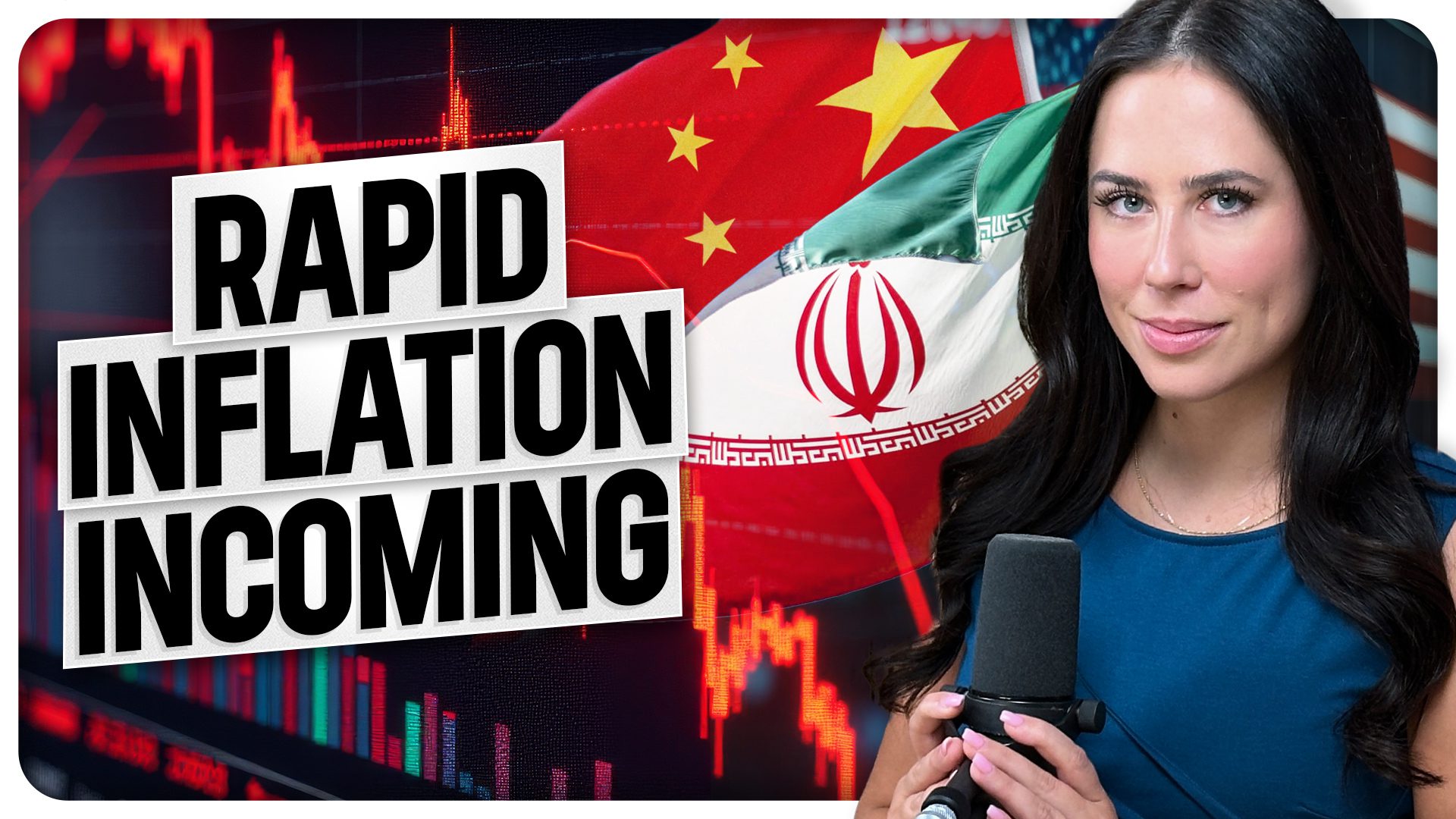
Something unusual is happening in the global financial system—and it’s flashing a warning sign most investors aren’t prepared for.
For decades, the U.S. Treasuries safe haven trade has been one of the most reliable patterns in global markets. Whenever geopolitical chaos erupts—war, financial crises, pandemics—capital floods into U.S. government bonds.
But now, that pattern appears to be breaking.
As conflict escalates in the Middle East and uncertainty spreads across global markets, investors aren’t rushing into U.S. Treasuries the way they historically have. In fact, yields are rising—suggesting something far more unsettling: capital may be leaving U.S. debt entirely.
If this trend continues, it could mark the beginning of a structural shift in the global monetary system.
And the implications for inflation, retirement savings, and the dollar could be enormous.
Why U.S. Treasuries Were Always the Global Safe Haven
For the last quarter century, the market’s response to global crises has been almost mechanical.
When uncertainty spikes, investors move into U.S. government debt.
That demand drives bond yields lower.
We saw this repeatedly:
- 2001 – September 11 attacks: Treasury yields plunged as investors fled to safety.
- 2020 – Global pandemic shutdowns: investors piled into U.S. debt.
- 2022 – Russia invades Ukraine: Treasuries again became the primary safe haven.
This pattern reflected one core belief:
U.S. government debt was considered the safest asset in the world.
The reasoning was simple:
- The U.S. controls the global reserve currency
- Treasury markets are the most liquid in the world
- Default risk was viewed as essentially zero
But today, that trust is showing cracks.
Rising Treasury Yields Signal a Dangerous Shift
During the current geopolitical tensions surrounding Iran and the Middle East, something unusual has happened.
Instead of falling…
U.S. Treasury yields are rising.
That means investors may not be buying Treasuries.
They may be selling them.
And that raises a much bigger question:
Is this just a short-term reaction to current events… or a structural loss of confidence in U.S. debt?
If global investors no longer view Treasuries as risk-free, the consequences could ripple through the entire financial system.
Because the U.S. government depends on investors buying its debt.
The $10 Trillion Debt Wall Facing the United States
The timing of this shift could not be worse.
The U.S. is facing a massive refinancing challenge.
Roughly $10 trillion in government debt must be rolled over in 2026.
And it will likely be refinanced at today’s much higher interest rates.
That creates a dangerous dilemma:
If interest rates remain high:
- Government borrowing costs explode
- Deficits surge even further
- Debt servicing becomes increasingly unsustainable
But lowering rates presents another problem.
It risks fueling inflation, especially as energy prices surge due to geopolitical tensions.
The government is essentially trapped in a monetary Catch-22.
- Raise rates → debt crisis
- Lower rates → inflation surge
Historically, governments have chosen the same path every time.
Inflate the debt away.
Geopolitics Is Accelerating the Shift Away from U.S. Debt
Another factor undermining the U.S. Treasuries safe haven status is geopolitics.
In 2022, the United States froze Russia’s foreign reserves after the Ukraine invasion.
That decision sent a powerful message to the world:
Dollar assets can be seized.
For countries holding large amounts of U.S. debt, that revelation changed the calculus.
Since then, many nations—particularly within the BRICS alliance—have been reducing their Treasury holdings.
China has been especially active.
Complicating matters further is the escalating conflict involving Iran.
Iran controls access to the Strait of Hormuz, a narrow shipping lane responsible for roughly:
- 20% of global oil supply
Any disruption there could trigger:
- Rising oil prices
- Higher inflation
- Increased pressure on global markets
And China—one of Iran’s largest oil customers—may respond by further reducing exposure to U.S. Treasuries.
Central Banks Are Quietly Moving Into Gold
While global investors debate the future of U.S. debt, central banks have already begun repositioning.
In recent years, they have been buying physical gold at the fastest pace in modern history.
Why?
Because gold offers something government debt cannot.
- It cannot be printed
- It cannot be inflated away
- It cannot be seized through financial sanctions
Unlike fiat currency, gold has intrinsic value.
And unlike bonds, it carries no counterparty risk.
Image alt text suggestion: Central bank gold purchases chart
What This Means for Inflation and Your Retirement
If global demand for U.S. Treasuries continues to decline, the Federal Reserve may be forced to step in as the buyer of last resort.
That would likely require:
- Large-scale money printing
- Liquidity injections into the bond market
- Artificially suppressed interest rates
The result?
Higher inflation.
And inflation has a devastating long-term impact on savers.
It quietly erodes:
- Retirement accounts
- Cash savings
- Bond portfolios
- Fixed income investments
Every dollar buys less.
Purchasing power disappears.
Why Gold and Silver Remain Trusted Wealth Protection
During periods of monetary uncertainty, many investors turn toward tangible assets.
This is where gold and silver historically play a crucial role.
For thousands of years, precious metals have functioned as real money.
Unlike fiat currencies:
- Gold and silver cannot be created out of thin air
- They hold intrinsic value
- They have served as wealth preservation tools during monetary resets
Today’s environment highlights their relevance once again.
As trust in government debt weakens and inflation pressures build, many investors are reconsidering the role of physical gold and silver as part of a diversified strategy.
Key reasons investors hold precious metals:
- Inflation hedge
- Protection against currency devaluation
- Tangible wealth outside the financial system
- Long-term wealth preservation
The Bigger Picture: A Monetary System in Transition
The events unfolding today may represent more than temporary market volatility.
They may signal something far larger.
- Record global debt levels
- Rising geopolitical conflict
- Central banks accumulating gold
- Declining trust in government bonds
Together, these forces suggest the global financial system may be entering a period of monetary transition.
For individuals and retirees, the question is no longer whether change is coming.
It’s whether your portfolio is positioned to withstand it.
For decades, U.S. Treasuries have been the backbone of global financial stability.
But the recent rise in yields during geopolitical turmoil raises an unsettling possibility:
The world may be losing confidence in U.S. government debt.
If that shift accelerates, the ripple effects could include:
- Higher inflation
- Greater market volatility
- Erosion of purchasing power
History shows that periods like this often reshape the financial landscape.
And when they do, those holding tangible assets have historically been better positioned to weather the storm.
About ITM Trading
ITM Trading has over 28 years of experience helping clients safeguard their wealth through personalized strategies built on physical gold and silver. Our team of experts delivers research-backed guidance tailored to today’s economic threats.
THINKING ABOUT PURCHASING GOLD & SILVER?
Get expert guidance from our team of analysts with 28+ years of experience.
👉 SCHEDULE YOUR CALL HERE or call 866-351-4219