

SHOCKING: US to Revalue Gold to $10,000+? Wipe Out Trillions in Debt – The 2026 Trigger!

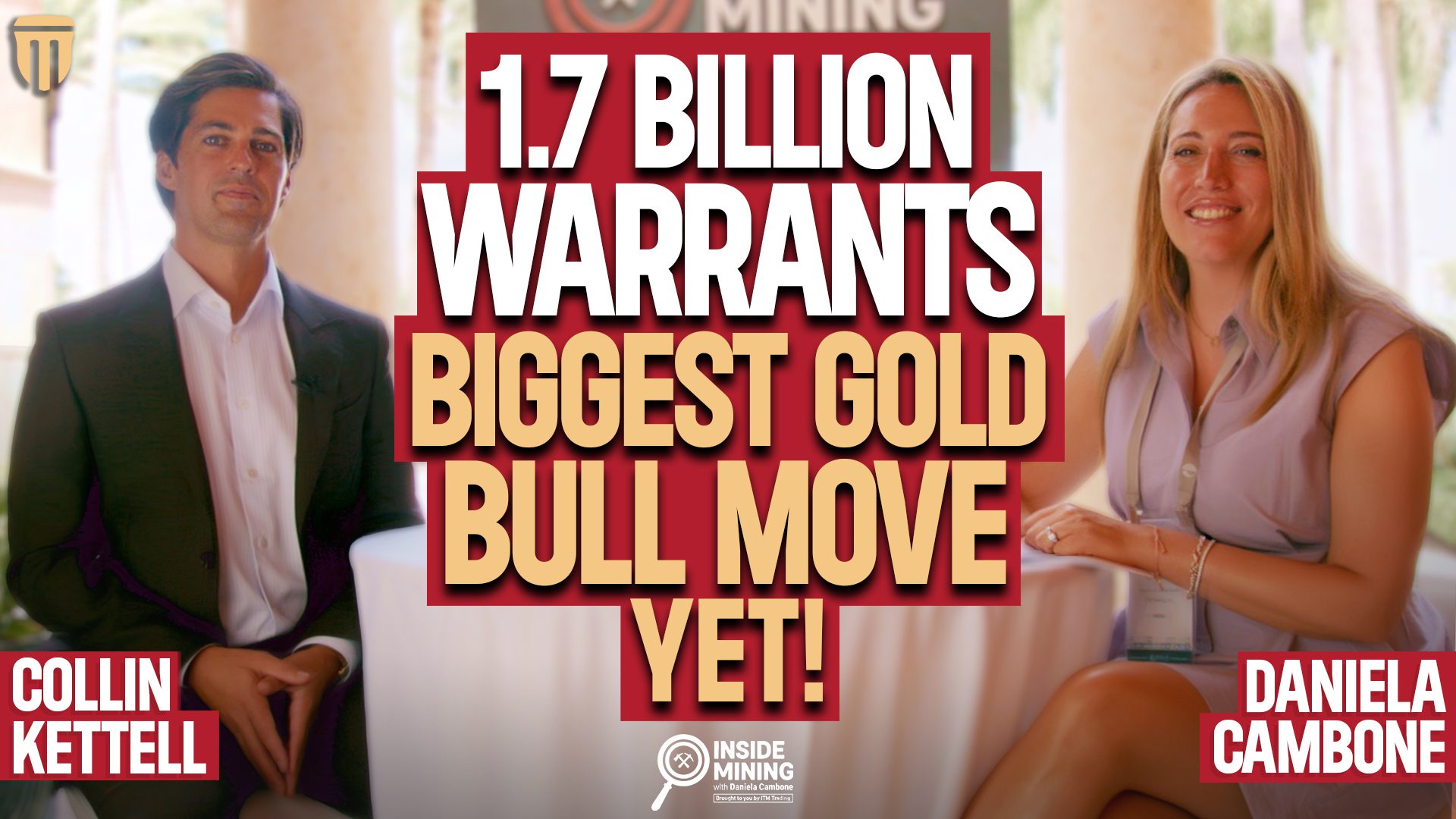
“A gold revaluation isn’t a conspiracy theory. It’s a legislative door that’s already been opened,” warns Graham Summers, editor of Money & Markets. In this critical return to the Daniela Cambone show, Summers reveals that the Trump administration could trigger the biggest gold revaluation in history, potentially repricing the nation’s gold from $42 an ounce to $10,000 or more. While the media focuses on market volatility, Summers pulls back the curtain on the Treasury’s balance sheet. He explains that the real target isn’t just paying down debt. It is funding a strategic Bitcoin reserve and winning the AI arms race with China. Watch the video to hear Summers expose how the appointments of key “gold guys” and the precedent set by FDR in 1934 could lead to a seismic shift that unlocks trillions and reshapes the financial system by year’s end.
America’s $37 Trillion Problem Has a $10,000 Gold Solution?
America’s debt is spiraling past $37 trillion—and rising. Now, whispers of a US gold revaluation in 2026 are gaining traction. Could Washington reprice gold from its archaic $42 per ounce official valuation to $10,000 or more… and instantly unlock trillions?
It sounds extreme.
It’s not unprecedented.
And if policymakers pull the trigger, it could reshape the global monetary system overnight.
The Hidden Asset: America’s Gold Stockpile
Most Americans don’t realize this:
-
The U.S. government still values its gold at $42.22 per ounce
-
Market gold trades thousands of dollars higher
-
The revaluation gap represents trillions in potential balance sheet adjustments
According to strategist Graham Summers, revaluing U.S. gold holdings could:
-
Add $3–$5 trillion to the asset side of the national balance sheet
-
Narrow the debt-to-GDP optics
-
Potentially fund initiatives like a strategic Bitcoin reserve
This isn’t fantasy. It echoes the precedent set under Franklin D. Roosevelt, who used the Gold Reserve Act to reprice gold during the Great Depression.
Back then, gold was revalued from $20.67 to $35 per ounce.
Today’s version? $10,000… $15,000… even $20,000?
The math changes everything.
Why 2026 Could Be the Trigger for US Gold Revaluation
Why now?
Several forces are converging:
1. Fiscal Dominance Is Here
-
Record Treasury issuance
-
Persistent deficits
-
Rising interest costs crowding out spending
Policymakers have one consistent solution: liquidity expansion.
And currency debasement historically benefits gold.
2. Strategic Competition with China
Washington views AI dominance and resource security as existential threats.
In an economic arms race, strengthening the national balance sheet matters. A gold revaluation instantly improves optics without austerity.
3. Legislative Doorways Are Opening
Proposed legislation around a strategic Bitcoin reserve reportedly includes language allowing asset revaluation.
Once that door opens, it doesn’t easily close.
How High Would Gold Need to Go?
Let’s break it down:
-
$10,000 gold → Potentially ~$3 trillion balance sheet impact
-
$15,000–$20,000 gold → Closer to $5 trillion
Would it eliminate $37 trillion in debt? No.
But it would:
-
Improve debt ratios
-
Increase financial flexibility
-
Create room for further monetary expansion
And here’s the uncomfortable truth:
The government doesn’t need gold at $10,000 because it loves gold.
It needs gold higher because it cannot allow the dollar to remain structurally strong while drowning in debt.
This becomes a classic gold vs dollar moment.
Gold, Silver, and the New Monetary Regime
We are already in a structural shift.
Consider the data:
-
Central banks have been buying over 1,000 tons of gold annually
-
Institutional allocators are increasing exposure
-
Retail investors are returning to precious metals
-
Silver has shown explosive volatility, historically a late-cycle accelerant
We haven’t seen this kind of alignment since the 1990s monetary reset era.
And while mainstream analysts dismiss revaluation talk as “conspiracy,” policymakers have quietly acknowledged the need to monetize the asset side of the balance sheet.
Gold and silver are no longer fringe assets.
They are becoming monetary anchors again.
What Happens to the Dollar?
If gold is officially revalued to $10,000+, several outcomes are possible:
-
The dollar weakens structurally
-
Inflation expectations reset higher
-
Bond markets reprice sovereign risk
-
Precious metals miners outperform bullion
-
Global central banks accelerate gold accumulation
War, rising deficits, and monetary easing are inherently inflationary forces.
Revaluation simply formalizes what markets already suspect:
The dollar must be diluted to survive the debt load.
Wealth Preservation in a Monetary Reset
If a US gold revaluation in 2026 becomes reality, those holding tangible assets will be positioned differently than those holding paper promises.
Physical gold and silver have historically served as:
-
A proven inflation hedge
-
Protection during currency debasement
-
A buffer against systemic risk
-
A core component of long-term wealth preservation
Unlike digital entries in a brokerage account, tangible assets are not someone else’s liability.
When governments adjust monetary rules, gold adjusts first.
And often—violently.
Final Thoughts: Watch the Signals
Is a $10,000+ gold revaluation guaranteed?
No.
Is it plausible in a $37 trillion debt environment?
More than most are willing to admit.
History shows that when governments face unsustainable debt burdens, they:
-
Inflate
-
Reprice
-
Redefine monetary anchors
The question isn’t whether change is coming.
It’s whether you’ll be positioned before it does.
About ITM Trading
ITM Trading has over 28 years of experience helping clients safeguard their wealth through personalized strategies built on physical gold and silver. Our team of experts delivers research-backed guidance tailored to today’s economic threats.
THINKING ABOUT PURCHASING GOLD & SILVER?
Get expert guidance from our team of analysts with 28+ years of experience.
👉 [SCHEDULE YOUR CALL HERE] or call 866-706-9061