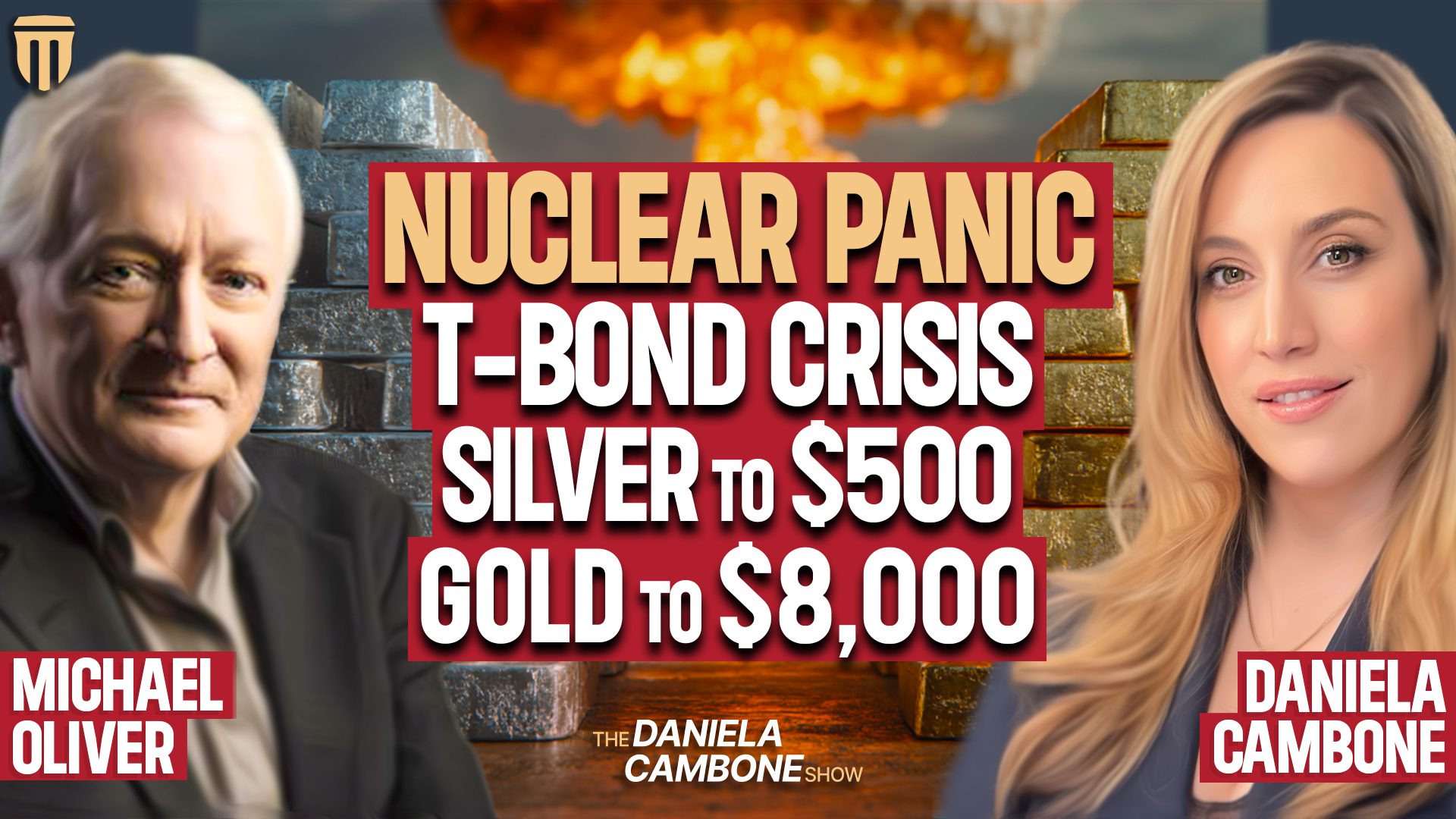
Michael Oliver: T-Bond Nuclear Panic Will Send Silver VIOLENTLY to $300–$500 | Gold to $8,000
This isn’t a bull market—this is a monetary endgame.
According to legendary market technician Michael Oliver, a looming T-bond panic could unleash a violent repricing of precious metals—sending silver to $300–$500 and gold toward $8,000 far faster than most investors expect.
In a candid conversation with Daniela Cambone, Oliver lays out why this move won’t be gradual, why central banks are losing control of the long end of the bond market, and why gold and silver are reacting before the full crisis hits.
The Bond Market Is the Fuse—And It’s Burning Fast
Oliver doesn’t mince words: the global bond market is on an ambulance stretcher.
-
U.S. 30-year T-bond futures collapsed from 2020–2022
-
Repeated Fed rescue attempts failed to stabilize long-term yields
-
Japan and the UK are already experiencing bond stress
-
A break below recent T-bond lows could trigger a full-blown bond panic
Why this matters:
Government debt markets dwarf stock markets. A panic here isn’t 2008—it’s systemic.
“You can’t have a U.S. debt market panic. That’s like a nuclear event.” — Michael Oliver
When confidence in sovereign debt cracks, central banks have only one response left: print.
Why Silver Is Set for a Vertical, Violent Repricing
Silver isn’t just rising—it’s breaking free from a 50-year prison.
Oliver highlights a historic breakout in the silver-to-gold ratio that began last November:
-
Silver finally broke above a multi-year ceiling relative to gold
-
Past breakouts like this triggered multi-quarter vertical moves
-
Prior silver surges:
-
1979–1980: 5x in 5 months
-
2010–2011: 2.5x in 7 months
-
This time is bigger.
Silver remains historically undervalued:
-
1980 peak: 6.5% of gold’s price
-
2011 peak: 3.1% of gold
-
Today: ~2%
If gold reaches $8,000 and silver simply returns to past norms, $300–$500 silver isn’t extreme—it’s math.
Gold Isn’t Overbought—It’s Still Catching Up
Gold at $5,000? Oliver calls that low.
Consider the pattern:
-
1976–1980: 8x gain
-
2001–2011: 8x gain
-
2015 low: ~$1,050
-
An 8x move puts gold near $8,000
And this time, fundamentals are far worse:
-
Exploding government debt
-
Accelerating money supply growth (M2)
-
Global trust erosion in fiat currencies
Gold isn’t reacting late—it’s reacting early.
The Fed Can’t Control the Long End—And They Know It
Short-term rate cuts won’t save the bond market.
-
The Fed doesn’t control long-term yields
-
Bond volatility has shifted from months → weeks → hours
-
A failed intervention risks panic selling across assets
When that happens:
-
Stocks wobble
-
Bonds collapse
-
Gold and silver go vertical
This is how monetary metals behave before the headlines catch up.
Gold & Silver: The Only Assets Without Counterparty Risk
When fiat confidence breaks, investors don’t rotate—they flee.
That’s why physical gold and silver matter:
-
Wealth preservation during monetary resets
-
Tangible assets outside the banking system
-
No counterparty risk
-
Proven inflation hedge across centuries
This isn’t about speculation. It’s about survival in a debt-saturated system.
Gold vs dollar?
Gold isn’t rising—the dollar is falling.
Conclusion: This Isn’t a Trade—It’s a Warning
Michael Oliver’s message is clear:
-
The bond market is cracking
-
Central banks are cornered
-
Money printing is inevitable
-
Gold and silver are signaling the next phase
Those waiting for confirmation may find themselves chasing prices—or worse, trapped in assets tied to a failing system.
The move may include pullbacks. It will scare people.
But the direction? Relentless.
About ITM Trading
ITM Trading has over 28 years of experience helping clients safeguard their wealth through personalized strategies built on physical gold and silver. Our team of experts delivers research-backed guidance tailored to today’s economic threats.
THINKING ABOUT PURCHASING GOLD & SILVER?
Get expert guidance from our team of analysts with 28+ years of experience.
👉 [SCHEDULE YOUR CALL HERE] or call 866-706-9061
This is not financial advice. It’s a reality check.