Warning: $3.5 Trillion Private Credit Bubble Will Trigger the Next Financial Crisis – Bert Dohmen
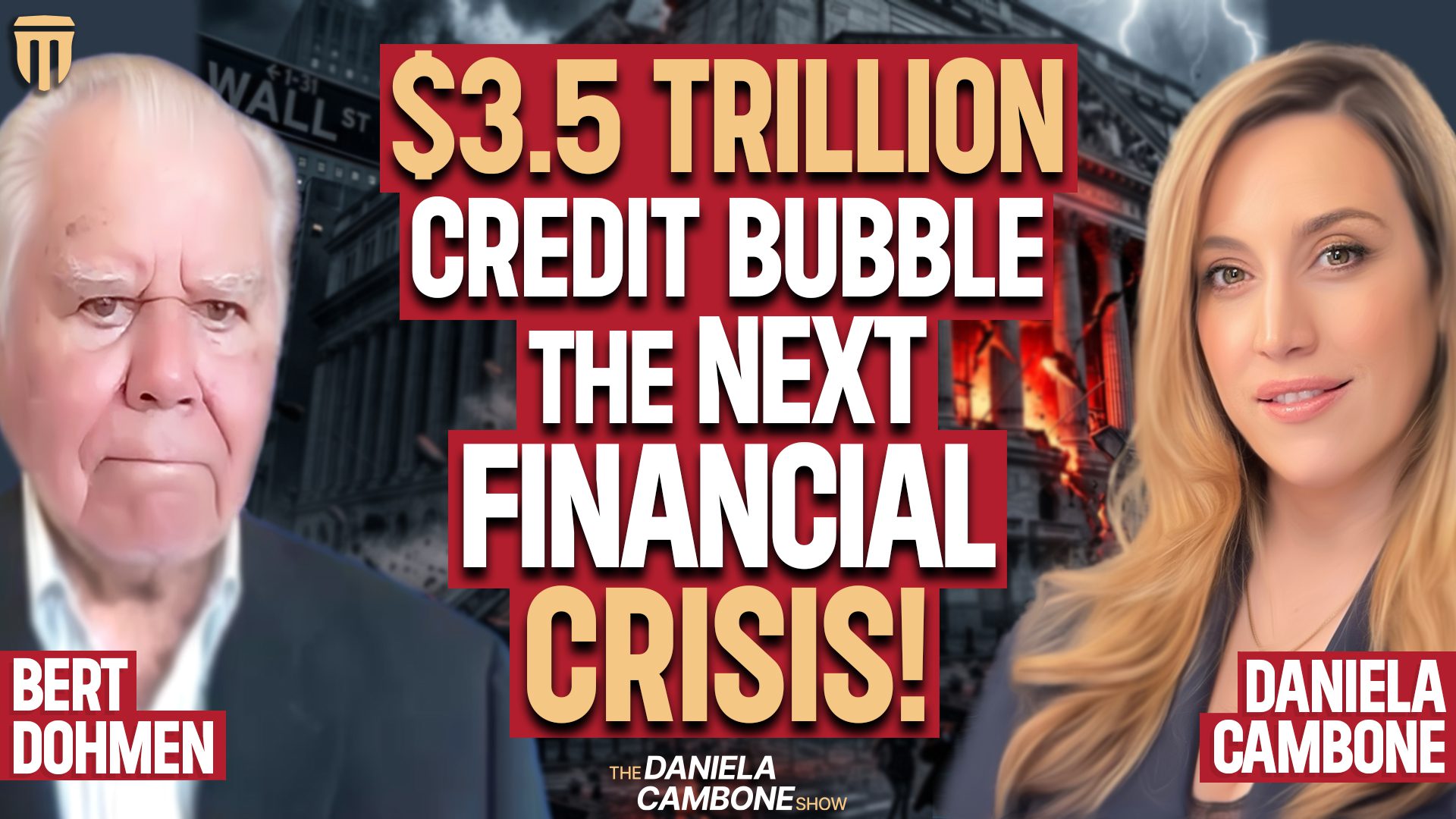
Could the next financial crisis already be locked in—hidden inside a $3.5 trillion private credit bubble?
According to veteran market strategist Bert Dohmen, the warning signs are no longer subtle. The private credit bubble has expanded at a pace eerily similar to past financial blowups—and the cracks are already forming beneath the surface.
While mainstream media remains largely silent, liquidity is drying up, redemptions are being halted, and investors are discovering a harsh reality: they can’t get their money out.
The Explosive Growth of the Private Credit Bubble
What started as a niche investment strategy has quietly ballooned into a systemic risk.
- 2020: ~$2 trillion in private credit assets
- Today: ~$3.5 trillion market
- Shadow banking: Nearly half of global financing
Major institutions like Goldman Sachs, Wells Fargo, and Citigroup are pouring $50+ billion into private credit funds.
That’s not a coincidence. It’s a pattern.
As Dohmen warns:
- When Wall Street promotes an asset, it’s often because they’re trying to exit
- Retail and institutional investors are left holding illiquid, high-risk assets
- The same playbook was used before 2008
Liquidity Is Vanishing—And That’s the Real Danger
Here’s the part most investors don’t understand:
Private credit isn’t just risky—it’s illiquid.
Dohmen highlights a striking example:
- Harvard, with billions in endowments tied to private credit
- Needed cash—but couldn’t sell assets
- Forced to borrow billions instead
This is how crises begin.
And now, the warning signs are accelerating:
- Blue Owl halted redemptions
- BlackRock restricted withdrawals
- UBS blocked investor access to funds
- Morgan Stanley returned less than half of requested capital
Translation: The exits are closing.
Why Credit Markets Always Signal the Next Collapse
History doesn’t repeat—but it rhymes with precision.
Dohmen’s decades-long research points to one core truth:
Markets don’t collapse because of earnings—they collapse because of liquidity.
When credit expands:
- Stocks rise
- Risk-taking increases
- Bubbles inflate
When credit contracts:
- Liquidity disappears
- Assets become unsellable
- Panic spreads
We are now entering the contraction phase.
And just like in:
- The dot-com crash
- The 2008 financial crisis
…the earliest cracks are appearing in the credit markets first.
A Shrinking Global Economy Signals Deeper Trouble
The private credit bubble isn’t forming in isolation—it’s colliding with a broader global slowdown.
Dohmen points to alarming real-world signals:
- Airlines canceling 20,000 flights due to fuel shortages
- Farmers reducing crop production due to fertilizer scarcity
- Supply chains fracturing under geopolitical pressure
This is what he calls:
“The incredible shrinking process.”
And when economies shrink:
- Debt becomes harder to service
- Defaults rise
- Illiquid assets become worthless on paper
The Fed’s Inevitable Response: More Money Printing
When the system starts to crack, central banks follow a predictable script:
- Inject liquidity
- Lower standards
- Print money at scale
But there’s a cost.
Every dollar created reduces the value of every dollar you already own.
Dohmen is blunt:
- The Fed is unlikely to allow true monetary tightening
- Inflation will remain elevated
- Policy responses will likely make things worse—not better
Gold vs Dollar: Why Tangible Assets Matter More Than Ever
In a world of frozen funds and vanishing liquidity, one principle stands out:
If you don’t hold it, you don’t own it.
This is where gold and silver become critical.
Unlike private credit:
- Gold has intrinsic value built over thousands of years
- Silver combines monetary and industrial demand
- Both are liquid, tangible assets outside the financial system
Dohmen emphasizes:
- Gold and silver outperformed many mainstream investments
- They carry lower risk in contraction cycles
- They are not dependent on counterparty trust
Why Investors Turn to Gold and Silver
- Wealth preservation during systemic crises
- Protection against currency debasement
- A proven inflation hedge
- Independence from Wall Street and banking risk
A Monetary Shift May Already Be Underway
There are early signs that confidence in fiat systems is weakening:
- U.S. states exploring gold and silver as legal tender
- Growing skepticism toward central bank policies
- Rising global demand for physical precious metals
This isn’t theoretical.
It’s a gradual shift away from paper promises toward tangible assets.
Conclusion
The $3.5 trillion private credit bubble is not just another market trend—it’s a potential trigger for the next financial crisis.
The warning signs are already visible:
- Illiquidity
- Redemption freezes
- Credit contraction
And history is clear:
When liquidity disappears, markets don’t correct—they break.
The question is no longer if the system will be tested—but when.
And more importantly:
Will your wealth be trapped inside it—or protected outside of it?
About ITM Trading
ITM Trading has over 28 years of experience helping clients safeguard their wealth through personalized strategies built on physical gold and silver. Our team of experts delivers research-backed guidance tailored to today’s economic threats.
THINKING ABOUT PURCHASING GOLD & SILVER?
Get expert guidance from our team of analysts with 28+ years of experience.
👉 SCHEDULE YOUR CALL HERE or call 866-706-9061