
$223 TRILLION Derivative Crisis as U.S. Banks Prepare for Bail-Ins
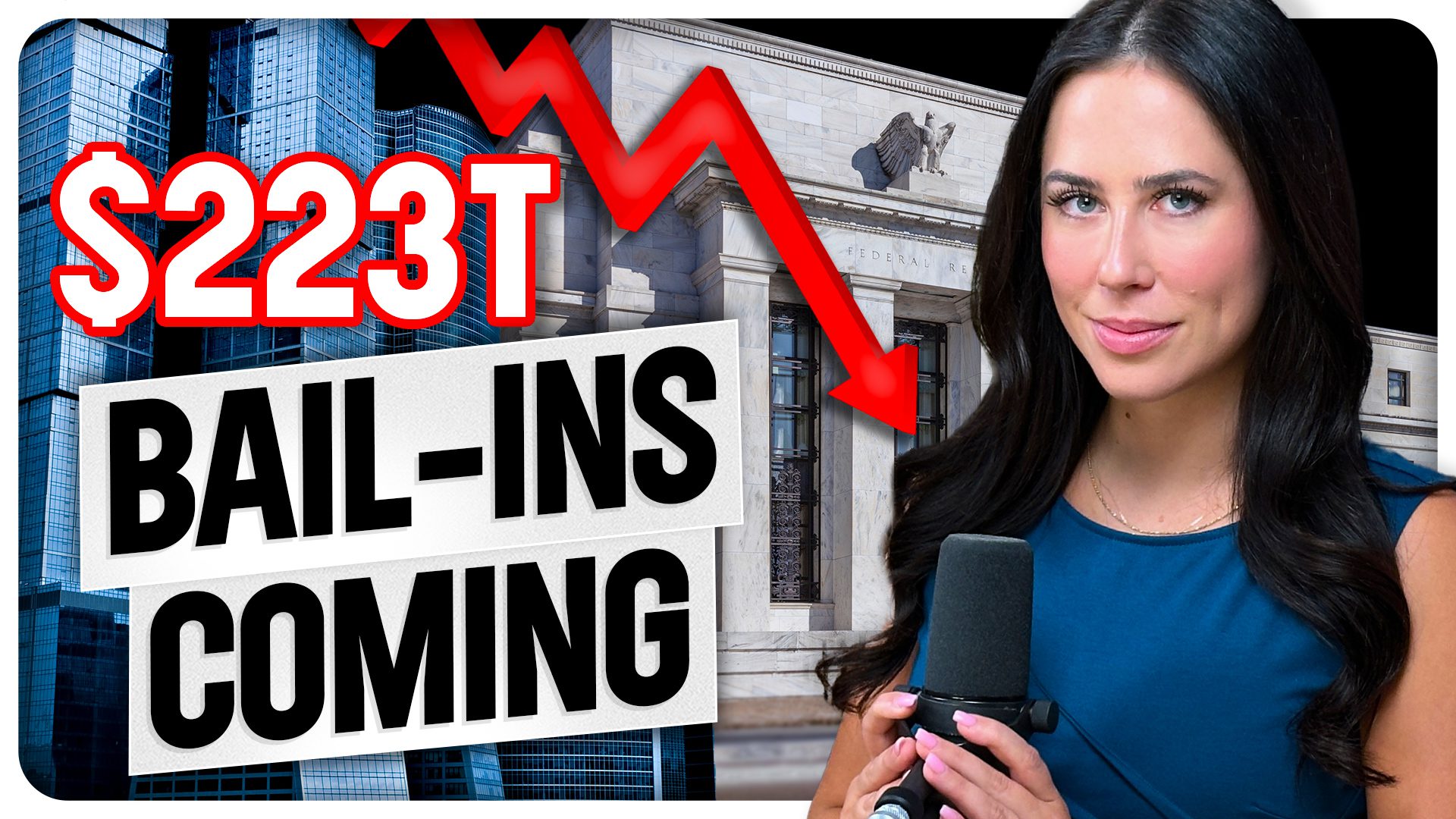
US banks are sitting on $223 trillion in derivatives. Here’s how it could lead to bail-ins and destroy your savings.
Could the Next Financial Collapse Already Be Brewing?
$223 trillion. That’s how much derivative exposure U.S. banks are currently sitting on. These financial “weapons of mass destruction,” as Warren Buffett once called them, didn’t disappear after 2008—they’ve metastasized into something even more dangerous.
If you think this is just banking noise, think again. Derivatives risk now threatens not just the banks, but your deposits, your retirement, and your entire financial life. And this time, there’s no bailout coming. There’s something far worse: the legal foundation for bail-ins.
A Ticking Time Bomb: The Evolution of Derivatives
Post-2008, Wall Street was supposed to clean up its act. But instead of de-risking, they got sneakier:
- Derivatives exposure at U.S. banks has ballooned to $223 trillion
- That’s more than 10x the U.S. GDP, buried in opaque financial products
- From Q4 last year to Q2 this year, U.S. derivative holdings jumped by $28 trillion
These are not just paper bets. They’re interlinked across subprime auto loans, housing, shadow banking, and private equity. One default sets off a domino effect—just like 2008, but worse.
Subprime Auto Loans Collapse
In the last month alone, three subprime auto lenders collapsed. Why does this matter?
- Car payments now average $750/month
- Over 100 million Americans have a car loan
- Auto debt is now the third largest consumer credit area, behind mortgages and student loans
Lenders issued risky loans to unqualified borrowers, then bundled them, sliced them, and sold them as AAA assets. Sound familiar? It’s 2008 all over again, with layers of derivatives stacked on toxic debt.
And guess who’s left holding the bag?
When the System Cracks: Bank Bail-Ins Explained
Unlike 2008’s bailouts, the next crisis has a different endgame:
- Under the Dodd-Frank Act, your deposits can legally be used to cover bank losses
- The FDIC only holds 1.3% of total insured deposits
- In a major collapse, that “FDIC insured” sticker won’t mean much
What does a bail-in look like?
- In Lebanon, banks froze all accounts overnight
- In Cyprus (2013), depositors lost up to 50% of their savings
- In both cases, the banking system survived—but savers were sacrificed
This isn’t a conspiracy. It’s on the books, and FDIC officials have openly mocked the public for not understanding it.
Gold & Silver: The Tangible Lifeline
What survives when currencies fail, banks freeze, and governments shift blame?
Physical gold and silver.
- Tangible assets not tied to the digital system
- Immune to bail-ins, freezes, and confiscation
- Proven inflation hedge across centuries
Unlike digits on a screen, gold can’t be “turned into equity” or frozen overnight. It’s outside the system, and that’s exactly where you want to be.
This isn’t just about wealth preservation. It’s about survival.
The Clock Is Ticking
The layers of derivatives risk, credit collapse, and centralized overreach are converging. The American middle class is already being crushed by debt and devaluation. The next phase is coming, and it won’t come with a warning bell.
You need to act before the system locks you out. The window for protection is narrow—but it’s still open.
About ITM Trading
ITM Trading has over 28 years of experience helping clients safeguard their wealth through personalized strategies built on physical gold and silver. Our team of experts delivers research-backed guidance tailored to today’s economic threats.
THINKING ABOUT PURCHASING GOLD & SILVER?
Get expert guidance from our team of analysts with 28+ years of experience.
👉 [SCHEDULE YOUR CALL HERE] or call 866-351-4219